Last updated October 30, 2026
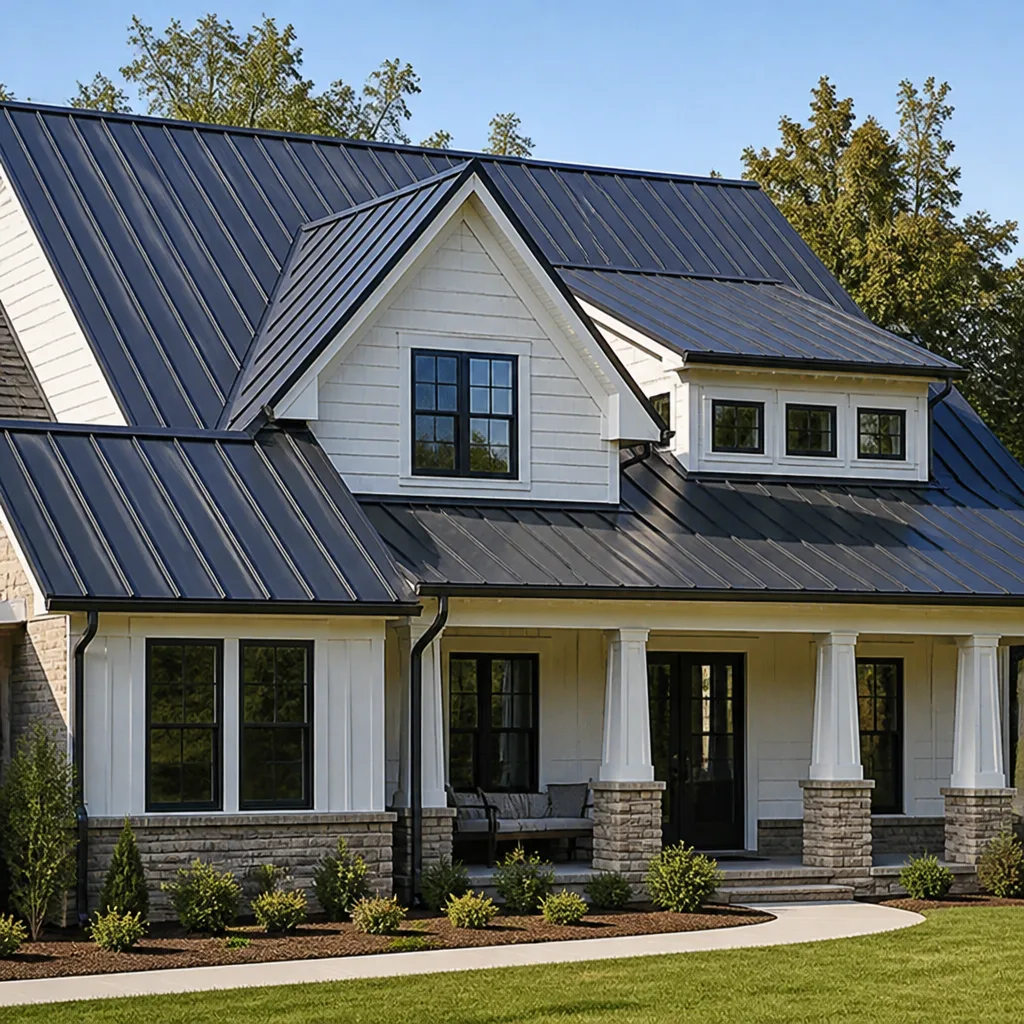 Metal roofing
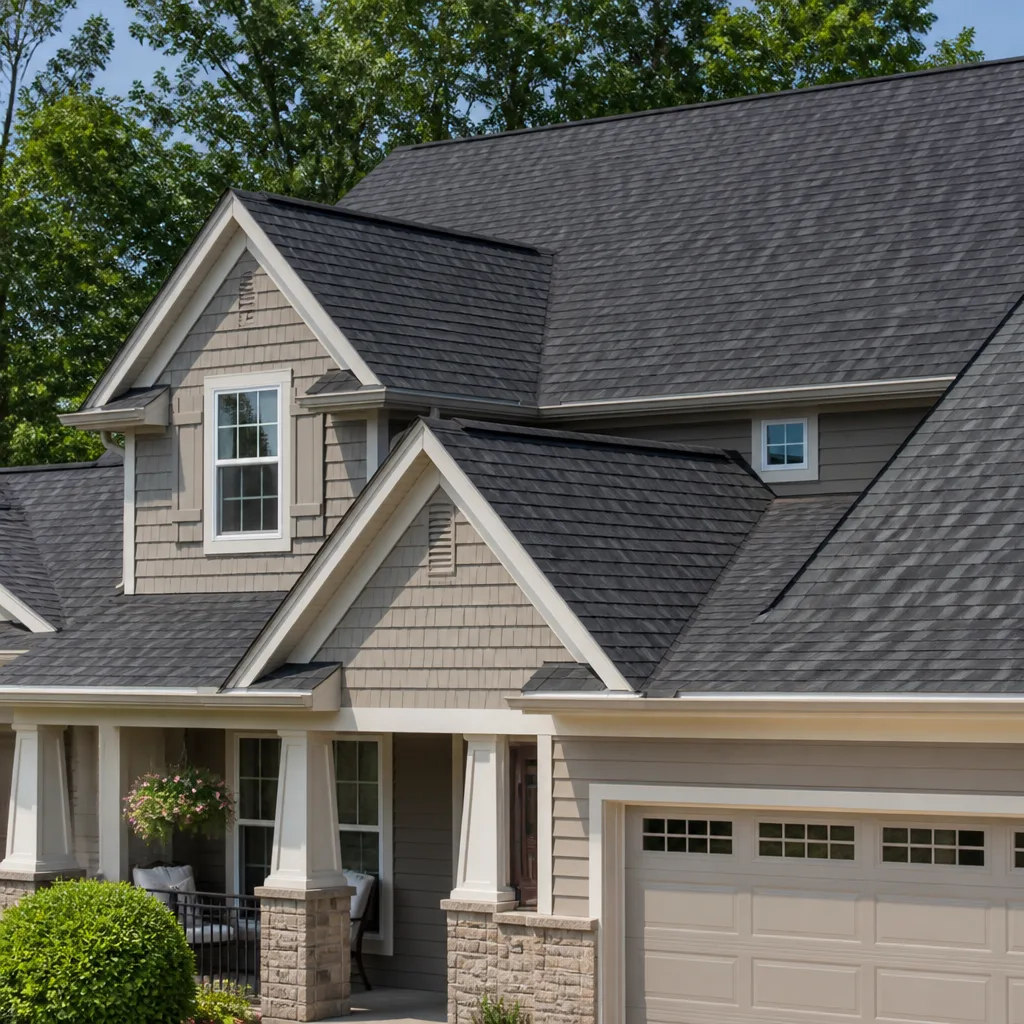 Architectural shingles
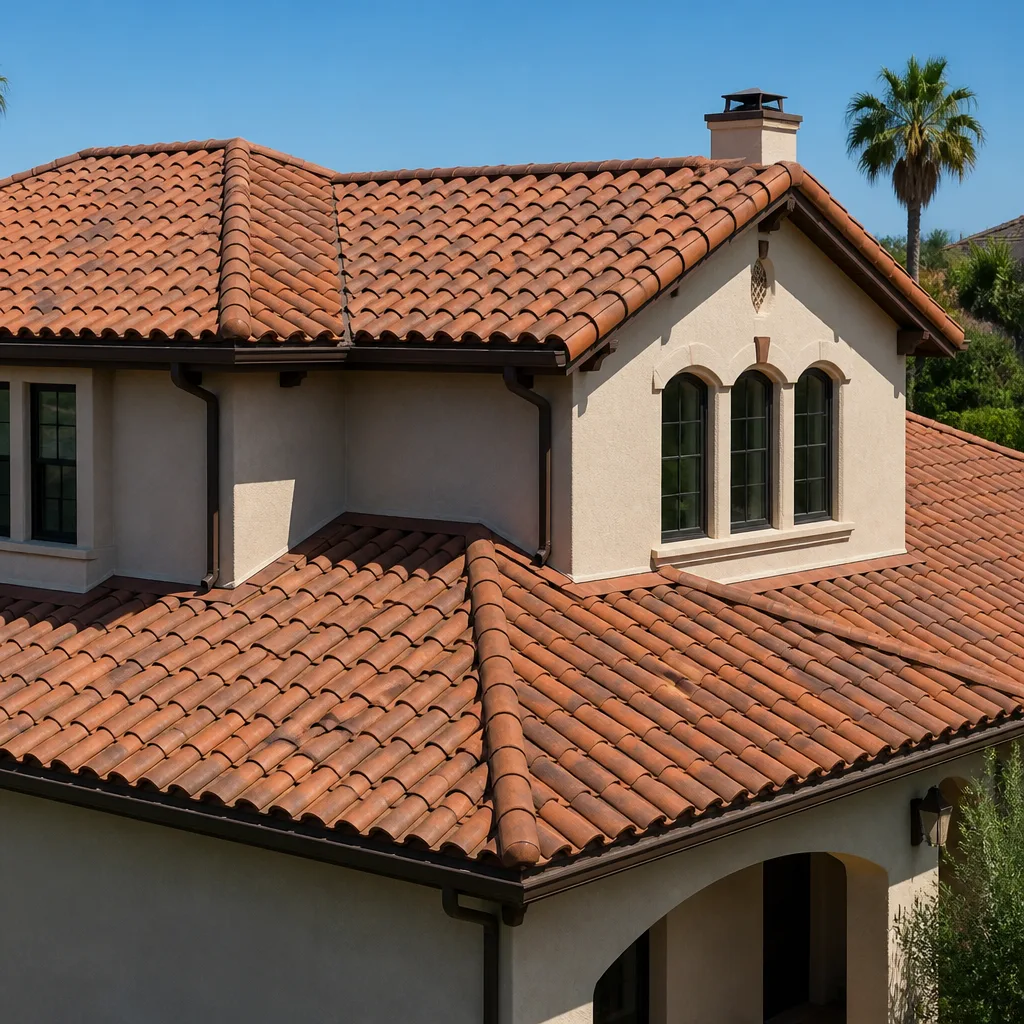 Tile roofing
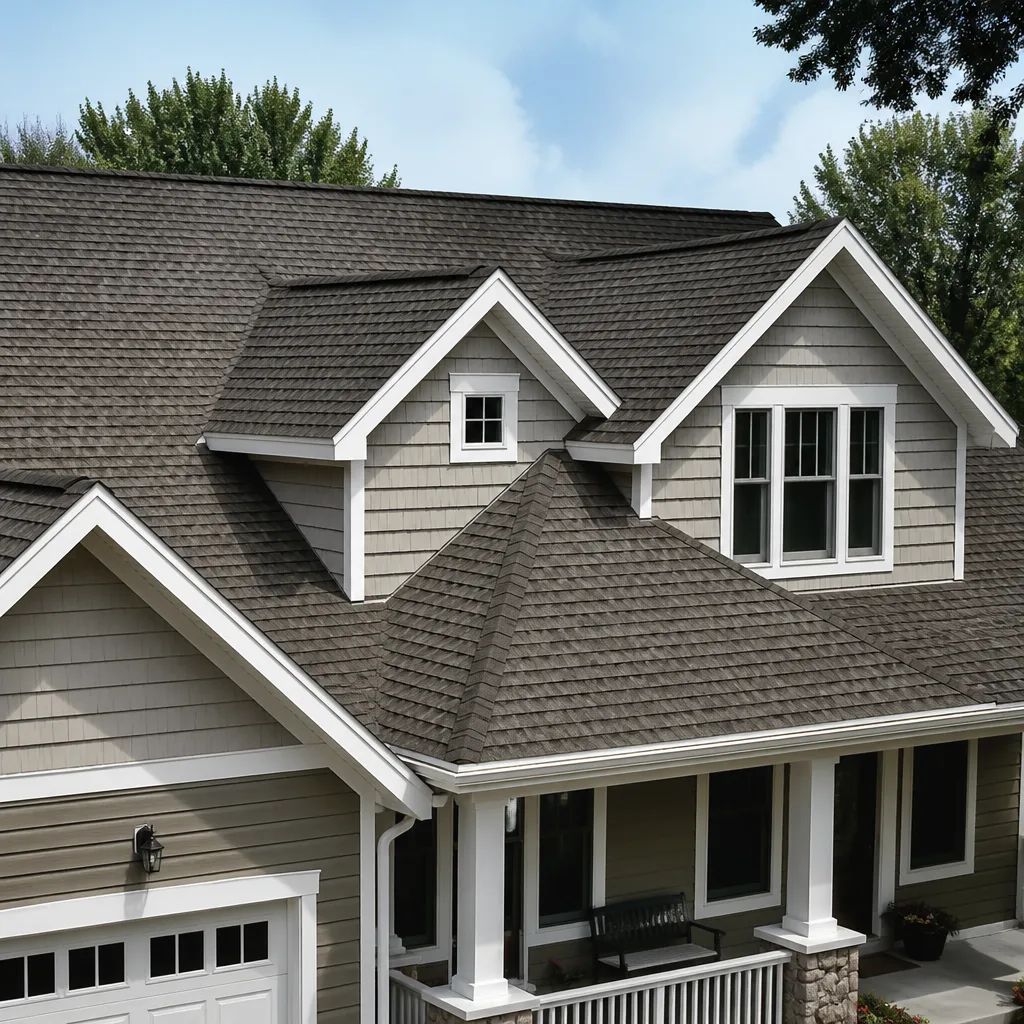 GAF
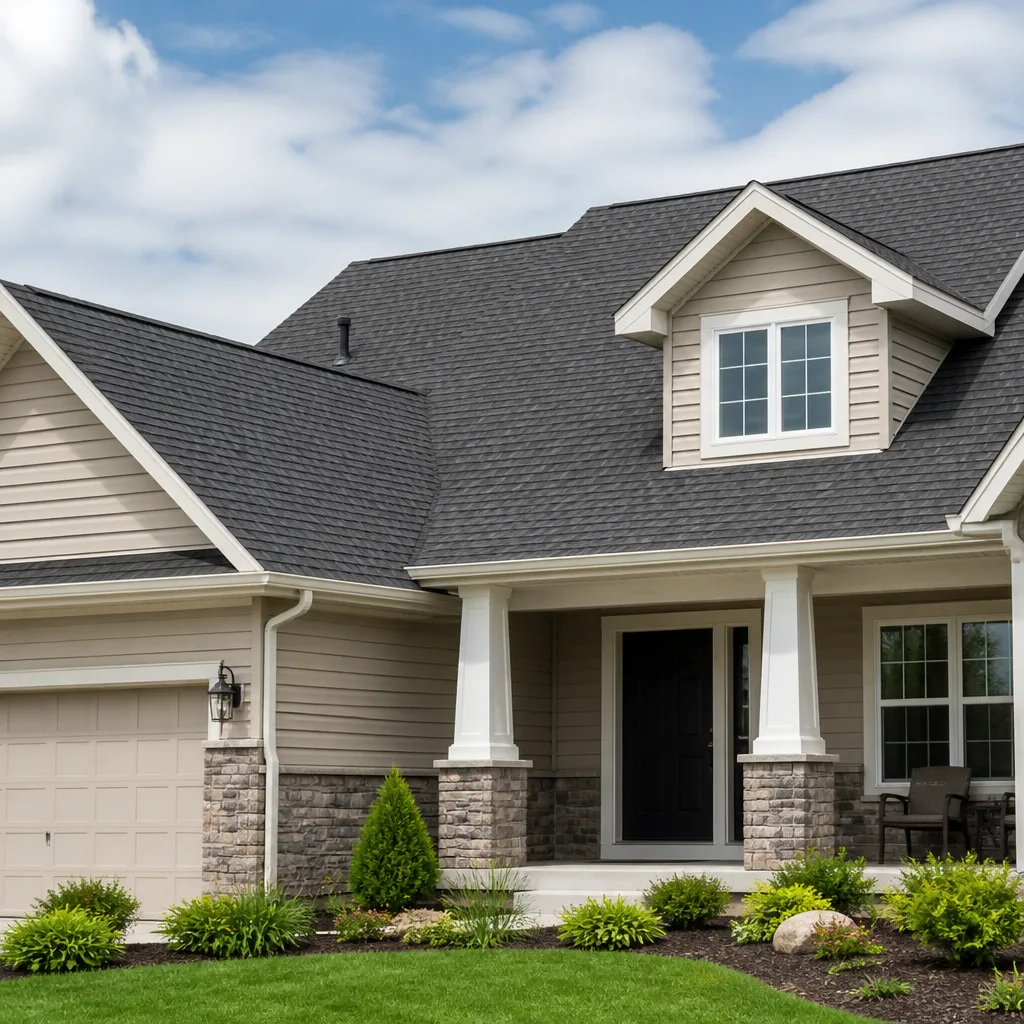 Owens Corning
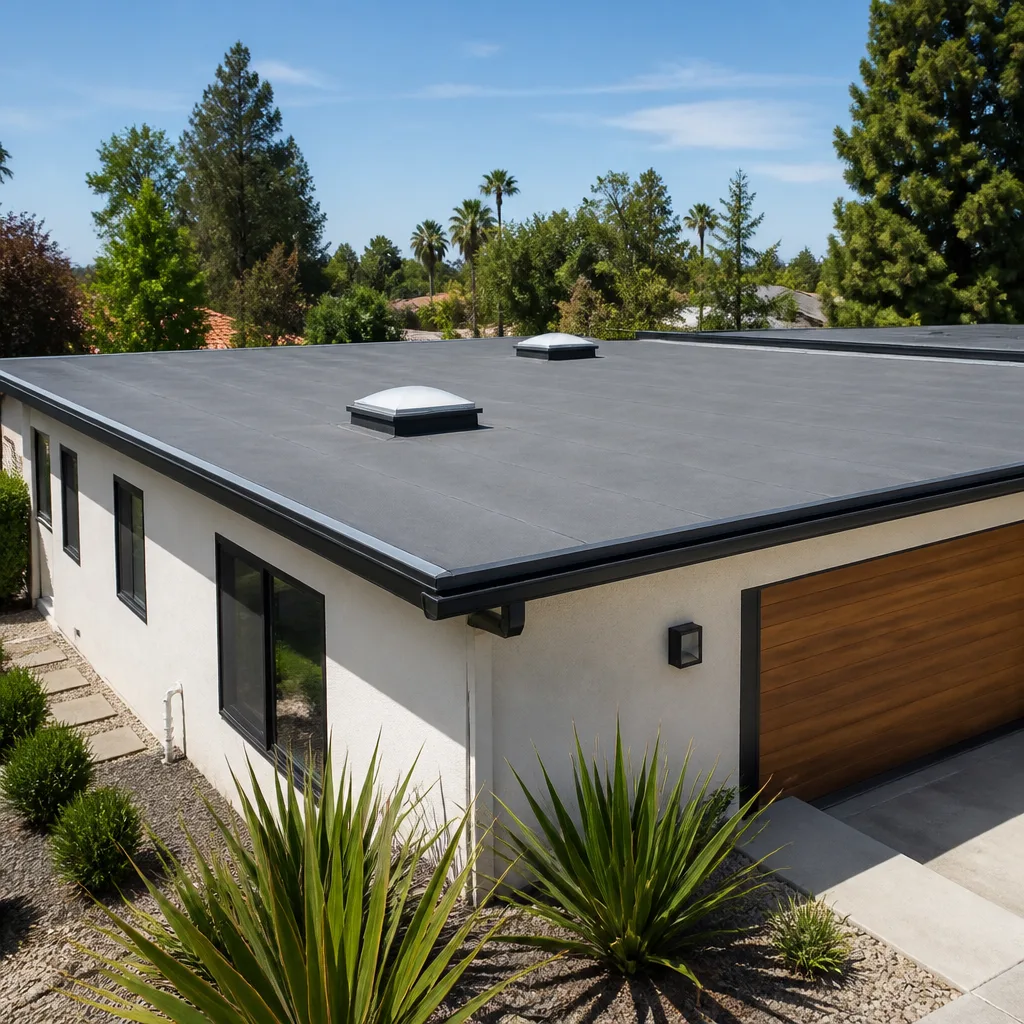 Flat & low-slope
Free roof inspection with deck photos before we talk money - GAF and Owens Corning certified installation
The Complete Guide to Roofing in Pomona
Pomona averages more than 280 sunny days a year, yet the roofing advice most Southern California homeowners read is built around coastal weather patterns. That’s a problem. The heat that beats down on a roof in Pomona does different things to shingles, underlayment, and decking than the marine layer in Santa Monica or Long Beach. This guide and our Complete Roof Repair Guide for Pomona Homeowners explain how Pomona’s Inland Empire climate, older housing stock, and local market conditions shape every roofing decision, from the first inspection to the final shingle. You’ll learn how to read a quote, when a repair actually makes sense, and which materials survive the thermal stress this valley throws at them.
Quick Answer
Roofing in Pomona is driven by three local factors: sustained UV exposure from 280-plus sunny days, temperature swings that accelerate material fatigue, and a housing stock dominated by homes built between the 1950s and 1980s. The right roof for a Pomona home is one chosen for thermal cycling resistance and a deck structure that an inspection has verified can carry it. A professional inspection before any repair or replacement is the single most important step you can take.
Styles & brands we work with
Table of Contents
- How Pomona’s Climate Changes Roofing Math
- The Age Profile of Pomona Homes and What It Means
- Roofing Materials Actually Used in Pomona
- The Roofing Lifecycle: Inspection to Replacement
- Repair vs. Replace: A Straight Decision Framework
- How to Read a Contractor’s Scope of Work
- Permits, Code, and What Pomona Requires
- Post-Job Maintenance That Extends Roof Life
How Pomona’s Climate Changes Roofing Math
Pomona sits in the Pomona Valley, a pocket of the Inland Empire that traps heat differently than the coastal plain. Summer temperatures routinely cross 100 degrees, and the roof surface itself can reach 160 to 180 degrees on an August afternoon. That heat does not just sit there. It works on every component of the roof system.
The real problem is thermal cycling. A roof in Pomona expands as it heats and contracts as it cools, and those cycles happen daily for six months of the year. Over a decade, that’s thousands of expansion and contraction events. Asphalt shingles lose volatile compounds that keep them flexible. They become brittle. The adhesive strips that bond one shingle to the next break down. The result is a roof that looks fine from the street but has shingles you could snap in half with two fingers.
Santa Ana winds add another layer. Those hot, dry winds arrive in the fall and can gust hard enough to lift shingle tabs and drive dust under edges. A roof that has already lost flexibility is far more vulnerable to wind damage. We also see occasional winter nights below freezing in Pomona, particularly in the Phillips Ranch and Ganesha Hills neighborhoods. Moisture that works into micro-cracks during the day can freeze and expand at night, widening those cracks.
This is why material selection matters more in Pomona than in a beach city. A budget 3-tab shingle will fail faster here than the same product installed in Irvine. The heat simply extracts more from it. When homeowners ask us about the difference between shingle grades, we point to the thermal reality of this valley first.
The Age Profile of Pomona Homes and What It Means
Pomona grew in distinct waves. The housing boom after World War II produced thousands of single-family homes in the 1950s and 1960s. A second wave followed in the 1970s and 1980s as the Inland Empire absorbed families priced out of Los Angeles and Orange County. A large share of Pomona’s single-family housing stock now sits between 50 and 75 years old.
That age profile carries specific structural realities. Homes built in the 1950s and 1960s in Pomona often used plank decking rather than plywood or OSB. Plank decking has gaps between boards, and those gaps grow wider as the wood dries out over decades. That creates a condition called “gap rot” when underlayment sags into the spaces. It also means the deck may not meet current code requirements for shear resistance if a full re-roof goes in without decking upgrades.
Older Pomona homes also tend to have lower roof pitches. A 3:12 or 4:12 pitch built in 1962 was standard, but it changes what materials you can install. Low-slope sections may require modified bitumen or specialized underlayment rather than standard shingles. If a salesperson quotes you a shingle roof without mentioning the slope, they have not actually looked at your roof.
Another factor: multiple roofing layers. Many of these older Pomona homes have had a second shingle layer installed directly over the first, a practice that used to be allowed under older code versions. That adds weight, traps heat, and shortens the life of the top layer. Current code in most jurisdictions restricts re-roofing to no more than two layers total, but a roof that’s been double-layered once may need a complete tear-off before anything new goes on.
Roofing Materials Actually Used in Pomona
Walk through any Pomona neighborhood, from Lincoln Park to Westmont, and you’ll see a specific mix of roofing materials. Architectural asphalt shingles dominate. A smaller number of homes have flat tile, and a few use concrete tile or standing seam metal. That’s the reality. The theoretical list of roofing options is long, but the practical list for most Pomona homes is short.
Architectural shingles are the workhorse here. They handle thermal cycling better than 3-tab shingles because they are thicker and have a more substantial adhesive bond. Among the brands actually installed on Pomona roofs, GAF, CertainTeed, Owens Corning, and IKO all have strong product lines. The difference between them comes down to specific features: CertainTeed’s fiberglass mat density, GAF’s adhesive strip design, Owens Corning’s granule embedding, and IKO’s dimensional profile. None of these differences matter if the wrong shingle goes on the wrong deck or the installation is sloppy.
Tile roofs appear on some Pomona homes, particularly in the Phillips Ranch area where Mediterranean styling was popular in the 1980s and 1990s. Tile handles heat well, but it is heavy. A concrete tile roof can weigh three to four times what a shingle roof weighs. Homes built for tile have the structural support. Homes that switch to tile without an engineering review do not. Tile also has a different failure mode: underlayment degrades long before the visible tile does, meaning a tile roof can look fine while leaking.
Metal roofing has a small but growing presence in Pomona. A standing seam roof reflects more solar radiation than dark asphalt, which can lower attic temperatures meaningfully in July and August. The cost is higher, and the installation skill requirement is higher. But for a homeowner planning to stay in the home for 20 years or more, metal’s longevity changes the math.
The material gap matters for repairs. If your Pomona home has a discontinued shingle line from a brand that changed its product, a patch job may never match perfectly. This is one reason we work with multiple manufacturers: it gives homeowners real options when a single-brand contractor would have to say “tear it all off.”
The Roofing Lifecycle: Inspection to Replacement
Every roof follows the same path, whether you live in a 1958 ranch in the Wilton Heights area or a 1990s two-story north of the 10 freeway. Understanding the lifecycle makes you a better buyer because you’ll know where your roof is on that path before anyone tries to sell you something.
Step 1: The Inspection
A real roof inspection is not a visual glance from the curb. It involves walking the roof surface, checking flashing points, examining the attic for decking stains, and documenting what’s actually there. The goal is a written record. We inspect first because every recommendation that follows should be anchored to what the roof actually shows, not what a sales quota requires.
Step 2: The Diagnosis
Inspection findings fall into categories: functional roof with minor wear, functional roof with isolated damage, roof nearing end of service life, or roof failure. The diagnosis is a statement about what the roof will do in the next two to five years if nothing changes.
Step 3: The Repair vs. Replace Decision
This is where honest contractors earn their fee. A roof with a localized leak from a cracked pipe boot can be repaired. A roof with granule loss across 40 percent of its surface and curling at the edges cannot, not meaningfully. The decision turns on whether the repair’s cost buys meaningful time.
Step 4: Material Selection
If replacement is warranted, the next choice is what goes on. Budget matters, but so does longevity. A premium architectural shingle from a brand like GAF or CertainTeed costs more up front but often lasts 10 to 15 years longer than an entry-level product under Pomona sun. We present multiple brand options and let the roof’s needs and your budget drive the recommendation.
Step 5: Permitting
Any structural roofing change in Pomona requires a permit. The permit process is not a bureaucratic formality; it ensures the work meets current code for wind resistance, fire rating, and weight.
Step 6: Installation
The crew strips the old roofing, repairs or replaces damaged decking, installs underlayment, and completes the shingles or other material. Quality at this stage is governed by manufacturer specifications. If the installer does not follow the brand’s published installation manual, the warranty can be voided.
Step 7: Post-Job Verification and Maintenance
Once the roof is on, you need documentation of what was installed and a plan for keeping it intact. Annual visual checks catch small issues before they become interior leaks.
This is the full lifecycle under one contractor: Roof Inspection in Pomona starts it, Roof Repair in Pomona handles the isolated damage stage, and Roof Replacement in Pomona covers the end of the road.
Repair vs. Replace: A Straight Decision Framework
The most common question we hear from Pomona homeowners is some version of: “Can I get a few more years out of this roof, or is it time?” The answer has less to do with age and more to do with condition. Here is the framework we use when we walk a roof.
Repair Makes Sense When:
- The damage is localized to one or two specific areas, like a single worn pipe boot or a torn shingle section from a branch.
- The rest of the roof surface still has adequate granule coverage and flexible shingles.
- The decking underneath is dry and structurally sound, confirmed by attic inspection.
- The roof is under 15 years old, or the cost of repair is less than 10 percent of replacement cost and buys at least two years.
Replacement Makes Sense When:
- Granule loss is widespread, and shingles are brittle to the touch. You can test this by gently flexing a shingle edge; if it cracks, the roof has lost its flexibility.
- Leaks appear in multiple rooms or around multiple penetrations like vents and chimneys.
- The underlayment is failing, which shows up as dark stains on decking visible from the attic.
- The roof has been patched repeatedly, and you’re now paying for repairs every year.
- You plan to keep the home for more than ten years and want a roof that actually reaches that mark.
The repair-or-replace decision is an accounting problem: what is the annualized cost of each path? A $600 repair that extends a roof two years costs $300 per year. A $14,000 replacement that gives you 25 years costs $560 per year, but it resets the clock entirely. The right answer—whether DIY or professional roofing—is the one that fits your budget and your timeline, not the one that makes the contractor’s week easier. Our position is simple: repair when repair is right, replace when replacement makes sense.
Homeowners ready to compare their options can start with Millstone Roofing home, which explains our inspection-first process and the material brands we carry.
How to Read a Contractor’s Scope of Work
A roofing estimate is not just a price. It is a legal document that defines exactly what you are approving before a single nail is pulled. Too many Pomona homeowners sign a one-page bid that says “re-roof, $13,200” and then act surprised when decking repair shows up as a change order. Our step-by-step guide to hiring a roofing contractor in Pomona shows how to read the scope like someone who knows what they’re doing.
- Start with the tear-off line. Does the scope include removal of all existing roofing layers? How many layers does the contractor assume are present? If the roof has two layers and the scope assumes one, you will get a change order.
- Look for decking language. The scope should state a unit price for decking replacement, like “$95 per 4’x8′ sheet if deteriorated decking is found.” If it does not mention decking at all, the contractor either assumes none will be replaced (unlikely on an older Pomona home) or plans to charge you later without a written basis.
- Check the underlayment specification. What brand and grade of underlayment goes in? Synthetic or felt? Does it cover the entire deck or just the eaves and valleys? The answer affects how your roof performs if a shingle blows off.
- Confirm flashing scope. Are all existing pipe boots, chimney flashing, and valley flashing being replaced or reused? Reusing old flashing on a new roof is a cost-cutting measure that rarely pays off.
- Verify the shingle brand and line. The scope should name the manufacturer and the specific product line, not just “architectural shingle.” A GAF Timberline is a different product than a CertainTeed Landmark, and the warranty terms differ accordingly.
- Look for the ventilation statement. Will the contractor install or replace ridge vents, intake vents, or eave vents? A roof that has no ventilation upgrades will cook the new shingles faster, especially in Pomona’s summer heat.
If the scope is vague, ask for specifics. A contractor who cannot write down what they plan to install is not ready to be on your roof.
Permits, Code, and What Pomona Requires
Roofing work in Pomona falls under the city’s building code, which incorporates California’s Title 24 energy standards and current fire and wind codes. The permit process has three parts: plan review, inspection during construction, and final sign-off.
The key requirement homeowners should know: a roofing permit is not optional. Any contractor who suggests skipping the permit to save time or money is asking you to accept liability for non-compliant work. The permit fee is a small line item compared to the cost of correcting unpermitted work when you sell the home. Buyers and their inspectors look for this, and unpermitted roofing can kill a sale.
Pomona’s code also requires specific nailing patterns for shingles in high-wind zones. The eastern edges of the city, closer to the hills, see stronger Santa Ana gusts than the valley floor. The code’s wind requirements apply uniformly, but a conscientious contractor will install to the higher standard across the board.
Another code point: re-roofing over existing layers is not allowed if the roof already has two layers. Most Pomona homes that have been roofed once already will need a full tear-off. Homes from the 1950s and 1960s may have asbestos-containing materials in old flashing or mastic, which requires specialized handling under state regulations.
Post-Job Maintenance That Extends Roof Life
A new roof is not a zero-maintenance asset. The best way to get 25 years out of a shingle roof in Pomona is to do the small things every year so the big things never happen.
- Clear the gutters and valleys twice a year. Debris traps moisture against the shingle edges, and moisture accelerates granule loss. In Pomona, the fall buildup from eucalyptus and oak trees is the main offender.
- Check flashing after every storm event. Wind-driven rain finds weak flashing. Look at the chimney, skylights, and pipe boots after a storm. If you see lifted edges or cracked sealant, address it immediately.
- Trim overhanging branches. Branches that scrape shingles remove granules, and a falling branch can puncture the deck.
- Walk the roof once a year, or have it walked. Look for loose shingles, exposed nails, and granule accumulation in spots. Early detection costs far less than interior drywall repair.
- Keep the attic ventilation clear. Insulation that blocks eave vents traps heat in the attic, which cooks the shingles from below. The hottest attics we see in Pomona are the ones where someone piled insulation over the intake vents.
- Document everything. Keep the scope of work, the permit number, the shingle brand and color, and the warranty registration. When you sell the home, that paperwork protects your asking price.
Maintenance is not optional here. The same heat that makes Pomona a difficult place for a cheap roof also makes a well-built roof perform exceptionally well if you let it.
Common Mistakes to Avoid
- Choosing the cheapest shingle on a Pomona roof. A budget 3-tab shingle installed in this climate can fail in 12 to 15 years, and the replacement cost arrives when you least expect it. The cheapest roof is rarely the least expensive over time.
- Skipping the attic inspection. A roof can look intact from the outside while the decking is rotting from trapped moisture. Any contractor who does not look in the attic before quoting is guessing.
- Signing a vague scope of work. If the estimate does not name the shingle brand, underlayment type, and decking unit price, you are signing a blank check. Make the contractor write it down.
- Ignoring ventilation. Pomona attics reach extreme temperatures in July and August, and a poorly ventilated attic shortens the life of every shingle above it. Ventilation is part of the roof system, not an add-on.
- Deferring a repair because it’s small. A $500 leak at a pipe boot becomes a $2,000 decking and drywall repair in one winter. Roof problems compound, and they compound faster in heat.
- Assuming every brand is the same. GAF, CertainTeed, Owens Corning, and IKO all make good shingles, but specific product lines within each brand are not interchangeable. Do not let a contractor swap products without a written explanation.
- Thinking a tile roof never needs attention. Tile lasts, but the underlayment beneath it does not. Tile roofs need underlayment replacement roughly every 20 to 25 years, which requires removing and resetting the tile.
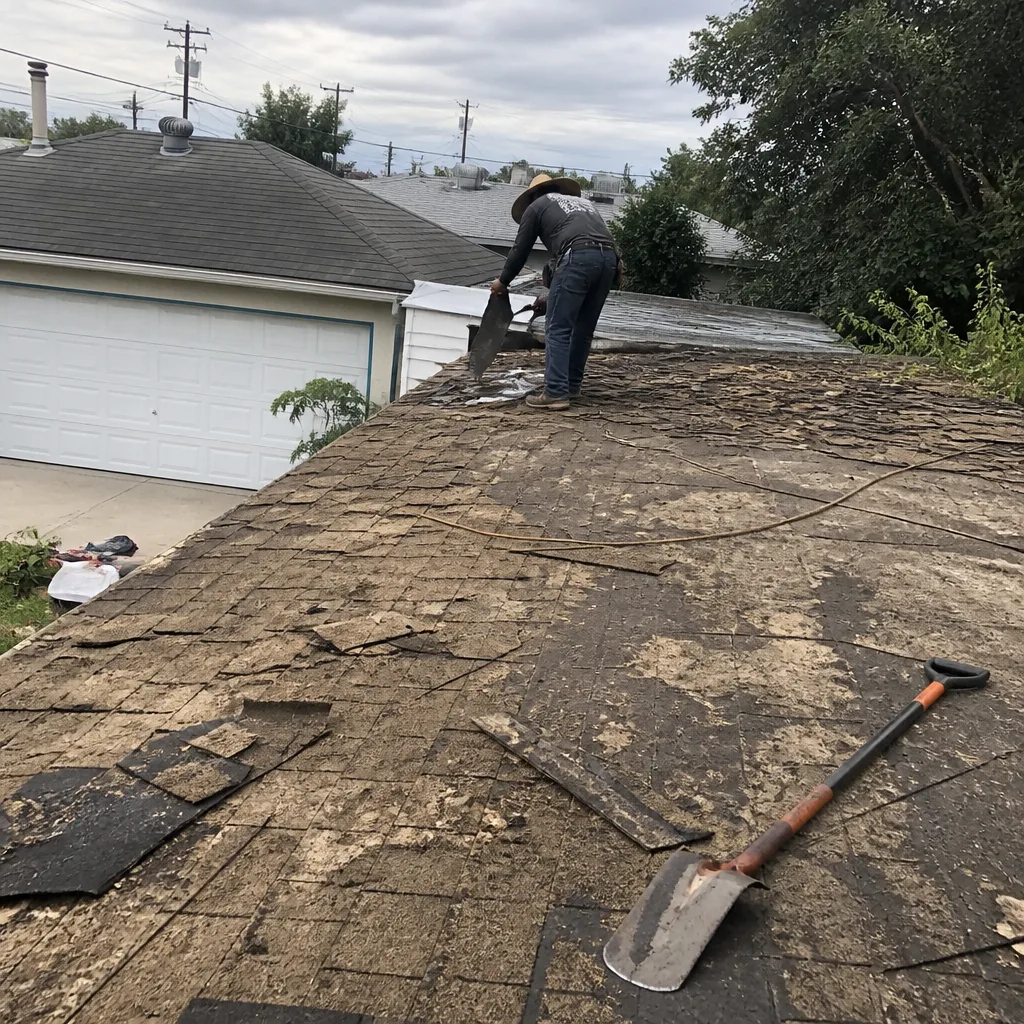
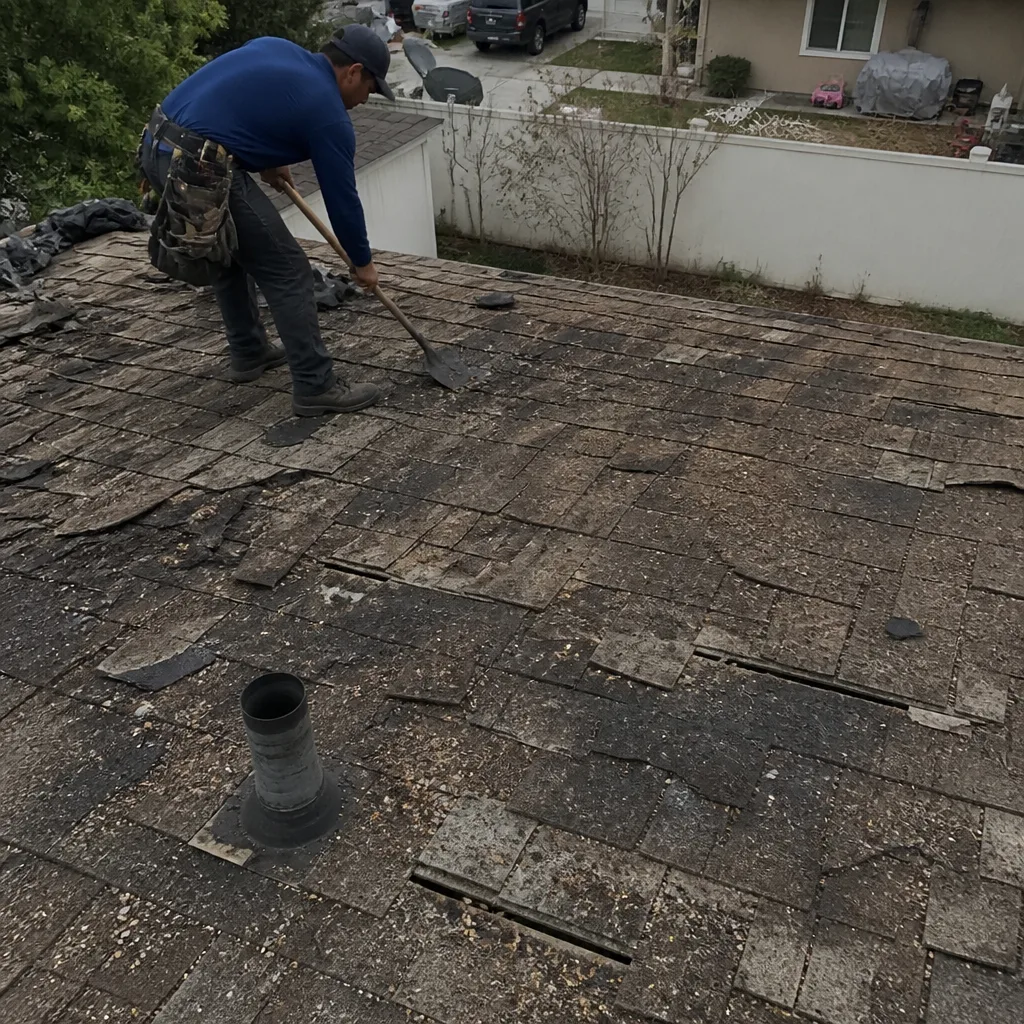
See the difference
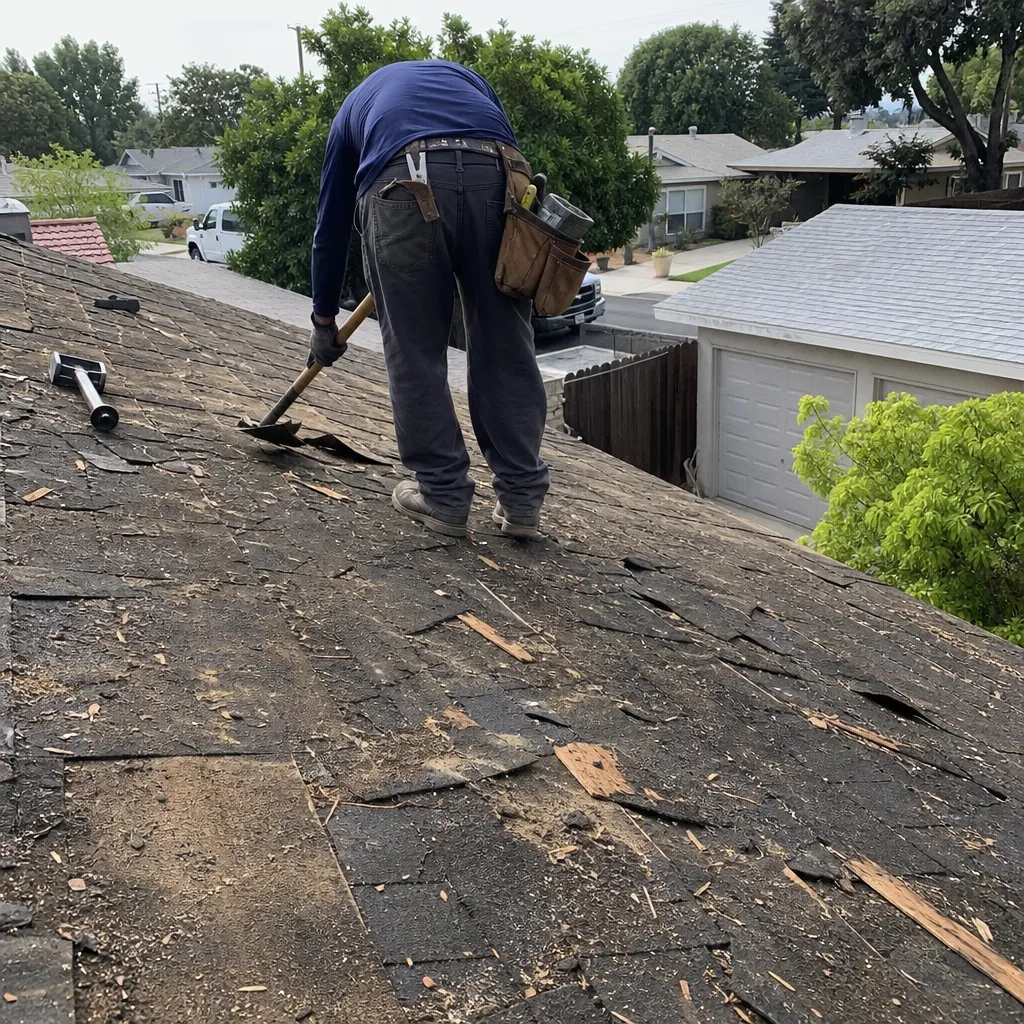 Before
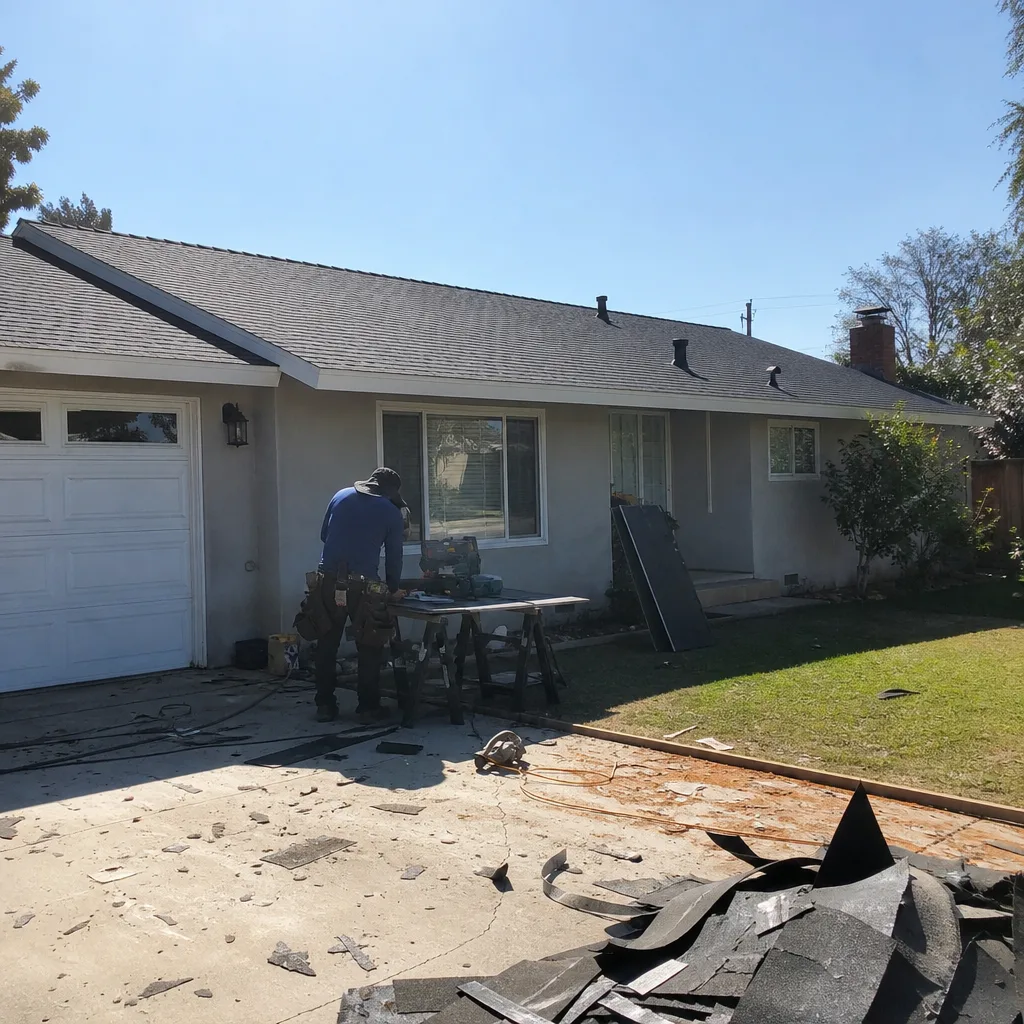 After
 Before
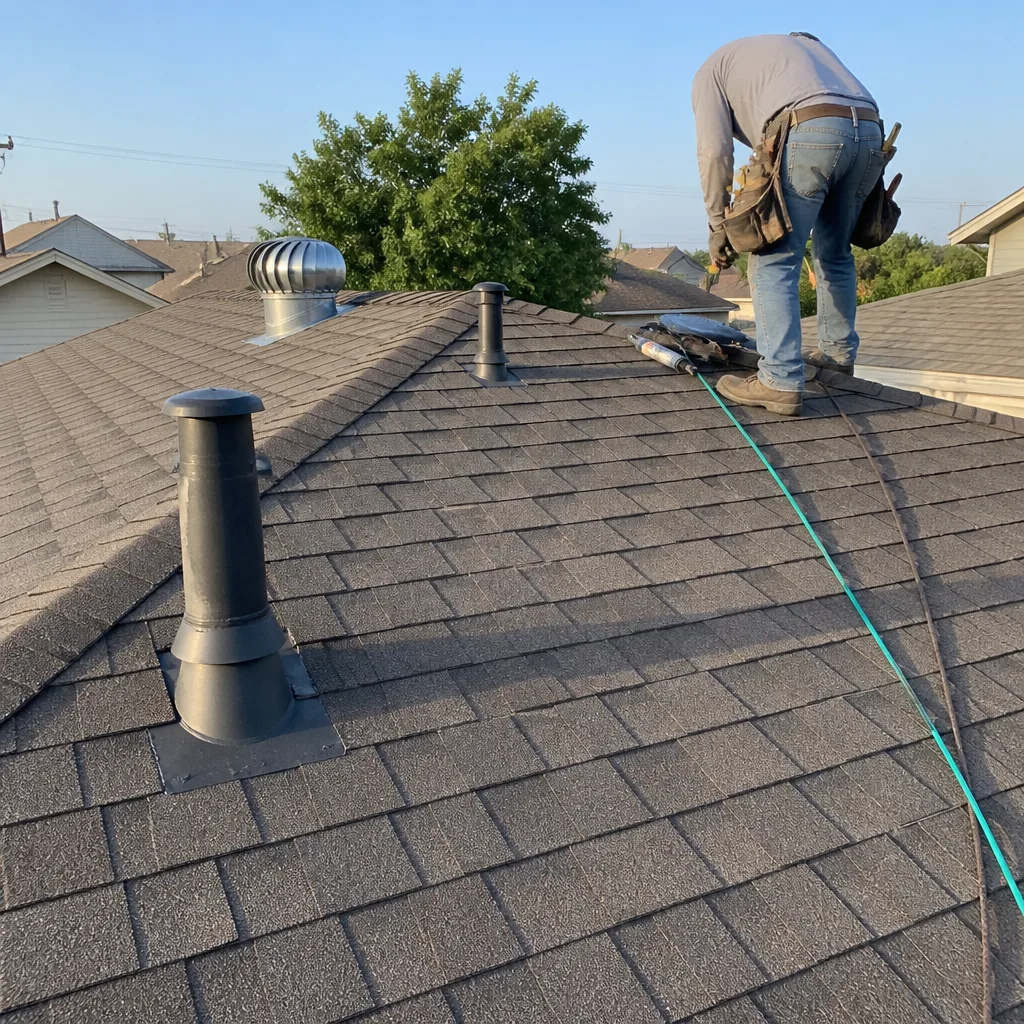 After
 Before
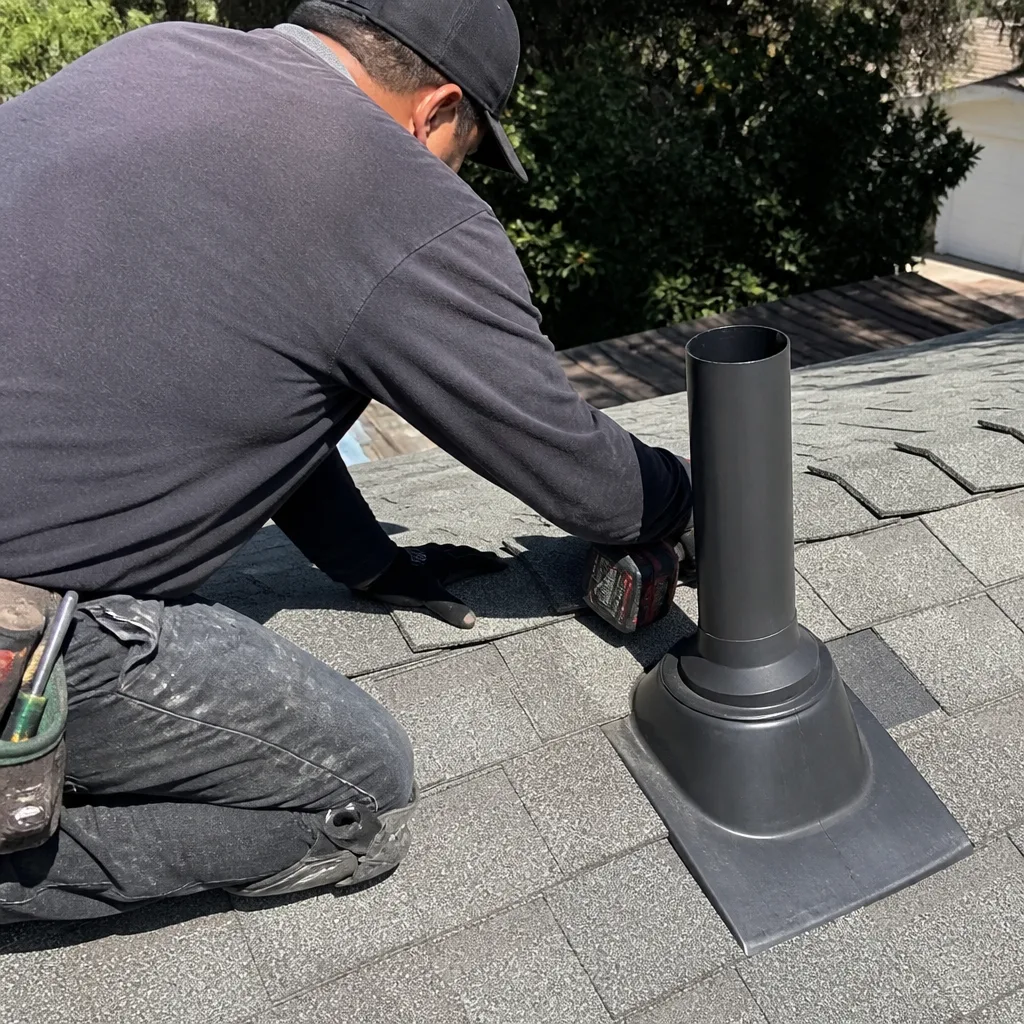 After
When to Call a Professional
Some roofing issues are obvious: water coming through the ceiling, missing shingles, a branch puncturing the deck. But the more subtle signs matter just as much. If you see granule accumulation in your gutters, shingles curling at the edges, daylight visible through the attic boards, or water stains on the ceiling after a storm, get someone on the roof who knows what they’re looking at. A roof that fails in Pomona fails fast, and the repair cost climbs with every week of delay. Millstone Roofing offers free estimates in Pomona, call (855) 341-6021 to schedule one. We inspect first, document what we find, and present options with written findings attached.
Frequently Asked Questions
A full shingle roof replacement for a typical Pomona home currently runs between $8,500 and $22,000 depending on roof size, pitch, number of layers being removed, and shingle grade. Architectural shingles with good ventilation add cost up front but return more years of service in this climate. Call (855) 341-6021 for an exact quote, estimates are free.
A quality architectural shingle roof in Pomona lasts 20 to 28 years when properly installed with adequate ventilation. Lower-grade 3-tab shingles in this heat often fail in 12 to 15 years. The difference comes down to the material’s ability to handle daily thermal cycling without losing flexibility.
Yes, structural roofing work in Pomona requires a city permit. The permit ensures the work meets current fire, wind, and energy codes. Unpermitted roofing work becomes a liability when you sell the home, so the buyer’s inspector will ask for the permit record.
In most cases, no. If your Pomona home already has two shingle layers, current code requires a complete tear-off before new roofing goes on. Even if a second layer were permitted, installing over an old roof traps heat and shortens the new roof’s life.
Several manufacturers, including GAF, CertainTeed, Owens Corning, and IKO, make architectural shingles that handle Inland Empire heat well. The specific product line matters more than the brand name, because performance varies within each manufacturer’s catalog. A multi-brand contractor can match the product to your roof’s geometry and your budget rather than pushing whichever line is easiest to stock.
A real repair addresses the cause of the leak, not just the visible damage. A patch covers it. Replacing a cracked pipe boot and resealing the flashing is a repair; smearing roofing cement around a leak is a patch. You should know which one you’re paying for before the work starts.
Yes, and it should be a separate, specialized roof inspection, not just the general home inspection. Pomona’s older housing stock means many homes carry hidden decking or ventilation issues a general inspector will not flag. A specialized inspection gives you a documented baseline for negotiation and future maintenance.
The Bottom Line
Roofing in Pomona rewards homeowners who understand the climate they live in. The heat, the dry winds, the freeze cycles, and the older housing stock all push roofs harder than the coastal guides assume. The single most valuable thing you can do is get an inspection, read the findings, and make decisions from documentation rather than sales pressure. Whether you need a targeted repair, a material recommendation from one of several major brands, or a full replacement, the process starts with looking at what is actually up there. For more guides & resources, visit our blog. Millstone Roofing serves Pomona homeowners with an inspection-first approach, multi-brand material options, and one crew from first visit to final shingle.
Written by the team at Millstone Roofing, serving Pomona since 2011.