
Emergency Roof Repair Near Me: What Pomona Homeowners Should Do First
If you’ve got water coming through your ceiling in Pomona right now, the first move is not calling a roofer. It’s stopping the water from spreading inside your house. A roof repair will happen, but the $12,000 problem happens in the next hour when water soaks through drywall, into insulation, and down into wall cavities. If you’d rather not handle the interior triage yourself, call (855) 341-6021 and we’ll walk you through it while a crew heads your way.
We’ve been called to homes in Pomona after Santa Ana wind events where the roof lost a few shingles, and the real damage was a ceiling that had been quietly absorbing water for six hours before anyone noticed the brown spot in the corner of a bedroom. The roof fix was under $800. The drywall, insulation, and mold remediation pushed the total past $9,000. That gap is almost always preventable in the first 60 minutes.
What to Do in the First Hour: A Sequence That Actually Works
The instinct after discovering a leak is to panic and start calling contractors. Slow down. The order of operations matters more than speed. Here’s the sequence we recommend to Pomona homeowners, in order:
- Move anything valuable out of the water path. Furniture, electronics, bedding, rugs. Water spreads sideways too, so move things wider than the wet spot.
- Contain the water falling from the ceiling. Use a bucket or large bin. If water is pooling in the ceiling drywall (you’ll see a bulge), poke a small hole with a screwdriver to let it drain in one controlled spot instead of spreading through the ceiling cavity and collapsing a larger section.
- Check the attic if you can do it safely. Pull-down attic stairs are fine. Do not walk on ceiling joists if you’re not comfortable up there. You’re looking for the water entry point: a wet rafter, a nail with water beading on it, or daylight coming through a deck seam. Mark it mentally or photograph it.
- Place a tarp inside the attic if the entry point is visible. Lay it over the wet area on top of the insulation, not under it. This buys you time and keeps the ceiling from taking more water while you sort out the exterior fix.
- Photograph everything before you touch anything else. Wide shots of the room, close-ups of the wet drywall, attic entry point, and any debris on the roof that’s visible from the ground.
One note about the screwdriver trick: only do this if the ceiling is actively bulging. If the drywall is just damp, leave it alone and put your bucket under the lowest point where water is dripping. If the ceiling is sagging more than an inch, don’t stand under it while you drain it. Drywall full of water is heavy and it lets go without warning.
What an “Emergency Roof Repair” Crew Actually Does
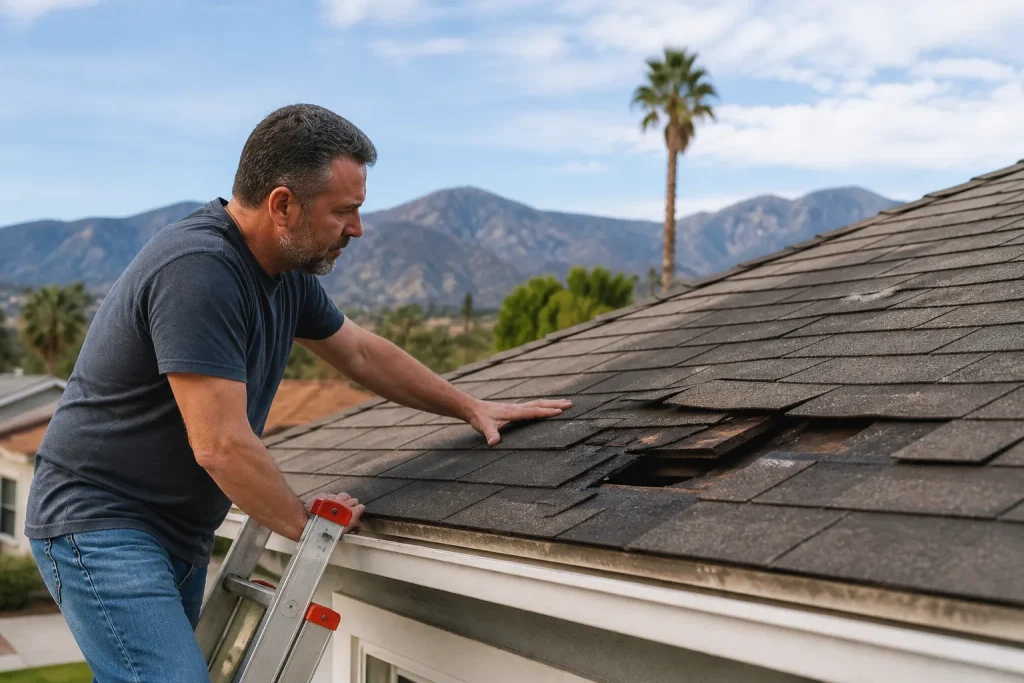
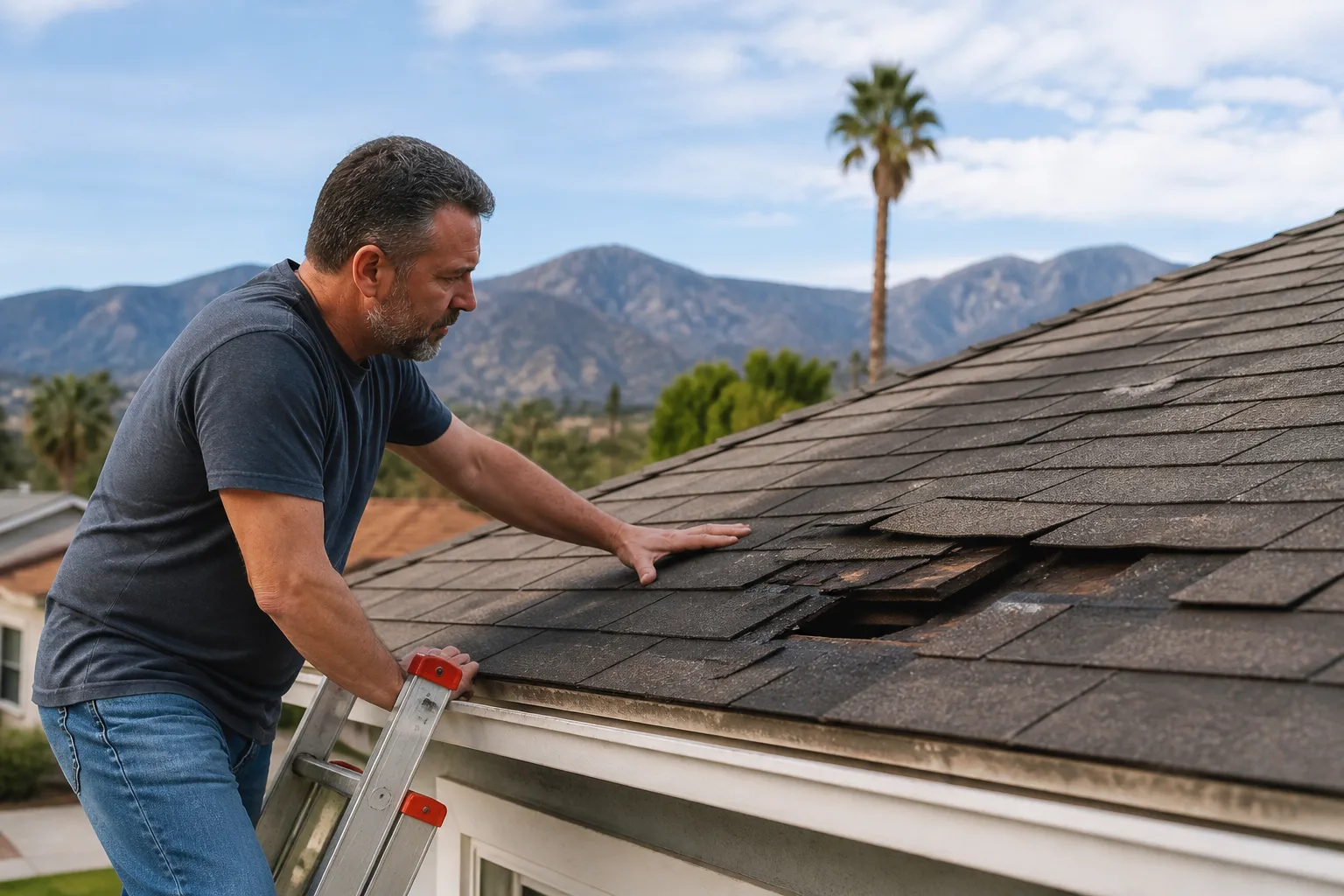
This is the part most Pomona homeowners don’t understand until they’re standing in their driveway watching a crew work. Emergency roof repair is almost always temporary stabilization, not a permanent fix. A crew comes out, throws a tarp over the damaged area, secures it with wood battens or sandbags, and stops the active water intrusion. That’s the job. The permanent roof repair gets scheduled after things dry out and a proper inspection maps the full scope.
So when you’re on the phone with any roofing company after a storm, ask one question: “Is this a tarp-up, or are you repairing the roof tonight?” Any honest contractor will tell you the tarp is the emergency response and the repair comes after inspection. If someone tells you they’ll rebuild a roof section at 11 p.m. in the rain, that’s a red flag, not a benefit. You cannot properly install underlayment and shingles on a wet deck. The sealant won’t cure. The nails won’t hold the way they should. Being direct about this saves you from paying for a rushed job that fails in the next storm.
We inspect first, every time. The sequence at Millstone Roofing is assessment, then documented findings, then a scoped repair. If you’re in Pomona and you want to understand what that looks like, our Roof Inspection in Pomona process starts with a full roof map, not a sales pitch. And when the inspection shows damage that can be repaired rather than replaced, that’s the path: Roof Repair in Pomona means fixing what’s actually broken, not selling you a roof you don’t need.
Storm-Chasers in Pomona: How to Spot Them Before You Sign
Pomona sits in a wind corridor. When Santa Ana events roll through and knock shingles loose across Phillips Ranch or down toward Lincoln Park, the storm-chasers show up within days. They go door to door with a ladder and a clipboard. The pitch is usually the same: “We’re in the neighborhood, we noticed your roof has storm damage, we can get you a free inspection today.”
Here’s what to watch for before you let anyone on your roof:
- Out-of-state license plates or no local address. A company serving Pomona should have a physical presence or verifiable service history in the Inland Empire or San Gabriel Valley. Ask which Pomona neighborhoods they’ve worked in recently. Storm-chasers can’t answer that.
- Pressure to sign a work authorization on the spot. Legitimate emergency stabilization is a one-page scope, not a contract for a full roof replacement. If you’re being asked to sign a replacement agreement before an adjuster has even looked at the damage, walk away.
- They offer to “handle your insurance claim” as part of the deal. A roofer can meet with your adjuster and provide findings, but anyone promising to “get your claim approved” is describing something they don’t control. Your insurance company decides coverage, not the contractor.
- Cash-only discount offers or “today only” pricing. We don’t run time-pressure pricing. A roof is a ten-to-thirty-year decision. Anyone rushing you into it isn’t doing you a favor.
In our experience, the homes that get taken advantage of in Pomona are the ones where the homeowner felt overwhelmed and signed something to make the problem go away. The 48 hours after a storm are exactly when you should be most skeptical, not least.
Insurance Documentation: What to Save, What to Photograph, and What Not to Throw Away
Your insurance adjuster is going to ask for a specific set of evidence. Most Pomona homeowners do this backwards: they clean up before documenting, or they document the wrong things, or they throw away the one shingle that would have proven the wind event happened. Here’s the complete evidence trail you want from hour one:
- Photographs of the roof from the ground before anything is moved or removed. Get shots from multiple angles. Zoom in on the damaged area. If there are shingles in the yard, photograph them where they landed before touching them.
- Keep any blown-off shingles or roofing debris. Put them in a trash bag and date the bag. The shingle’s tear pattern and nail placement help verify wind damage versus age-related failure. Do not throw them away even if they look useless.
- Interior photos of every water stain, bulge, or drip location. Use a measuring tape or a dollar bill in the photo for scale. Document the room it’s in, not just the ceiling. The adjuster needs to understand where water traveled.
- A written log with dates and times. When you first noticed the leak, when you tarped, when you called your insurer. Memory fades fast after a storm week. Write it down the day it happens.
- Receipts for any materials you buy: tarps, buckets, sandbags, the screwdriver. Most policies reimburse reasonable temporary mitigation costs.
One thing people in Pomona often miss: if you have a neighbor’s roof debris in your yard, photograph that too. It’s evidence of wind direction and severity across the neighborhood, and adjusters do consider it when assessing a claim. Similarly, if the city or county posts storm damage notices, save a screenshot.
Urgent vs. Can Wait: The Triage Framework We Use
Not every roof problem is an emergency. We get calls in Pomona about missing shingles after wind events, and in many cases the deck is still sealed, the underlayment held, and the house is dry. That’s a scheduled repair, not a 2 a.m. tarp job. Conversely, we get calls about a small drip in a garage that turns out to be a failed pipe boot that has been quietly rotting the deck sheathing for three seasons.
Here’s the framework we use to decide what rises to emergency priority:
- Active water penetration. Water is entering the living space right now. This is always urgent because every hour adds secondary damage: drywall, insulation, framing, flooring. Tarps go up immediately.
- Structural compromise. A tree branch has punched through the deck, or the roof is sagging in a way it wasn’t before. This is urgent and requires stabilizing before weather changes.
- Exposed deck or underlayment. Shingles are gone and you can see bare wood or felt. This can wait 48 to 72 hours if no rain is forecast, but it should be tarped or covered if Pomona weather is uncertain or Santa Ana winds are still active.
- Missing a few shingles with intact underlayment. This is a scheduled repair. Call to get on the calendar, but don’t pay emergency rates for a Monday appointment.
- Granule loss or cosmetic aging. Your roof is shedding granules into the gutter. This is an inspection priority to understand remaining life, not an emergency. It’s the kind of thing that shows up in a professional roof inspection and gets documented for a planned fix.
The difference matters because emergency pricing exists for a reason: crews mobilize at night, in weather, and pull people off scheduled work. You don’t want to pay that premium for something that could just as easily get done on Thursday at normal rates. A straight answer about which bucket your roof falls into is worth more than a fast truck.
What Pomona Weather Actually Does to Roofs
Pomona’s roof damage pattern is specific, and it’s worth understanding because it changes what you look for after a storm. The Santa Ana winds that sweep through the San Gabriel Valley don’t just push shingles up. They carry grit and small debris that scours the granule surface off shingles facing the wind. That’s a slow degradation that shows up as bare patches, especially on the west and north exposures in the hillside neighborhoods above the 10 freeway. Then the December-to-March rain events turn those bare patches into leaks.
We also see a lot of valley-specific thermal stress. Pomona summer roof surface temps run hot enough to cure the adhesive strip on shingles prematurely, which means a wind gust later has less to fight against. This is why material choice matters here. CertainTeed’s Northgate ClimateFlex shingles hold up well in high-wind-plus-heat combinations, and we’ve seen excellent performance from Tamko’s Titan XT line on Pomona homes with steep windward slopes. The right material for your roof, not the easiest one for us to stock, is the principle we work from. Some roofs here need a Class H impact-rated product like Boral’s stone-coated steel. Others need a solid architectural shingle from Owens Corning. The inspection tells us which direction to go, and we don’t get pushed toward any single brand because we work across seven of them, including GAF and Atlas.
One real job from over near Ganesha Hills last spring: the homeowner called us for a leak in a second-story bedroom after a rain week. We found a single shingle lifted at the ridge that had been letting water track down the deck for what looked like months. The deck was soft in a six-foot run. We replaced the deck section, re-underlayed, and re-shingled the affected slope. Total repair was around $2,400. If that had gone another season, the rafter tails would have needed work and the ceiling below would have come with it. Early triage matters. That’s the whole point.
The Bottom Line
When a roof emergency hits in Pomona, the first hour decides the size of the bill. Move water out of the house, photograph everything, keep the debris, and know whether you’re looking at a tarp-up or a repair. Be skeptical of anyone who shows up unsolicited after a storm. And remember that emergency roof repair is usually temporary stabilization, not a permanent fix.
If you’re in Pomona and dealing with roof damage, call us at (855) 341-6021. We’ll talk you through the first moves on the phone, then schedule an inspection that gives you documented findings before anyone recommends work. If a full replacement turns out to be the right call, our Roof Replacement in Pomona process gives you material options across manufacturer lines, not one default product. And for everything in between, the Roof Repair in Pomona path fixes what’s broken without overselling. That’s how we’d want it handled on our own roofs. Start with the Millstone Roofing home page if you want to see who you’re dealing with.
Frequently Asked Questions
Emergency tarping in Pomona typically runs between $250 and $500 depending on roof access, slope, and the size of the damaged area. The permanent repair after inspection usually falls in the $600 to $3,000 range for localized wind or water damage, with full roof replacement running higher. Call (855) 341-6021 for a free estimate based on what we find during inspection, not a phone guess.
Most standard homeowners policies in California cover sudden storm-related roof damage, including the cost of temporary tarping, minus your deductible. Age-related failure or lack of maintenance is generally not covered. We document everything in writing so your adjuster has a clear evidence trail. Call (855) 341-6021 and we’ll walk you through what to send them.
A properly secured tarp can hold for 30 to 90 days, but we schedule permanent repairs as soon as the roof dries and the inspection is complete, usually within one to three weeks in Pomona’s climate. The tarp is temporary mitigation, not a fix. Call (855) 341-6021 and we’ll give you a realistic timeline based on current schedule and the damage scope.
Only if the roof is low-slope, you can do it from an extension ladder without standing on the wet surface, and you have a second person steadying the ladder. Never walk a wet or steep roof, and never tarp near power lines. A fall costs more than any roof repair. If there’s any doubt, call (855) 341-6021 and we’ll coordinate a crew. Estimates are free.
Written by the team at Millstone Roofing, serving Pomona since 2011.
Need Roofing Help?
Call Millstone Roofing — licensed & insured, here with fast after-hours help in Pomona.
(855) 341-6021