
Last updated October 30, 2026
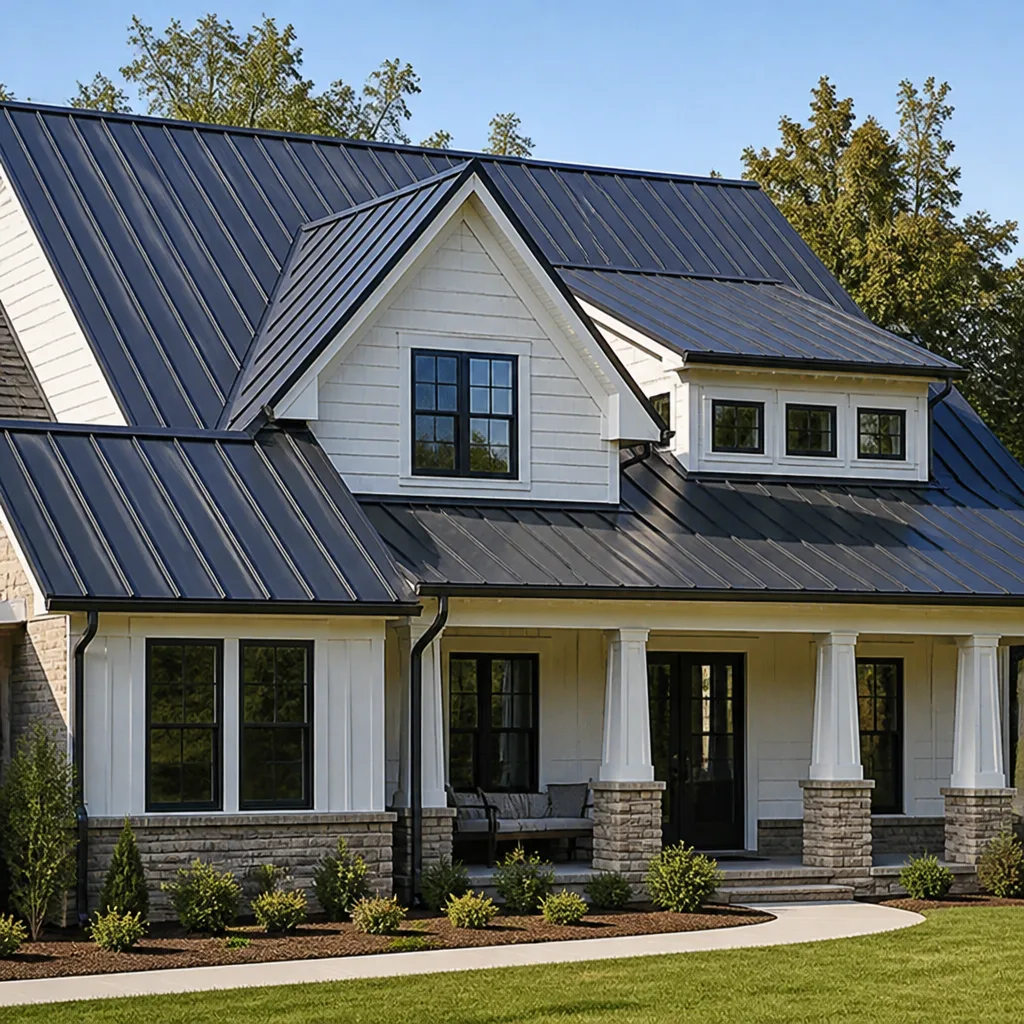 Metal roofing
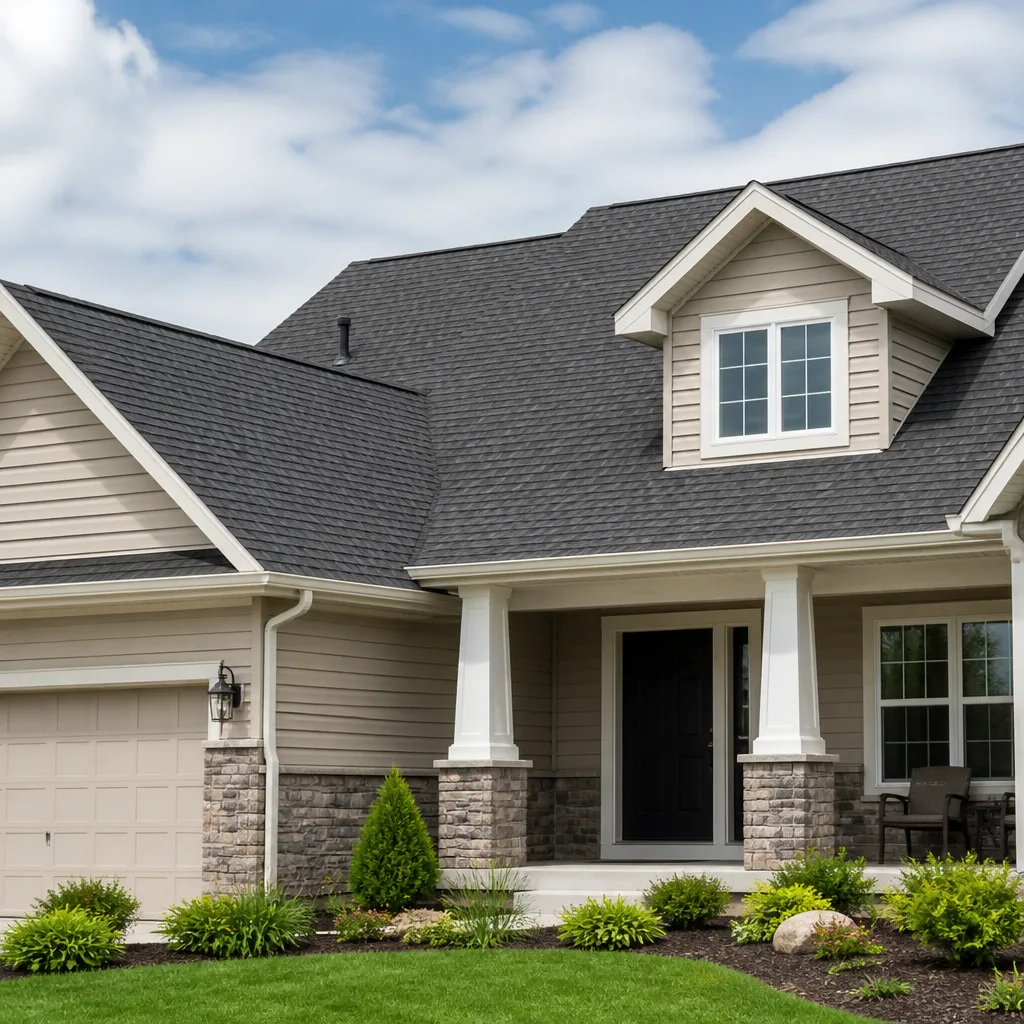
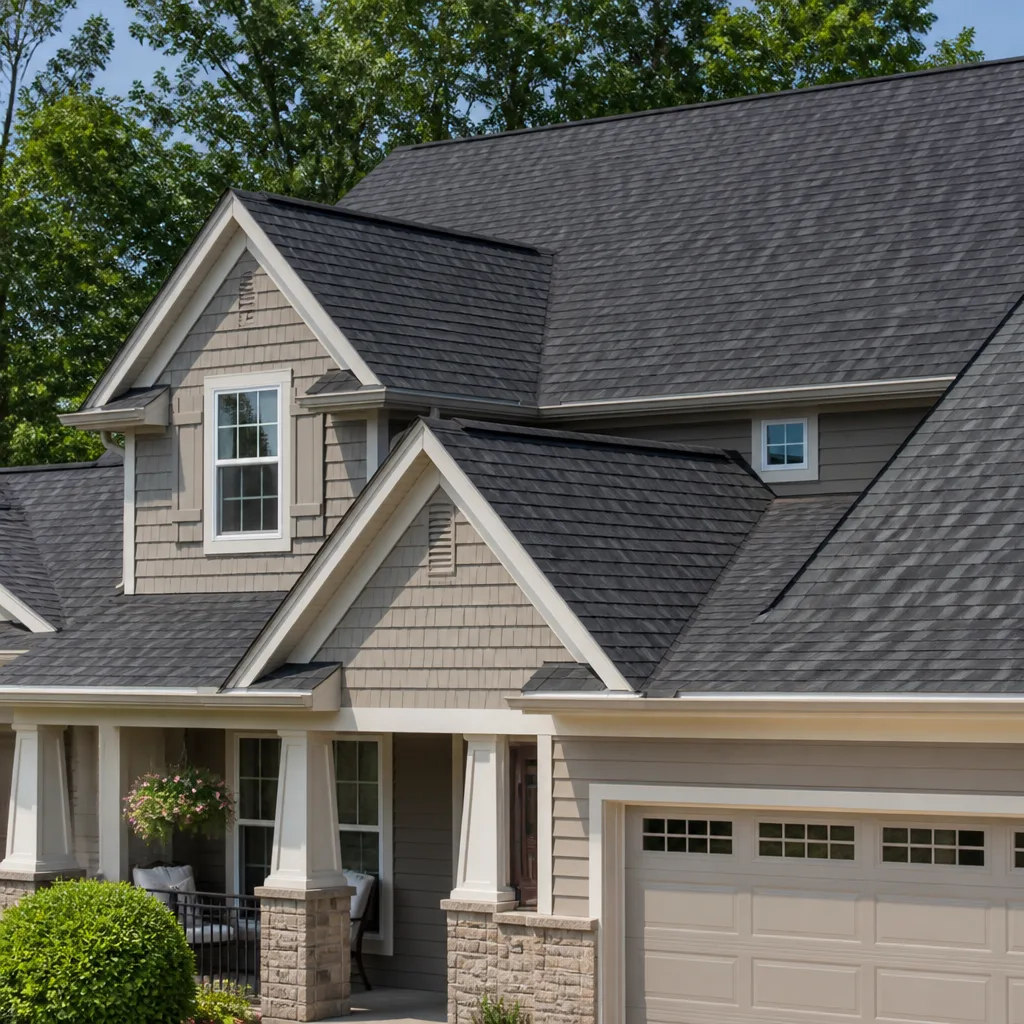 Architectural shingles
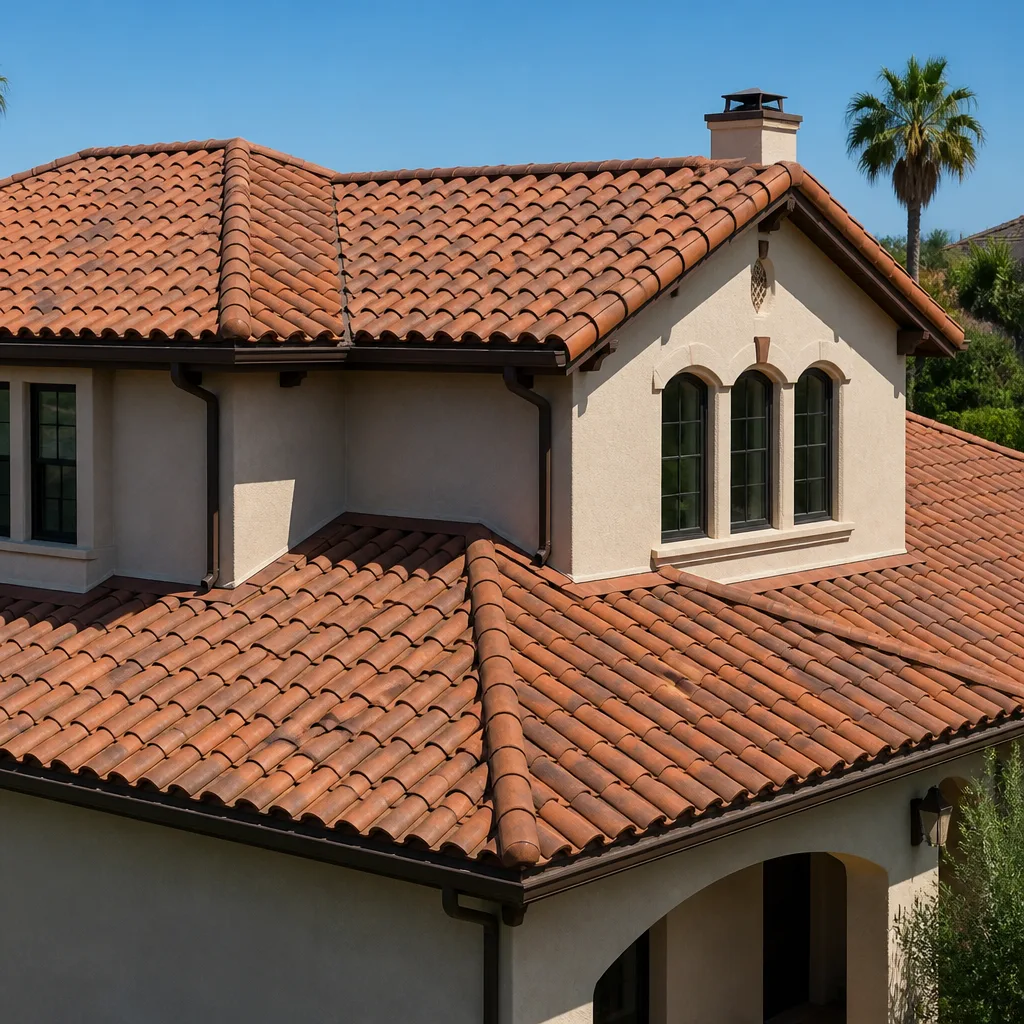 Tile roofing
 GAF
 Owens Corning
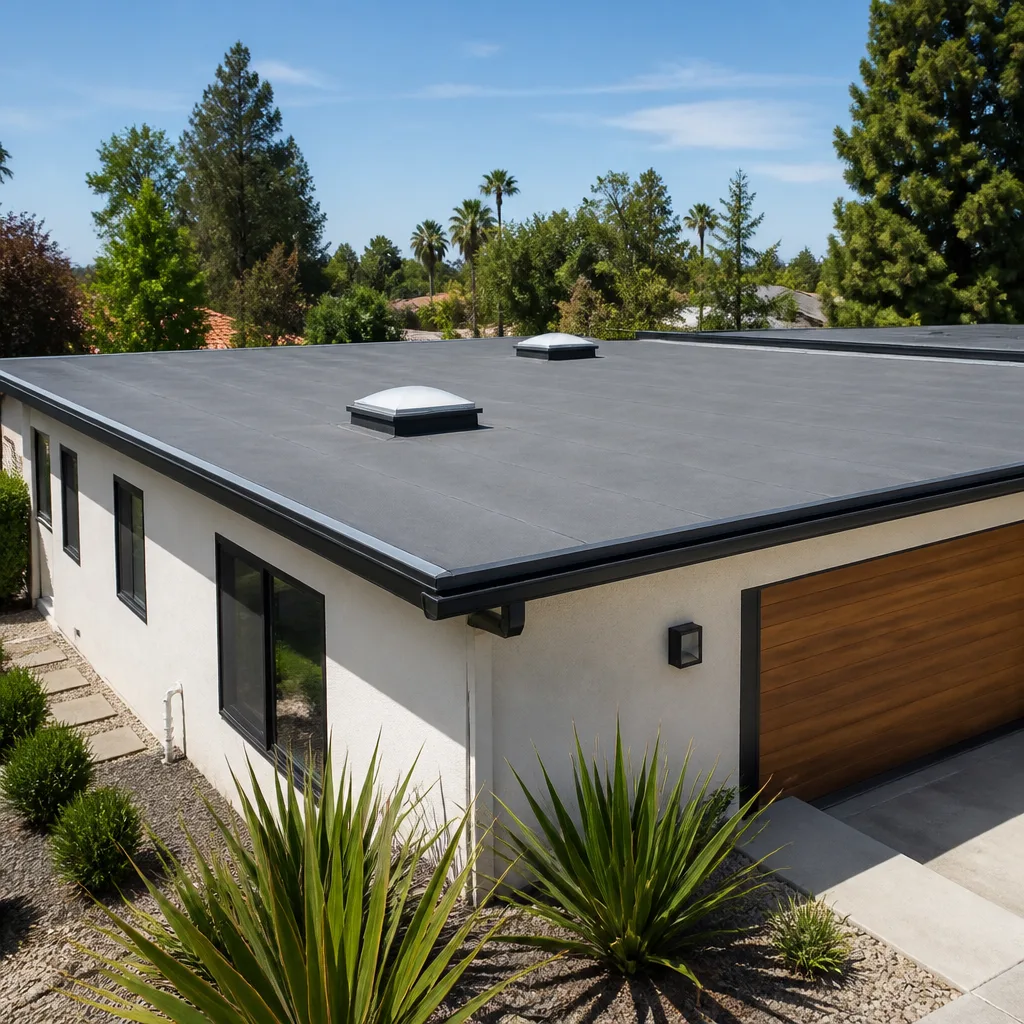 Flat & low-slope
Free roof inspection with deck photos before we talk money - GAF and Owens Corning certified installation
Roofing Cost Breakdown: The Pomona Homeowner’s Reference for 2026
A $9,500 roofing bid and a $14,000 roofing bid in Pomona can describe the exact same 1,400-square-foot house, and neither contractor is necessarily lying to you. The difference lives in four line items most homeowners never ask about: decking replacement policy, underlayment grade, disposal fees, and who carries the permit. This guide walks through every number on a Pomona roofing estimate so you can compare bids on substance, not sticker price, and points to our Roofing Warning Signs: A Pomona Homeowner’s Reference Guide for early detection.
Quick Answer
Roof replacement in Pomona averaged $6.80 to $9.40 per square foot in 2026 for architectural asphalt shingles, with most complete tear-off and reroof jobs landing between $9,500 and $15,500 for a typical 1,400-square-foot home. Material choice, roof pitch, decking condition, and underlayment grade drive the spread. Concrete tile runs higher, while TPO flat roofing prices by the square foot sit in a bracket all their own.
Styles & brands we work with
Table of Contents
- Material Costs Per Square: What Pomona Roofs Actually Use
- The Four Line Items That Make Bids Look Crazy Different
- Labor Cost Drivers Specific to Pomona
- Manufacturer Certifications and What They Do to the Price
- What a Fair Payment Schedule Looks Like
- Common Mistakes to Avoid
- When to Call a Professional
- Frequently Asked Questions
Material Costs Per Square: What Pomona Roofs Actually Use
Roofing prices are quoted in “squares.” One square equals 100 square feet of roof surface. A 1,400-square-foot single-story house typically translates to 14 to 18 squares once you account for pitch and overhangs. The material price per square is the first number to understand before you look at any bid.
In Pomona and the broader Inland Empire, we see material pricing settle into predictable ranges in 2026. Archite architectectural asphalt shingles, the most common reroof material in the Phillips Ranch and Lincoln Park neighborhoods, run $210 to $320 per square for materials only. Basic three-tab shingles, increasingly rare but still requested on rental properties, run $130 to $180 per square. Concrete tile, the roofing you see on scores of homes in Ganesha Hills and along North Towne Avenue, runs $400 to $700 per square depending on profile. Clay tile runs higher, from $650 to $950 per square. TPO membrane for flat or low-slope sections of industrial-adjacent residential properties runs $180 to $260 per square for the membrane alone.
The material cost per square is only the surface. What sits between the shingle and the decking matters just as much.
Underlayment: The Hidden Line Item That Changes Everything
Roofing felt used to be the default, and it is still on the bid sheets of budget contractors at $12 to $20 per square. Synthetic underlayment costs $25 to $40 per square. The gap sounds trivial until you consider that Pomona sits in a wildfire-adjacent zone and sees intense UV exposure through long, hot summers. Synthetic underlayment withstands tear-off foot traffic better, holds up longer during the gap between tear-off and shingle installation, and carries stronger manufacturer requirements in several of the brand systems we work with, including Owens Corning and CertainTeed.
A bid that lists “felt” without a grade or a brand is the first signal that the contractor is building the price backward from a target number. A bid that specifies a synthetic underlayment brand, thickness, and attachment method gives you comparability across estimates.
The Four Line Items That Make Bids Look Crazy Different
Two Pomona roofing bids for the same house can differ by $4,000 and both be honest. The divergence usually lives in four places most homeowners do not know to examine.
1. Decking Replacement Policy
Roof decking, the plywood or OSB beneath the shingles, does not reveal its condition until the old roof is stripped. A standard reroof bid includes replacement of a small number of damaged decking sheets, often two to four sheets, at a stated per-sheet price, typically $75 to $110 per sheet in Pomona. A lower bid may include zero sheets and state that replacement is an extra, meaning the final invoice climbs after the old roof comes off. When we inspect roofs, we look for telltale signs of decking failure, sagging between rafters, water stains in the attic, and nail pops that indicate the decking has lost its grip.
Ask every bidder to state the included decking allowance in writing. The difference between zero included sheets and four included sheets is roughly $300 to $450 at the time of acceptance, but it can become much larger if the old roof hides widespread rot. In Pomona, homes built in the 1950s and 1960s with original decking are common, especially in the Wilton Heights and Westmont areas. Those decks have been through decades of heat cycling.
2. Underlayment Grade
One bidder may quote synthetic underlayment at $35 per square. Another may quote 15-pound felt at $15 per square. On 16 squares, that is a $320 difference hidden inside a bid that reads “complete roof system.” The materials are not equivalent, and the cheaper bid is not a better deal. It is a different scope of work.
3. Disposal and Haul-Off Fees
Tearing off a roof in Pomona produces several tons of material that cannot go in a normal dumpster without a permit from the city. Most legitimate roofers include haul-off and disposal in the bid. Some line-item it separately, typically $400 to $800 for a single-family tear-off. When a bid seems suspiciously low, look for whether disposal is itemized or omitted. An omitted disposal line is a change order waiting to happen.
4. Permit Cost Responsibility
The City of Pomona requires a re-roof permit for most residential reroofs, and the permit fee typically runs between $250 and $600 depending on project valuation. See our Roofing Permits, Codes & Inspections in CA: What You Need to Know for full details. Some contractors include the permit fee in the bid. Others state that the homeowner is responsible. Neither approach is inherently dishonest, but the responsibility must be explicit. A contract that is silent on permits can become an argument on the day of installation, and the homeowner is the one left with the unpermitted roof.
Labor Cost Drivers Specific to Pomona
Labor for a reroof in Pomona runs $170 to $260 per square for a straightforward single-story tear-off and install. The number moves based on three factors that are visible to anyone who walks the property.
Roof Pitch
Walkable roofs, anything up to a 6:12 pitch, carry the lowest labor rate. Steeper roofs require safety harnesses, staging, and more careful material movement. A 8:12 or 9:12 pitch, common on the mid-century homes in the Lincoln Park and Ganesha Hills neighborhoods, can add 15% to 25% to the labor line. Two-story homes add the cost of carrying material to the roof line, often $1,800 to $3,000 in additional labor on a full reroof.
Existing Layers
California building code allows a second shingle layer over a single existing layer in limited circumstances, but the code does not allow a third layer under any circumstance. Homes in Pomona that still carry their original wood shake or have had multiple reroofs require a complete tear-off before replacement. Tear-off adds $50 to $90 per square in labor, including the labor to strip, load, and haul. Ask about the existing layer count during the inspection, not after the old roof is already open.
Access Difficulty
Mature landscaping, detached garages with narrow passage, and tight lot lines all complicate material staging. In Pomona’s older neighborhoods, especially around Garey Avenue and Holt, properties with mature oak and palm trees can force roofers to hand-carry shingles from the street. This adds hours to the job and shows up on the bid as an access or staging allowance. We flag access issues in the inspection report so the bid reflects reality from day one, not as a surprise when the crew arrives.
Manufacturer Certifications and What They Do to the Price
Manufacturer certifications add cost to a roofing installation, but the warranty they unlock changes the long-term ownership math. The relevant question is not whether a certification matters, but what doors it opens for your specific roof.
A certified installer is a contractor that has passed a manufacturer’s application review, including work history and documented installations, and is permitted to offer the manufacturer’s extended warranty. A non-certified installer can usually offer the manufacturer’s standard product warranty, but not the full system warranty that includes labor and workmanship. In Pomona, where roofs face sustained UV exposure and occasional heavy wind events from the Santa Ana pattern, extended warranties that cover wind uplift and blow-through carry real value.
The premium for a certified installation runs between 5% and 12% on the total job, depending on the system. For example, a roof system from Owens Corning installed by a certified contractor might run $500 to $1,200 more than the same architectural shingle installed outside the certification program. That premium buys a warranty backed by the manufacturer’s corporate entity rather than a contractor’s promise, which matters in an industry where contractors go out of business every year.
The honest approach to certification pricing is to ask the contractor two questions: which certification do you hold, and what exactly does the warranty cover? If the contractor cannot answer both in writing, the premium is not justified. Millstone Roofing recommends products from manufacturers including IKO, Atlas, and Tamko, depending on the roof’s pitch, exposure, and budget. The recommendation is driven by the roof, not by which brand we have in stock this week.
What a Fair Payment Schedule Looks Like
California law places limits on how much a contractor can collect before work begins. For home improvement projects, the limit is 10% of the project price or $1,000, whichever is less. Any Pomona contractor asking for more than 10% upfront is asking for something outside the legal limit, and that is not a paperwork formality. It is a red flag.
A fair payment schedule for a roofing project in Pomona typically works like this:
- Deposit at signing: 10% or $1,000 max, which reserves the crew and schedules the permit
- Progress payment at material delivery or completion of tear-off: 40% to 50%, paid after materials are on site and work has begun
- Final payment at completion: 40% to 50%, paid after the crew cleans up, the final walkthrough is complete, and the city inspection has passed
Note that the final payment is tied to inspection completion. In Pomona, final inspection requires the city inspector to sign off on the roofing system. A contractor who demands final payment before inspection passes is asking you to accept the risk the city will not approve the work. Hold the final payment until the inspector signs.
Pomona Roofing Market Context: Why Prices Are What They Are
Pomona’s roofing market does not behave like coastal Los Angeles or the high desert. The city sits inland, where summer temperatures routinely exceed 95 degrees and UV exposure accelerates shingle degradation. Roofs in Pomona wear out faster than roofs in coastal neighborhoods simply because the heat load is higher, which makes our Roofing Emergency Preparedness Guide for Pomona Homes especially relevant. This shortens the realistic lifespan of an architectural shingle roof from the manufacturer’s stated 30 years to a real-world 22 to 26 years in the Inland Empire.
The city’s housing stock also shapes the pricing. A large share of Pomona’s single-family homes were built between 1945 and 1975, which means original decking, older framing methods, and shallow attic spaces that make inspection and ventilation work more complicated. The combination of hot, dry summers, occasional heavy winter rain, and aging housing stock means the average Pomona roof replacement is not a simple overlay. It is a complete tear-off with decking repair, improved ventilation, and a modern underlayment system.
For readers who want a broader view of what a roof replacement entails in Pomona specifically, our Roof Replacement in Pomona page walks through the full process from tear-off to final inspection.
TPO and Flat Roof Segments: The Other Pomona Roof
Not every Pomona roof is pitched. The city has thousands of homes with flat or low-slope sections: patio covers, carports, second-story additions, and mid-century modern designs that intentionally used flat roof profiles. These segments require membrane systems, and the dominant membrane in the residential market is TPO.
TPO roofing in Pomona runs $180 to $260 per square for the membrane, plus insulation board at $50 to $90 per square and labor at $150 to $220 per square. A typical flat roof section of 500 square feet might cost $2,400 to $4,000 for a complete TPO replacement with insulation. The line items are different from shingle roofing, but the same four questions apply: what is the decking condition, what is the insulation thickness, who is responsible for the permit, and what is the warranty.
When we perform a Roof Inspection in Pomona, every flat section gets documented attention because leaks in low-slope systems often go unnoticed until ceiling damage appears inside the home.
See the difference
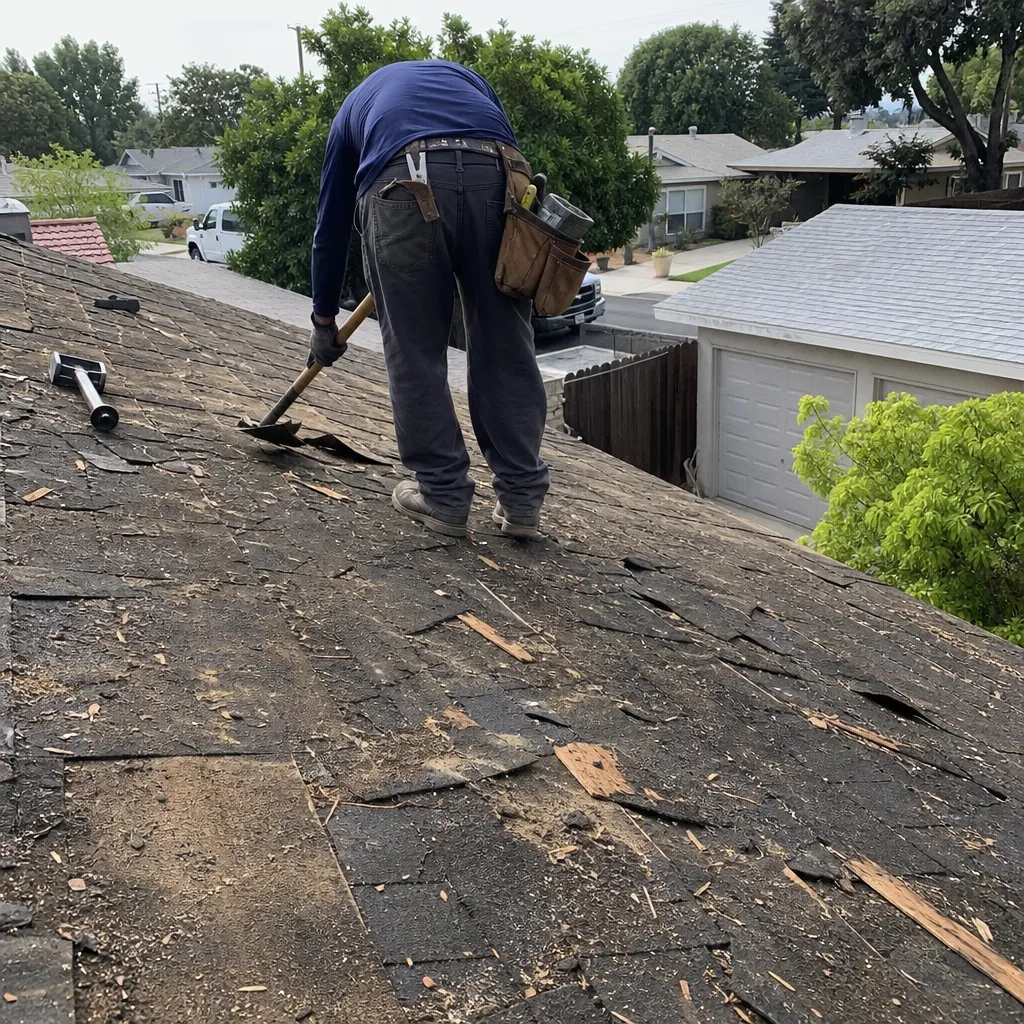 Before
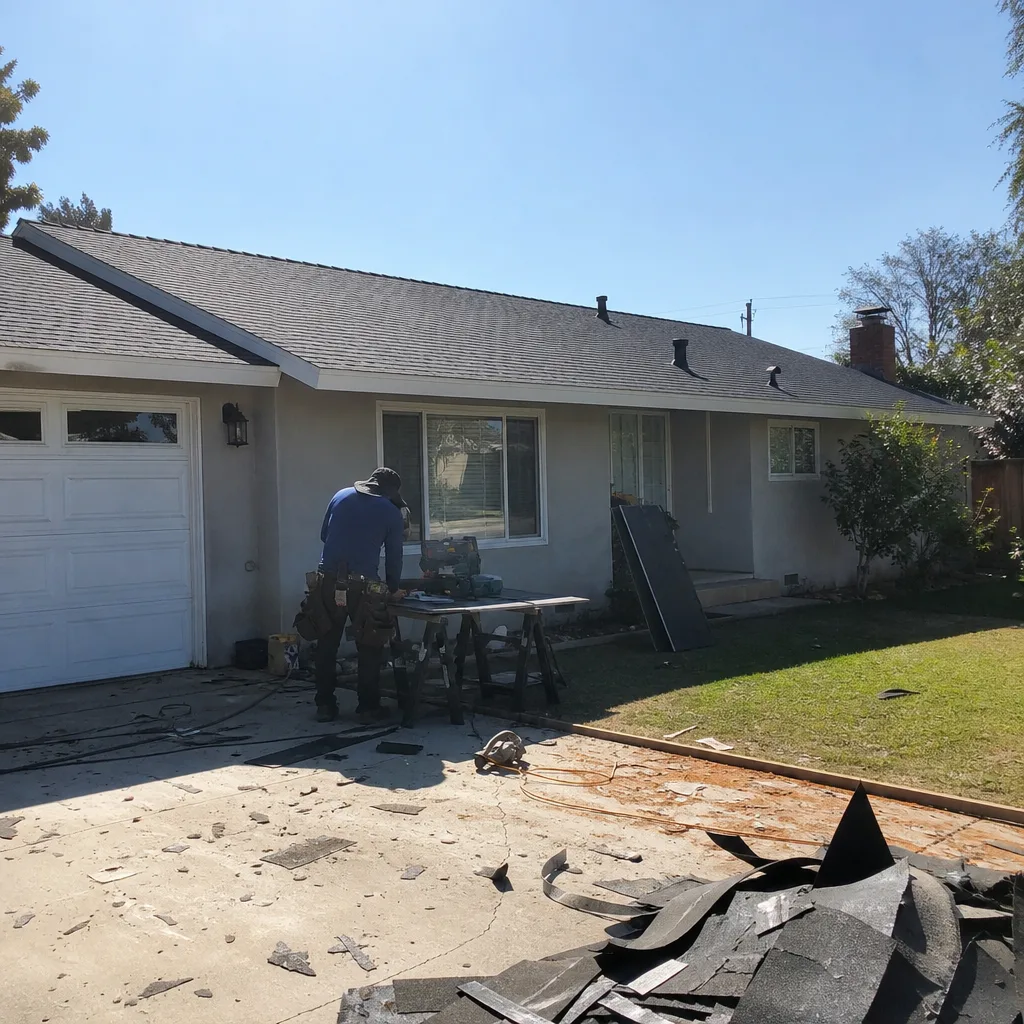 After
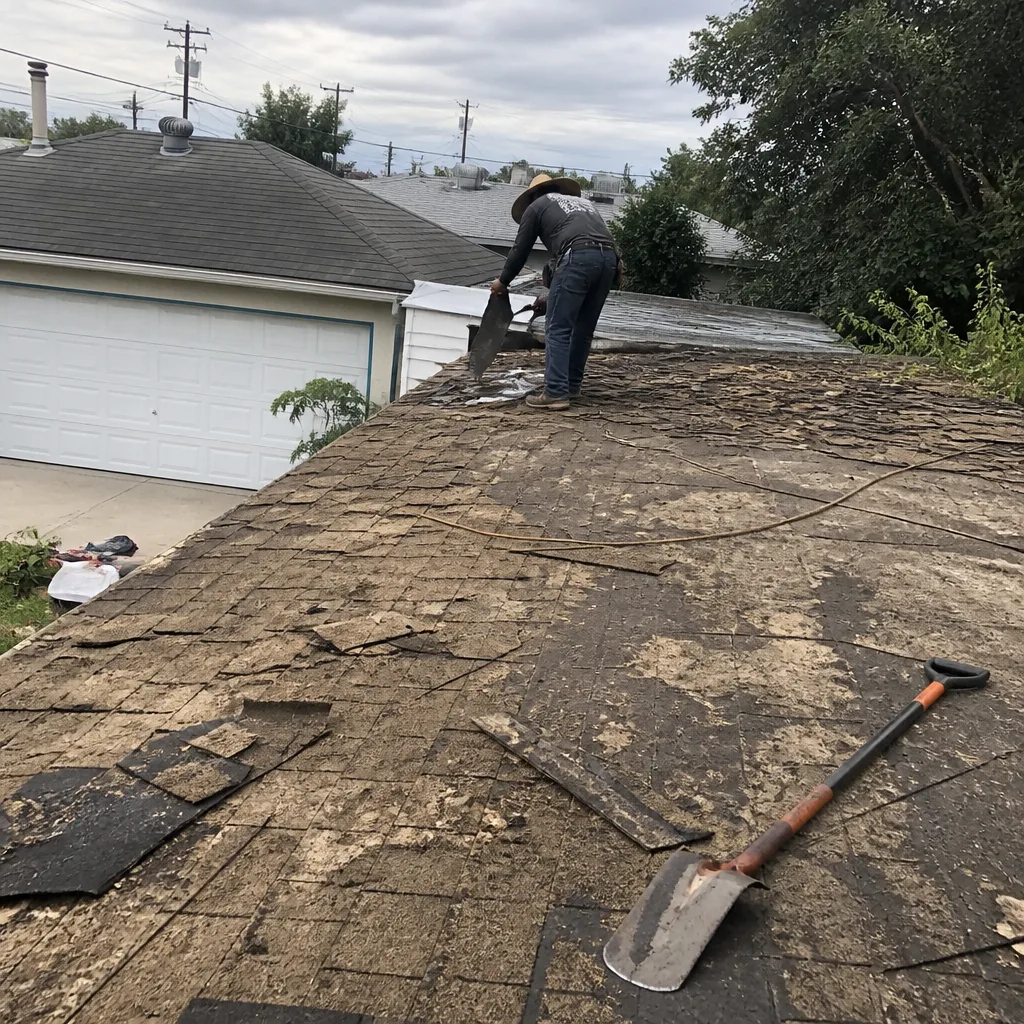 Before
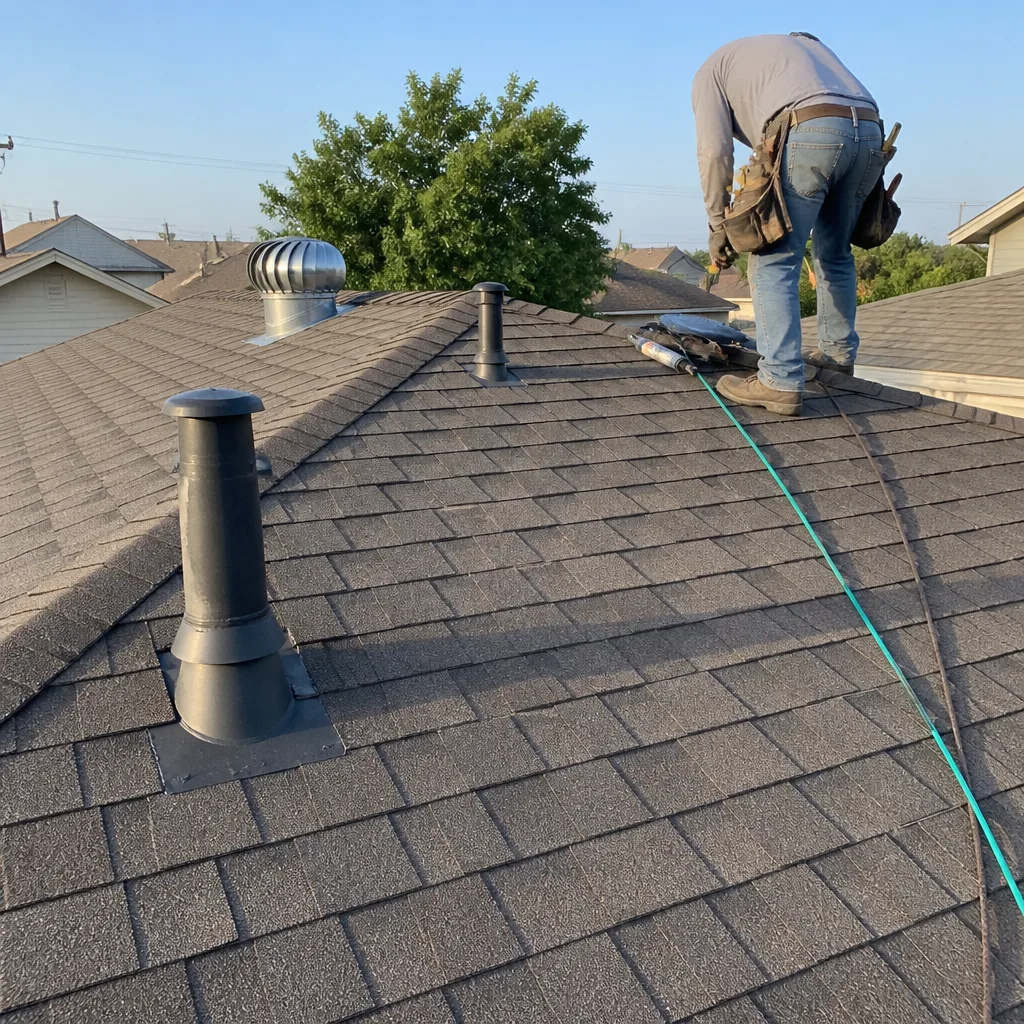 After
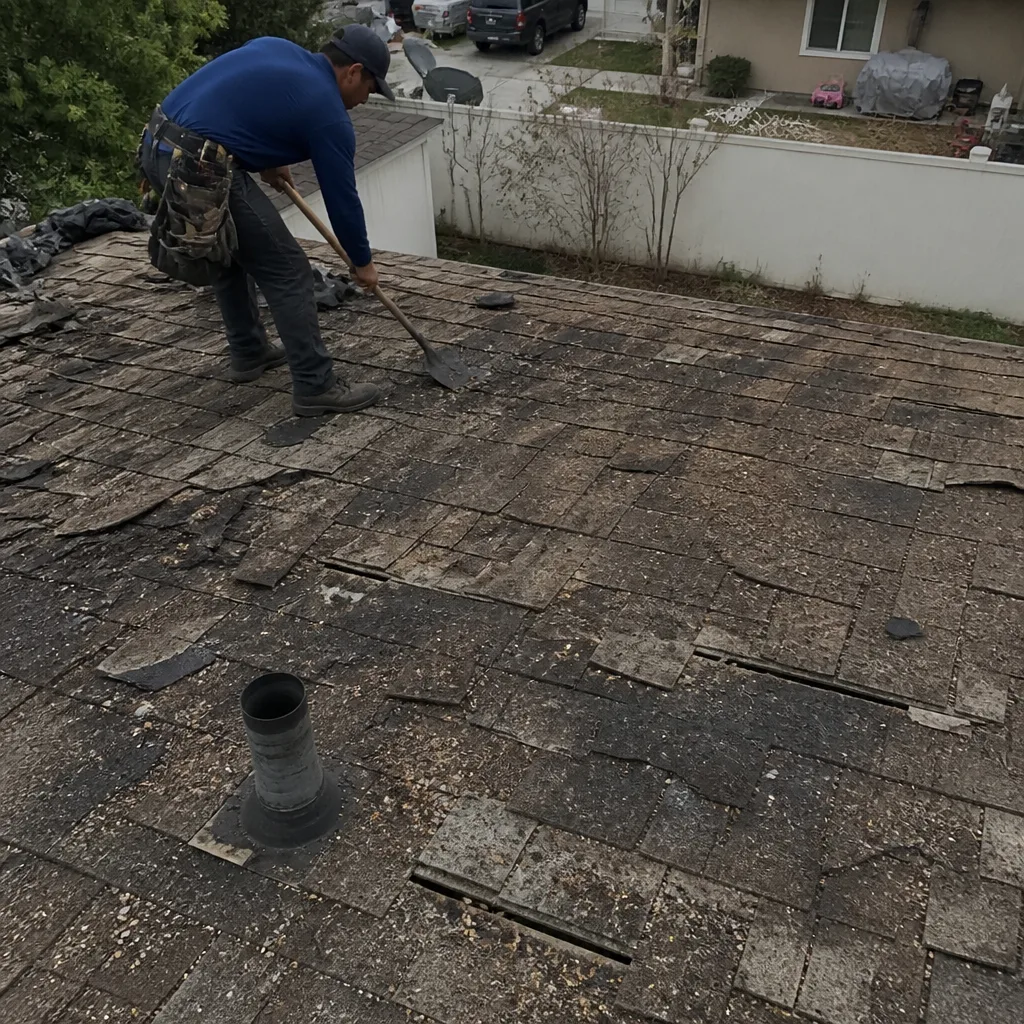 Before
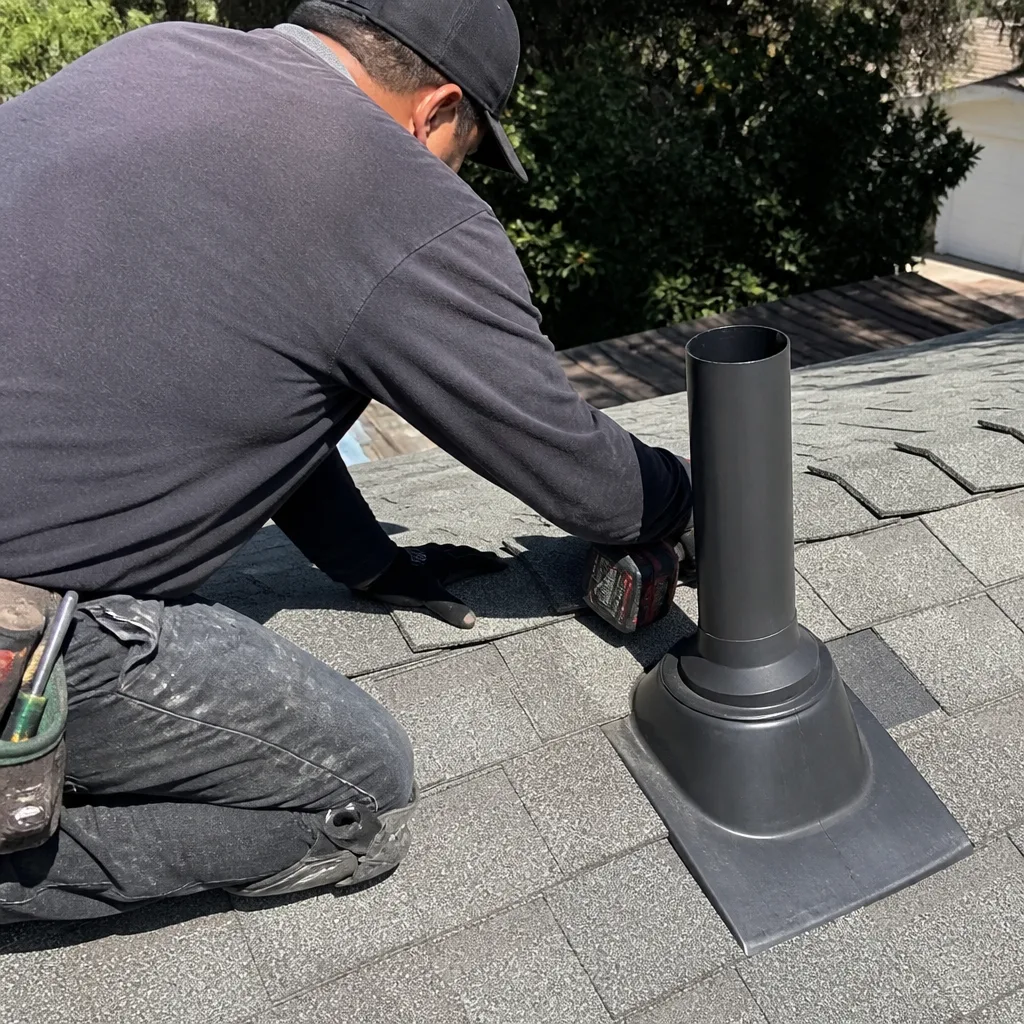 After
Repair Versus Replace: The Cheaper Roof Is Not Always the Cheaper Roof
Homeowners gravitate toward repair because the upfront number is smaller. That instinct is often correct, but it depends on the failure mode. A single missing shingle from wind damage is a repair. Flashing that has pulled away from a chimney is a repair. A roof with granular loss across its entire surface, sagging decking in three separate areas, and shingles that have reached the end of their service life is a roof that needs replacement, regardless of what the repair estimate says.
The decision hinges on four factors:
- Age of the current roof: asphalt shingles in Pomona often reach the end of practical life between 18 and 25 years. If your roof is within five years of that window, a repair buys limited time.
- Extent of existing damage: leaks in isolated spots suggest repair. Leaks that recur after repair suggest systemic failure.
- Decking condition: if inspection reveals widespread decking rot, the roofer cannot install new shingles over failing substrate regardless of repair versus replacement intent.
- Long-term ownership plans: if you are selling within two years, a documented repair may hold you over. If you are staying ten years, replacement is often the stronger financial decision.
The inspection is the only way to make this call on facts rather than feeling. Our Roof Repair in Pomona page explains what we can repair and what we will not, and the distinction is always documented in writing.
How to Read a Pomona Roofing Bid: A Step-by-Step Walkthrough
A roofing bid should not be a single number. It should be a line-item document that can be compared against the next bid without a spreadsheet degree. Here is how to read one.
- 1
Check the scope of work paragraph. The bid should describe exactly what is being removed, what is being installed, and what the finished roof will look like. Vague language is a warning sign.
- 2
Verify the material specifications. The bid should name the shingle brand, the shingle line, the underlayment type and brand, and the ventilation system. “Comparable shingle” is not a specification.
- 3
Confirm the decking replacement allowance. The bid should state how many sheets of decking are included in the price, and the per-sheet charge for additional sheets.
- 4
Check whether the permit fee is line-itemed. If it is not mentioned, ask. Better yet, ask in writing.
- 5
Confirm disposal and haul-off. The bid should state whether the old roofing material is included in the price or billed separately.
- 6
Verify the payment schedule. The first payment should be 10% or ol,000 maximum, whichever is less, per California law.
- 7
Check the warranty language. The bid should state what warranty applies, who backs it, and for how long. A contractor warranty and a manufacturer warranty are different documents with different rights.
The majority of confusing Pomona roofing bids become clear once these seven points are checked. The confusion is not created by dishonest contractors as often as it is created by missing details, and a bid that is missing details is not a functioning bid.
What Pomona Homeowners Should Know About Insurance Claims
Some Pomona homeowners replace roofs through insurance claims after wind or storm damage. The process is different from a retail replacement, and the pricing works differently. When an insurance claim is involved, the insurer sets the scope and the pricing based on a software estimate, and the homeowner selects a contractor who can work within that scope.
If you are considering an insurance claim for roof damage in Pomona, get a professional inspection first. The inspector’s documented findings become evidence for the claim, and a documented claim is more likely to be approved than a phone call that says “my roof is old.” Note that insurance companies cover sudden and accidental damage, not age-related wear. A roof that has simply reached the end of its service life is a homeowner expense, not an insurance claim.
Common Mistakes to Avoid
- Comparing bids by total price alone. Two Pomona roofers can bid the same house thousands of dollars apart and both be offering different things. Compare line items, not totals.
- Not asking about the decking allowance. The number of included decking sheets is the biggest hidden variable in a Pomona reroof. A low bid with no decking allowance is a higher final bill.
- Skating on the underlayment. Underlayment is the waterproofing layer that protects the decking if the shingles fail. Choosing felt to save $300 on a roof that will last 25 years is a false economy.
- Paying more than 10% upfront. California law caps the deposit at 10% or $1,000. Contractors who ignore this limit are ignoring other rules too.
- Overlooking the permit. An unpermitted roof can complicate a future home sale in Pomona. If the bid does not mention permits, ask about it in writing.
- Trusting a warranty without reading it. Manufacturer warranties and contractor warranties are different. A “lifetime warranty” that is actually a pro-rated material-only warranty is not the protection it sounds like.
- Skipping the inspection. A roof can look fine from the street and be failing underneath. The inspection is where you learn what the roof actually needs. At Millstone Roofing, the inspection comes first.
When to Call a Professional
Roof work in Pomona is not a project where trial and error is acceptable. The Millstone Roofing home page details our full process, but the short version is this: if your roof is leaking, if you are seeing granular loss in your gutters, if you see daylight through the attic boards, or if you simply do not know the age of your roof, it is time for a professional inspection. Roofs protect everything underneath them, and small failures become structural failures when they are ignored. Roof Inspection in Pomona is the starting point for every repair or replacement we scope. Millstone Roofing offers free estimates in Pomona – call (855) 341-6021 to schedule yours.
Frequently Asked Questions
A complete tear-off and reroof for a typical 1,400-square-foot Pomona home runs $9,500 to $15,500, or $6.80 to $9.40 per square foot, for architectural asphalt shingles. The final number depends on the material, roof pitch, decking condition, and underlayment grade. Call (855) 341-6021 for an exact quote on your roof.
Bids vary because contractors bundle decking replacement, underlayment grade, disposal fees, and permit responsibility differently. Identical-scope jobs can look entirely different when those four line items are not aligned. Ask for a line-item bid and compare those items side by side.
California law caps the deposit for home improvement projects at 10% of the project price or $1,000, whichever is less. Any Pomona contractor asking for more than that upfront is operating outside the legal limit, and that is a signal to walk away.
A repair is enough when the failure is isolated: one damaged shingle, one failed flashing point, one small leak. A replacement is warranted when the failure is systemic: widespread granular loss, decking rot in multiple locations, or a roof that has reached the end of its service life. An inspection answers the question with documented evidence.
Yes, certified installations typically run 5% to 12% more, which translates to $500 to $1,200 on an average Pomona reroof. What you buy is access to the manufacturer’s extended warranty, which includes labor and workmanship coverage that a standard product warranty does not include.
Most residential reroofs in Pomona require a city permit, and the permit fee typically runs $250 to $600. The contractor should state in writing who is responsible for pulling the permit and paying the fee before the project starts. Call (855) 341-6021 to discuss your project and get a written answer.
The Bottom Line
Pomona roofing bids are confusing because they bundle costs differently, not because pricing is arbitrary. The difference between a $9,500 bid and a $14,000 bid is usually found in decking allowance, underlayment grade, disposal fees, and permit responsibility, not in the shingles themselves. Once you understand those four line items, you can compare bids on substance, which is the only way to evaluate roofing work honestly. The inspection is the first step for any Pomona roof project, and every recommendation should be backed by documented findings. Millstone Roofing works with industry-leading manufacturers including Owens Corning, IKO, Atlas, and Tamko, and every recommendation starts with what the roof needs rather than what is easiest to stock. For more guides & resources, explore our blog, or call (855) 341-6021 to schedule your free estimate.
Written by the team at Millstone Roofing, serving Pomona since 2011.