
Last updated October 30, 2026
 Metal roofing
 Architectural shingles
 Tile roofing
 GAF
 Owens Corning
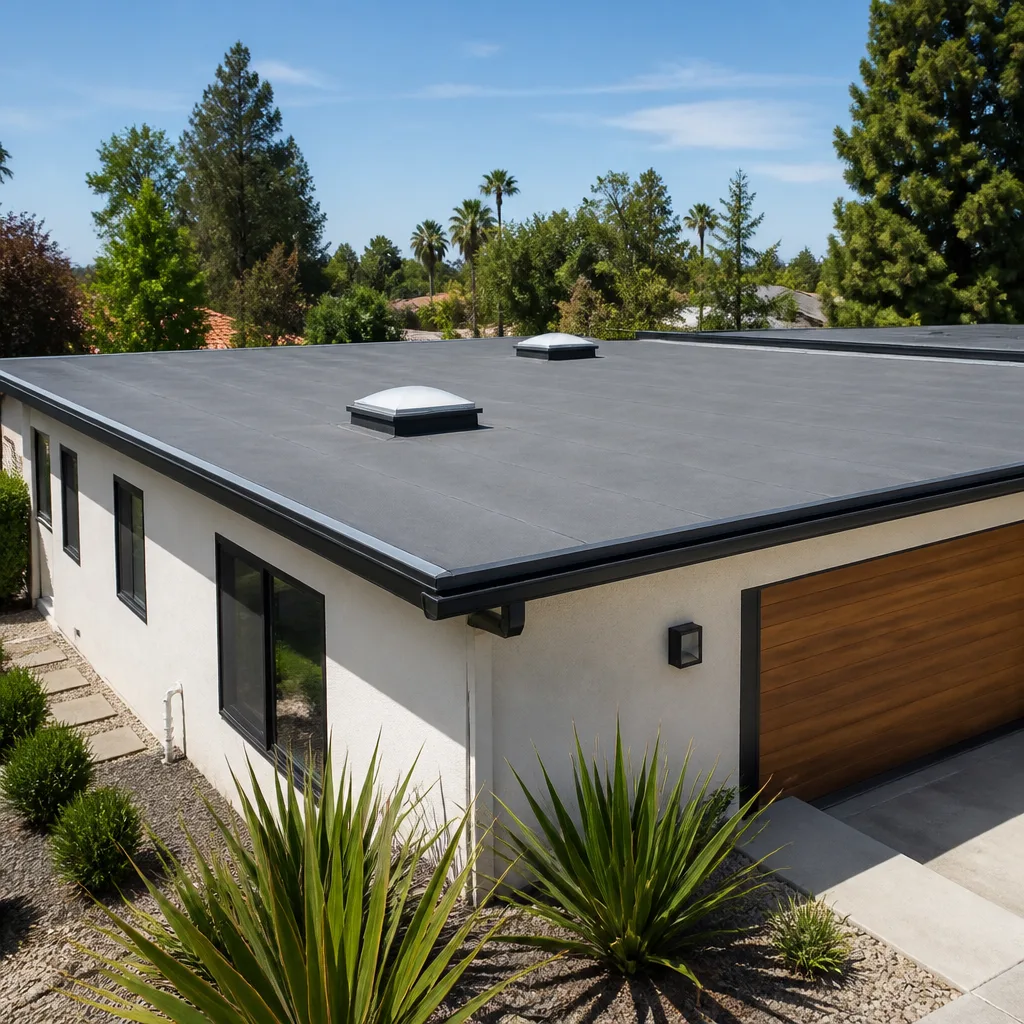 Flat & low-slope
Free roof inspection with deck photos before we talk money - GAF and Owens Corning certified installation
Roofing Warning Signs: A Pomona Homeowner’s Reference Guide
Granules in your gutter are one of the most Googled roofing warning signs, yet almost no guide explains that granule loss from a 5-year-old shingle and granule loss from a 22-year-old shingle point to completely different problems with completely different solutions. The first is often a manufacturing defect covered by warranty. The second is the natural end of a shingle’s service life. This reference guide pairs every major Pomona roofing warning sign with a plain-language explanation of what’s failing underneath, so you can tell whether you’re looking at a $300 repair or a $15,000 replacement conversation before you ever pick up the phone. For a deeper dive into local conditions, see our Complete Guide to Roofing in Pomona.
Quick Answer
The most common roofing warning signs in Pomona are granule loss in gutters, interior water stains on ceilings or walls, lifted or missing shingles, cracked concrete tile, and sagging roof decking. Each sign maps to a specific mechanical failure: granule loss indicates shingle oxidation or age, water stains indicate an active leak path, lifted shingles indicate failing sealant or nail withdrawal, cracked tile indicates impact or thermal stress, and sagging decking indicates structural moisture damage. What matters most is distinguishing urgent signs (active leaks, visible deck deflection) from signs that allow scheduled repair on your timeline.
Styles & brands we work with
Table of Contents
- Granule Loss: What It Actually Means
- Interior Water Stains: Reading the Leak Map
- Lifted Shingles: Sealant, Nails, and Wind Uplift
- Cracked Tile: Pomona’s Thermal Cycle Problem
- Sagging Decking: When Moisture Has Already Won
- Attic Warning Signs Most Homeowners Miss
- How to Photograph and Document a Warning Sign
- The Compounding Effect: What Delay Costs in Pomona
Granule Loss: What It Actually Means
Asphalt shingles shed granules for two very different reasons, and knowing which one you’re looking at changes everything about your next step. Granules are crushed stone embedded in the asphalt layer. They block UV radiation, which is the primary agent that breaks down the asphalt’s oils and causes the shingle to become brittle. When granules go missing, the asphalt is exposed and aging accelerates.
The age question matters first. A shingle that has been on a Pomona roof for five years and is already collecting granules in the gutter at visible volume is almost certainly defective. Every major manufacturer we work with, including GAF, CertainTeed, and Owens Corning, has warranty provisions for abnormal granule loss. Our Choosing the Right Roofing Brand: A Buyer’s Guide for Pomona explains how these warranties compare in practice. A shingle that has been up for twenty-plus years and is shedding granules is simply done with its service life. The asphalt has oxidized to the point where it can no longer hold the granule embedment. That roof is not failing early; it’s finishing on schedule.
What you can check yourself: Run your hand along the gutter line after the next rain. If the granules you collect are a uniform color matching your shingles and appear in a consistent layer, that’s surface loss. If you see granules mixed with visible asphalt flecks or the shingle edges look shiny and black, the shingle body itself is degrading. The first is normal for an aging roof; the second is a sign the roof has entered its final years regardless of its calendar age.
In Pomona, our dry heat accelerates oxidation in ways coastal homeowners don’t experience. The San Gabriel Valley’s summer temperatures routinely push attic temperatures above 140 degrees, which cooks shingles from both sides. That’s why we inspect granule loss differently depending on which Pomona neighborhood the home is in, as detailed in our Seasonal Roofing Care for Pomona: Year-Round Homeowner’s Guide. A Phillips Ranch home with heavy tree cover ages differently than a Westmont home with full afternoon exposure. The warning sign is the same. The cause and the timeline are not.
Interior Water Stains: Reading the Leak Map
A ceiling stain is not the leak. It’s the leak’s exit point. Water enters the roof somewhere else, travels along a rafter or the decking, then drops at the first penetration or seam it finds. That’s why the stain you see is often ten or more feet away from the actual breach in the roofing material. Treating the stain without finding the entry point is the most common and most expensive mistake we see Pomona homeowners make.
Water stains fall into three general categories, and each points to a different repair scope.
- Small, isolated stain near a pipe boot, vent, or chimney: This is usually a flashing failure. Flashing is the metal or rubber collar that seals the transition between roofing material and a penetration. When it fails, the repair is typically targeted and straightforward. This is the good news scenario: a focused flashing repair usually resolves it for a few hundred dollars.
- Linear stain following a rafter or truss line: This indicates water is running along a framing member after entering at a higher point. The entry could be a cracked tile, a missing shingle, or a failed valley seam. Linear stains require tracing the water path back to its source, which is exactly what a professional Roof Inspection in Pomona is designed to do.
- Large, spreading stain with no clear edge: This is the sign that water has been entering for months, possibly longer. The decking beneath the roofing material is likely saturated, and the stain you see is just the tip of the damage. This scenario usually triggers a decking replacement, not just a roof surface repair.
Pomona’s rainy season is compressed into a few winter months. That compression is actually useful for diagnosis. If a stain appears during or immediately after a storm and then dries out for the next nine months, you have a direct leak path. If the stain persists or grows between storms, you have trapped moisture in the decking or insulation, which is a more serious condition.
Lifted Shingles: Sealant, Nails, and Wind Uplift
A lifted shingle looks alarming, and sometimes it should. But most lifted shingles are not detached shingles. They’re still nailed down; the sealant strip that bonds the shingle to the course below has simply released. The sealant is an asphalt-based adhesive that activates in heat. When it fails, the shingle lifts at its leading edge and flutters in wind, but remains secured at the nail line. That distinction matters because the repair is different.
Sealant release without nail failure: The shingle can often be re-sealed with a proper asphalt adhesive applied at the sealant line. This is a minor repair. We’ve done this on Pomona homes where a particularly hot stretch followed by Santa Ana winds broke the seal on an otherwise healthy shingle field. The roof wasn’t failing; it just needed re-bonding.
Nail withdrawal or nail pop: If the shingle is lifting because the fasteners have backed out or the decking is no longer holding them, that’s a different conversation. Nails back out when the decking beneath them has softened from moisture or when the original installation used fasteners too short for the material. In this case, re-sealing won’t hold. The shingle requires re-fastening into solid decking, and if the decking is compromised, the repair extends below the surface.
Pomona sits in a wind corridor that runs through the eastern San Gabriel Valley. Santa Ana events regularly produce gusts over 50 miles per hour in exposed neighborhoods like Ganesha Hills and the areas east of the 71. If you have several lifted shingles after a wind event, the issue is usually systemic sealant failure or a fastener pattern that wasn’t adequate for the wind uplift zone. One lifted shingle is often incidental. Six lifted shingles is a pattern that deserves a professional assessment before the next wind event turns lifts into losses.
Cracked Tile: Pomona’s Thermal Cycle Problem
Concrete tile roofs are common across Pomona, and they present a set of warning signs that differ from shingle roofs in one important way: the tile itself is not the waterproof layer. Tile is a water-shedding surface. The waterproofing lives beneath it in the underlayment. So a cracked tile is not by itself a leak. But every cracked tile reduces the life of the underlayment beneath it, and enough cracked tiles over enough time means the underlayment is now doing the job it was never designed to do alone.
Tile cracks in Pomona come from three main causes, and we see all three regularly.
- Thermal stress: Pomona’s temperature swings between summer afternoons and winter nights are extreme by Southern California standards. Concrete tile expands and contracts with temperature change. Over decades, this cycle creates hairline fractures that eventually widen into visible splits. This is the most common cause of cracked tile in our market, and it’s why we inspect tile roofs differently in Pomona than we would in a coastal climate with milder temperature ranges.
- Foot traffic: Someone walked on the roof. Contractors, satellite installers, pest control. Tile is designed to be walked on only at specific points, and only by people who know where those points are. A tile cracked at the center of a panel is usually a foot-traffic crack. A tile cracked at an edge is more likely thermal or impact.
- Impact: Trees, hail (rare but not unheard of in Pomona’s higher elevations), or debris from construction. Impact cracks are usually localized. If you have one cracked tile and no other warning signs, replace it. If you have cracked tiles spread across multiple roof planes, that’s thermal or traffic, and the problem is broader than one tile.
The pragmatic rule: a few isolated cracked tiles should be replaced promptly to protect the underlayment. Widespread cracking across a tile field that has been up for thirty-plus years is a signal that the roof system has reached the point where underlayment inspection, and likely replacement, is the honest recommendation. We inspect first, document what we find, and then tell you whether we’re repairing tiles or talking about a fuller Roof Replacement in Pomona.
Sagging Decking: When Moisture Has Already Won
This is the warning sign that separates a roofing conversation from a structural conversation. Sagging decking means the plywood or OSB beneath your roofing material has absorbed enough moisture to lose its structural integrity. It’s visibly deflecting between rafters. When you see this from the attic, you are no longer looking at a roofing surface problem. You’re looking at a damaged structural component that must be replaced before any new roofing material goes down.
Decking fails for one primary reason: prolonged exposure to moisture that never fully dried. A slow flashing leak that drips into the decking for two years will saturate the wood. The wood swells, the fasteners lose their grip, and the panel begins to sag under its own weight. In Pomona, the long dry season can mask this problem because the decking may dry on the surface while remaining compromised internally. Homeowners go nine months without a leak, assume the problem is gone, and then the first winter storm reveals that the decking has been quietly deteriorating the whole time.
How to spot it from inside the attic: Run a flashlight along the underside of the decking between the rafters. You’re looking for any panel that is not laying flat on the rafter tops. A healthy deck sits tight against the framing. A failing deck shows visible gaps between the panel and the rafter, or a visible bowing in the center of the panel. Press on it gently with a gloved hand. If it flexes more than a fraction of an inch, it’s compromised.
This is not a repair scenario. When decking is sagging, the only correct fix is removing the roofing material in that area, cutting out the damaged decking, replacing it with new panel, and re-roofing over sound structure. The cost is meaningful, but the alternative is a roof that can no longer be counted on to hold fasteners or support weight. We recommend treating any visible decking deflection as an urgent matter, because the damage only travels in one direction.
Attic Warning Signs Most Homeowners Miss
Most Pomona homeowners never go into their attic. It’s hot in summer, dusty year-round, and easy to ignore. But the attic is where roofing problems announce themselves long before they show up on your ceiling. Three specific attic warning signs deserve attention, and none of them require special skills to identify.
Daylight through the decking
On a sunny day, turn off the attic light and let your eyes adjust. If you can see pinpoints or slivers of daylight coming through the decking, that means there are gaps in your roof system. On a shingle roof, gaps mean missing shingles or shifted underlayment. On a tile roof, gaps mean cracked or displaced tile above a compromised underlayment. Daylight is the most direct warning sign there is: if light can get through, water can get through. Mark those spots and get them addressed before the next rain.
Insulation compression from moisture
Fiberglass and cellulose insulation lose their R-value when they get wet. Water running onto attic insulation compresses it, and compressed insulation does not recover. If you notice areas of insulation that look flattened, matted, or darker than the surrounding material, that’s moisture history. The water came from somewhere, and if the source hasn’t been fixed, it will return. In Pomona’s dry climate, wet insulation can dry out and still look compromised months later. The damage record is written in the matting.
Rafter staining patterns
Wood rafters that have been wet repeatedly develop dark stains that follow the water’s path. These stains are different from the uniform aging color of old lumber. They show up as streaks or blotches that trace a flow line. A stained rafter near an eave suggests water entering at the eave line. A stained rafter high on the roof plane suggests water entering at a ridge or field penetration. The stain is a map, and reading it correctly is half of finding the leak.
How to Photograph and Document a Warning Sign
The quality of a remote assessment depends entirely on the quality of the documentation you provide. A good photograph can save an unnecessary visit; a bad one can send a contractor looking at the wrong thing entirely. This is especially true in Pomona, where many roofing issues are first reported from the ground after a wind event or from the attic after a stain appears.
The right way to document a roofing warning sign:
- Wide shot first: Take a photo that shows the entire roof plane or the entire attic area where the issue lives. This gives geographic context. A contractor needs to see where on the roof the problem is, not just what the problem looks like.
- Medium shot second: Move closer. Frame the specific area of concern, whether it’s the lifted shingle cluster, the cracked tile, or the stained rafter. Include a reference point in this shot: a vent pipe, a chimney, a window line. Something that identifies where you’re looking.
- Close-up third: Get as tight as your camera will focus. You want the surface texture, the crack pattern, the granule condition, the edge of the stain. This is the shot that tells a professional whether the problem is active or old, structural or cosmetic.
- Note the orientation: Add a note to your photos indicating which direction you’re looking and when the photo was taken. “Looking east, south-facing roof plane, November 14” is far more useful than an unlabeled image.
- Include a measurement reference: If you can safely place a coin or a ruler next to a crack or stain, do it. Scale matters. A crack that looks minor in a close-up can be six inches long, and that changes the repair scope.
We routinely walk Pomona homeowners through this documentation process over the phone before scheduling a site visit when the issue is ambiguous. It isn’t a substitute for a professional inspection, but it helps us route the right person with the right materials to the right address the first time. That said, no photograph can replace a physical Roof Inspection in Pomona for anything that could involve hidden moisture or structural compromise.
The Compounding Effect: What Delay Costs in Pomona
The single most expensive phrase in roofing is “we’ll get to it next season.” We’ve watched minor flashing separations become rotted decking replacements within one or two rainy seasons because the timeline of water damage is not linear. It compounds. Here’s the typical sequence we see on Pomona homes.
Year one: A small flashing separation develops at a pipe boot or a valley seam. Water enters during heavy storms, but the volume is low. The decking gets damp but dries out during Pomona’s long dry season. No visible staining inside. No urgency.
Year two: The same flashing separation is still there, slightly larger now. More water enters during each storm. The decking doesn’t fully dry between events. The dampness attracts wood-rot organisms that would never establish in dry conditions. The decking begins to soften imperceptibly. Still no interior staining, or perhaps a faint discoloration that gets ignored.
Year three: The decking is now saturated and soft. The fasteners holding the surrounding shingles or tile have lost their grip. Windlift begins to move shingles that were previously secure. The first visible water stain appears on the ceiling, and by the time it does, the repair scope has gone from a few hundred dollars of flashing work to several thousand dollars of decking replacement plus re-roofing the affected plane.
This is not an outlier. It’s the standard trajectory. Pomona’s climate actually masks the problem: the nine dry months convince homeowners the roof has healed itself, when in reality the moisture just paused. When the winter rains return, the damage resumes from a worse starting point. That’s why we’re direct about what we find during inspections. A $300 flashing repair next month is always cheaper than a $3,000 decking replacement two years from now, and the roof doesn’t care which one you choose.
Symptom-to-Cause Reference Table
Here’s the quick translation table we use when talking with Pomona homeowners about what they’re seeing. It pairs the visible sign with what’s actually failing underneath and the realistic response.
- Granules in gutter, roof under 10 years old: Likely manufacturing defect or installation exposure. Action: document, check warranty terms with the manufacturer. Repair or replacement may be covered.
- Granules in gutter, roof over 18 years old: Normal end-of-life oxidation. Action: scheduled inspection; start planning for replacement timeline rather than emergency repair.
- Isolated water stain near a penetration: Flashing failure. Action: targeted repair, usually same-day fix possible.
- Linear stain following a rafter line: Water traveling from a higher entry point. Action: professional inspection to trace the path; do not treat the stain in isolation.
- Lifted shingle, sealant intact but released: Thermal sealant failure. Action: re-seal with proper adhesive; minor repair.
- Lifted shingle, nail pulled through decking: Decking compromise or fastener failure. Action: inspect decking condition before any re-fastening.
- Cracked tile, isolated: Impact or foot traffic. Action: replace the tile and check underlayment under it.
- Cracked tile, widespread pattern: Thermal stress or aging underlayment. Action: full roof system assessment.
- Sagging decking visible from attic: Advanced moisture damage. Action: urgent assessment; decking replacement anticipated.
- Daylight through decking: Gaps in roofing system. Action: immediate attention; mark and document every gap.
Materials Matter When Repair Is the Answer
When the diagnosis is a repair rather than a replacement, the material you put back on the roof should match what’s already there. That sounds obvious, but it’s not how every Pomona roofing company operates. Some contractors stock one brand and fit every repair into that product line, whether it matches the existing roof or not. We take a different approach at Millstone Roofing home: we work across seven manufacturer lines, including GAF, CertainTeed, and Owens Corning, so the repair material matches the roof you already have. The right material for your roof, not the easiest one for us to stock.
This matters for more than aesthetics. Mixing shingle brands on a single roof plane can create inconsistent weathering rates, where the new shingle and the old shingle age at different speeds. Within a few years, the patched area can look like a patch, and more importantly, it may perform differently under Pomona’s thermal cycling. Matching the material, the weight, and the profile is how a repair disappears into the roof. That’s the standard we hold, and it’s part of why we maintain access to multiple manufacturer lines rather than optimizing for a single supplier relationship.
See the difference
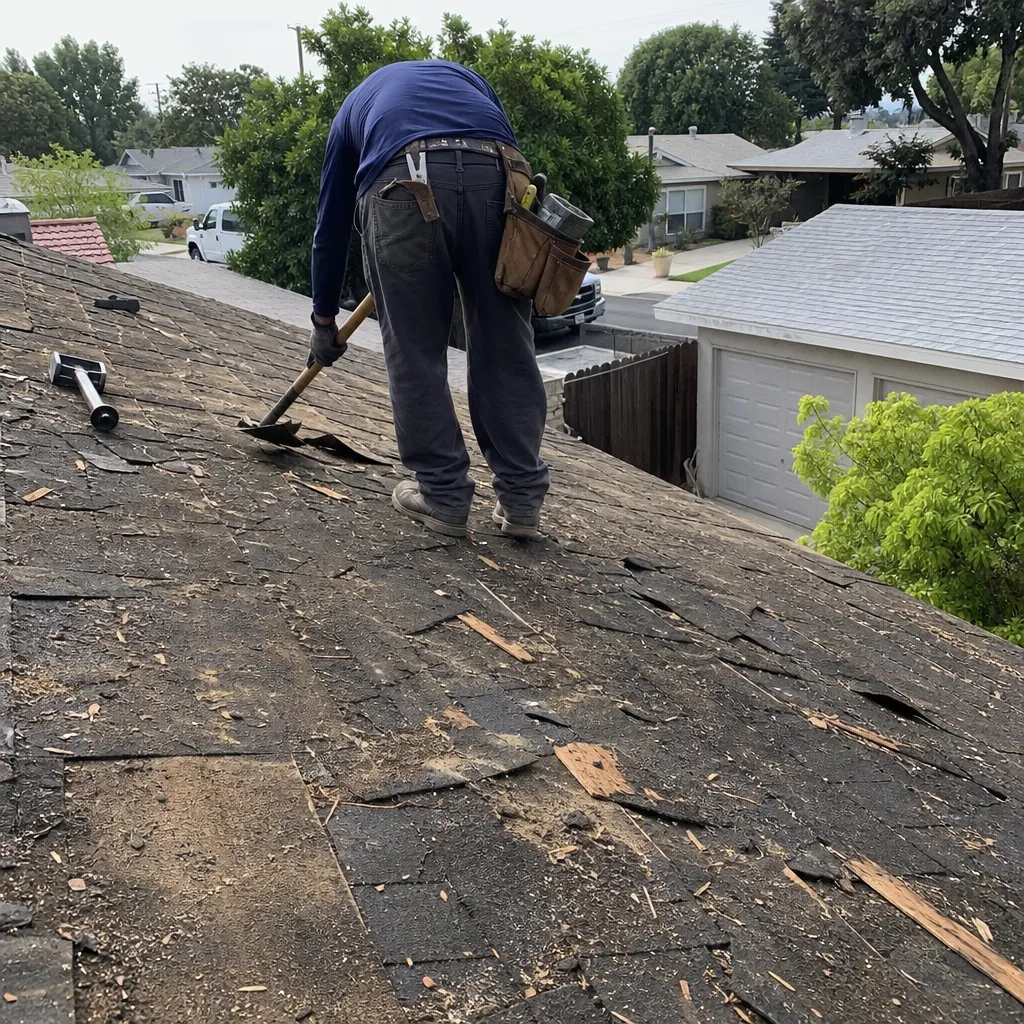 Before
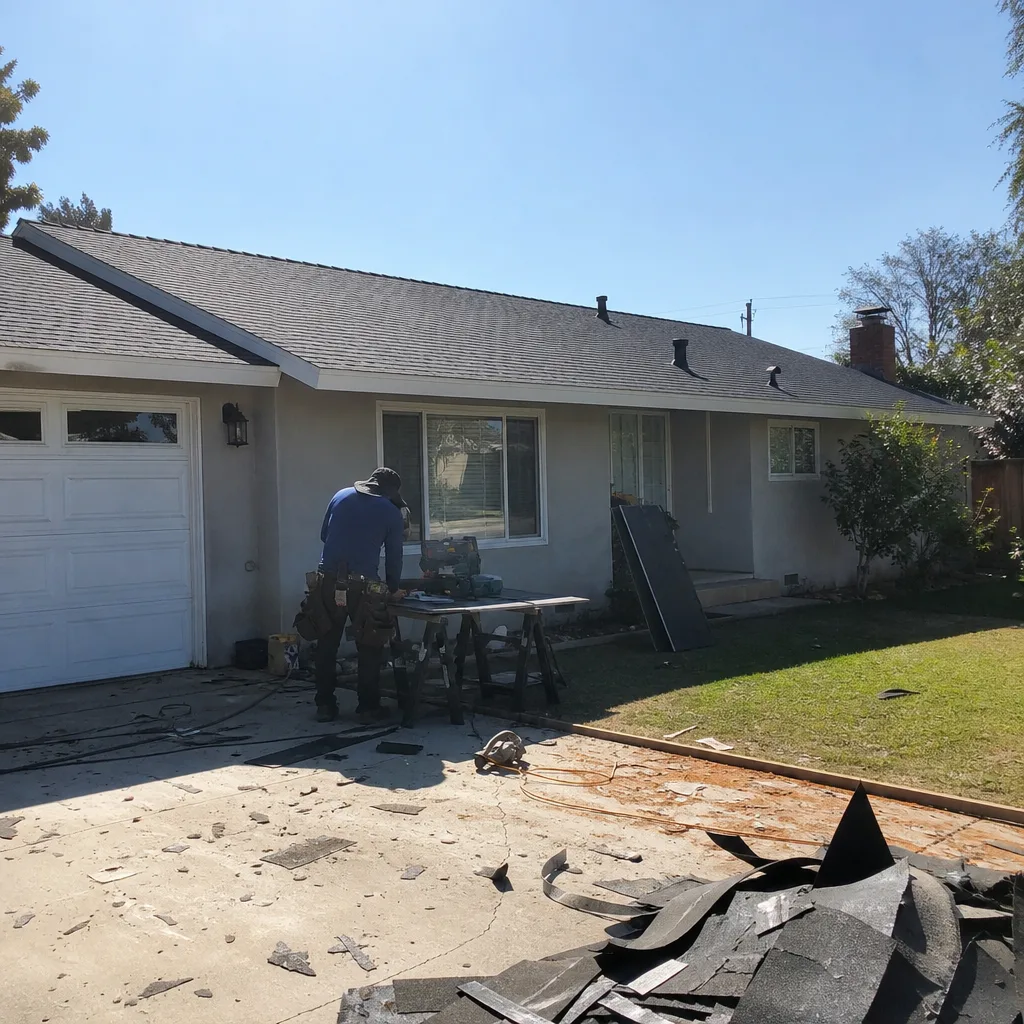 After
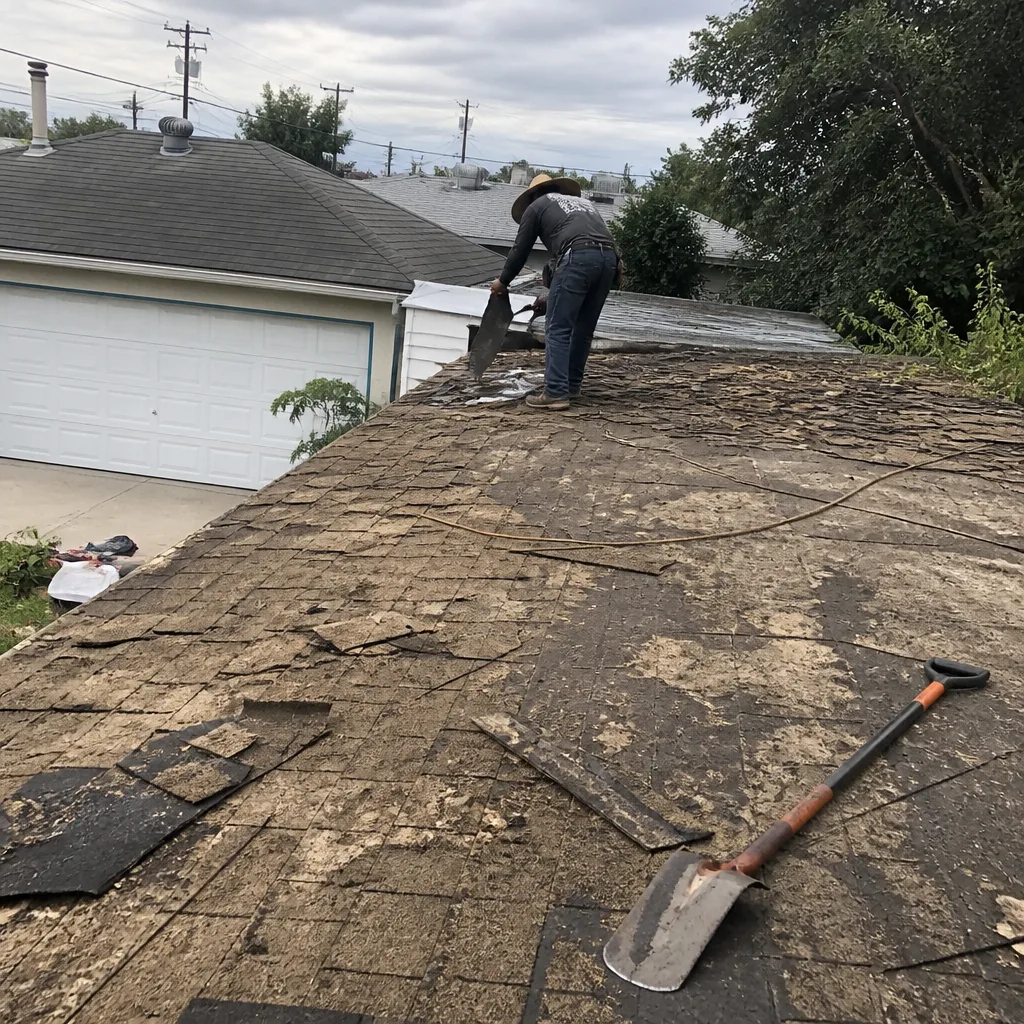 Before
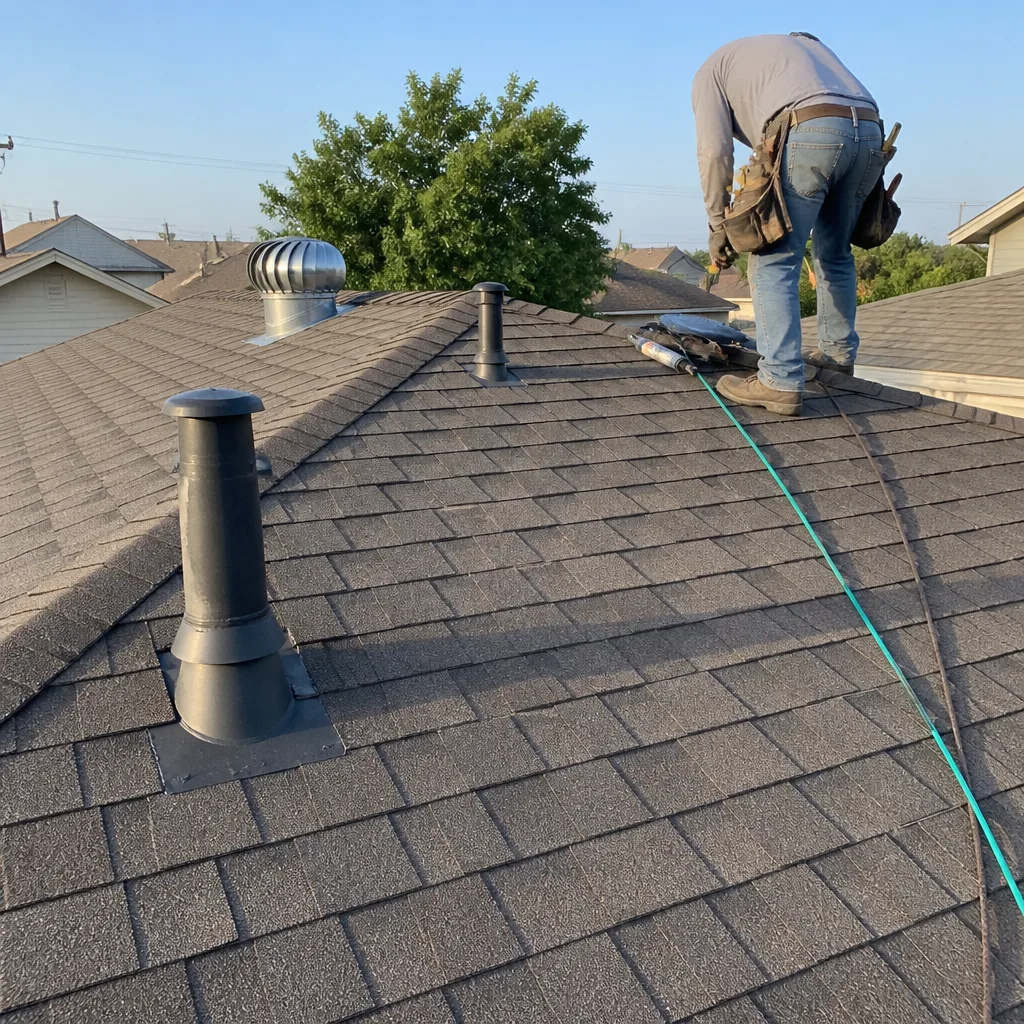 After
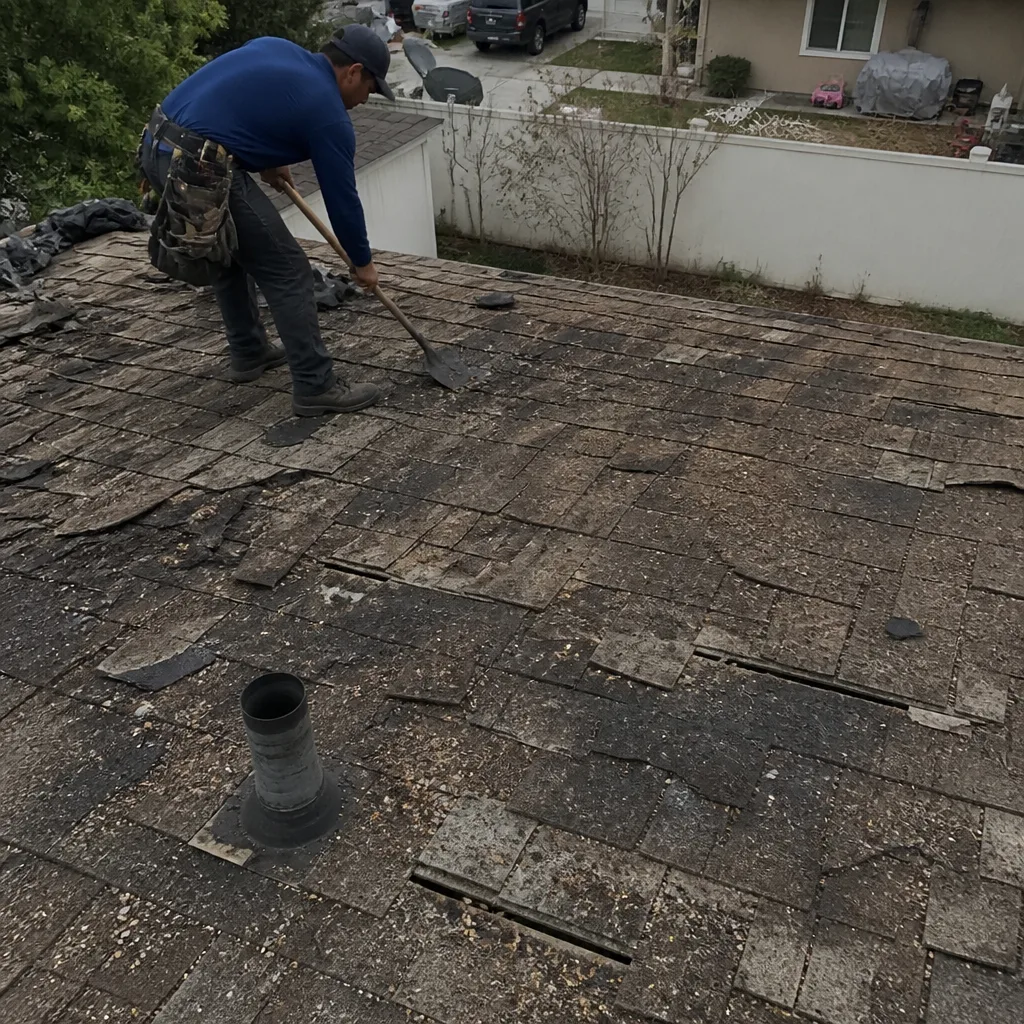 Before
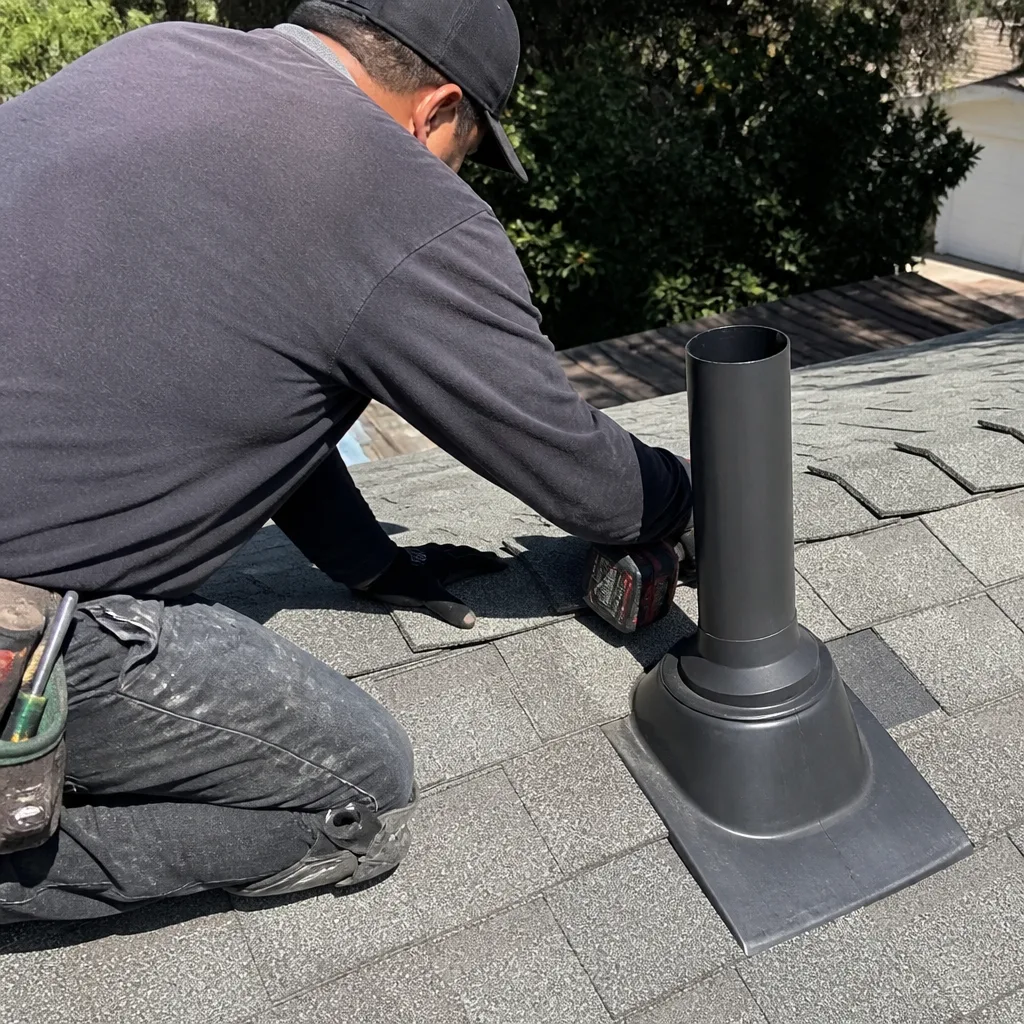 After
Common Mistakes to Avoid
- Ignoring granule loss because the roof “looks fine from the street.” Granule loss happens on the upper surface of the shingle, not on the visible edge. If your gutters are collecting granules, the shingle is already degrading even if it looks normal from the ground.
- Painting over a ceiling stain without finding the leak. The stain will return, and the water damage beneath it will be worse the second time. Paint is a cosmetic fix for a mechanical problem. Find the leak first, then paint once the decking above is confirmed dry.
- Assuming a cracked tile is no big deal because “tile roofs don’t leak.” Tile sheds water; it doesn’t waterproof. Every cracked tile speeds the deterioration of the underlayment, which is the actual waterproof layer. The problem is real even when no leak is visible inside.
- Waiting until the next rainy season to address a small flashing issue. The damage compounds. What’s a minor repair in October may be a decking replacement by the time February rain arrives. Pomona’s dry season is the cheapest time to fix roofing problems.
- Walking on the roof to inspect it yourself. You can identify signs from the ground and from the attic. Walking a tile roof without knowing the proper foot placement creates new cracks. Walking any roof is a fall risk. The inspection you do from the attic or ground is sufficient to start the conversation.
- Choosing a contractor based on price alone without asking about materials and process. A roofer who stocks one shingle brand will fit that brand to your roof regardless of what’s already there. Ask what manufacturers they work with and whether the repair material will match your existing roof. Ask whether the recommendation is inspection-driven or estimate-driven.
When to Call a Professional
Call a professional when the warning sign involves water, structure, or uncertainty about the cause. A small granule accumulation you want to understand is worth a conversation. A water stain you can’t trace to a clear source is worth a visit. Sagging decking or daylight in the attic is worth an urgent call, not a scheduled one. If you’ve documented the sign and still aren’t sure whether you’re looking at a repair or a replacement signal, that’s exactly what we’re here to sort out. Millstone Roofing offers free estimates in Pomona – call (855) 341-6021, and we’ll start with a professional inspection before anything else gets recommended. We inspect first, and every recommendation comes with documented findings.
Frequently Asked Questions
Most single-issue repairs in Pomona, such as a flashing fix or a few replaced shingles, fall in the $300 to $800 range. Repairs that involve decking replacement or extensive tile work run significantly higher, often $2,000 to $5,000 or more. Call (855) 341-6021 for an exact quote on your specific warning sign; estimates are free.
You can wait on signs that don’t involve active water entry, such as granule loss on an older roof or a few lifted shingles with no interior staining. You should not wait on any sign that involves a visible leak, daylight through the decking, or sagging decking. Pomona’s rain season is short but intense, and deferred fixes become larger fixes after a single heavy storm.
The deciding factors are the age of the roof, the extent of the damage, and the condition of the decking and underlayment. Isolated damage on a roof with substantial remaining service life is a repair. Widespread granule loss, tile cracking across multiple planes, or decking deterioration points toward replacement. The only honest way to know is a documented inspection.
Insurance typically covers sudden, accidental damage such as wind or hail events, not wear-and-tear conditions like aging shingles or thermal tile cracks. Every policy differs, and we recommend reviewing your specific coverage. What we provide either way is a documented inspection report that you can submit to your carrier.
Attic warning signs. Most homeowners never see their attic, and by the time a problem shows up on the ceiling, the damage beneath has usually been developing for months or years. Daylight through the decking, matted insulation, and rafter stains are visible long before ceiling stains appear. Check the attic twice a year, once before and once after the rainy season.
We work with seven of the roofing industry’s leading shingle and material manufacturers, including GAF, CertainTeed, and Owens Corning. That means we match the repair material to your existing roof rather than fitting your roof to whatever we happen to stock. Call (855) 341-6021 and we’ll tell you exactly what’s on your roof and what it will take to fix it right.
The Bottom Line
Roofing warning signs are a language. Granules in the gutter, a lifted shingle, a stained rafter: each one is telling you something specific about what’s failing underneath. The skill is translation. Most Pomona homeowners don’t need to become roofing experts; they need to know which signs are urgent, which can wait, and how to document what they see so a professional can move quickly when the time comes. Explore more guides & resources to stay ahead of roof maintenance. We inspect first because every recommendation should rest on documented findings, not guesswork. Repair when repair is right. Replace when replacement makes sense. One crew, one company, from the first inspection to the final shingle.
Written by the team at Millstone Roofing, serving Pomona since 2011.