Last updated October 30, 2026
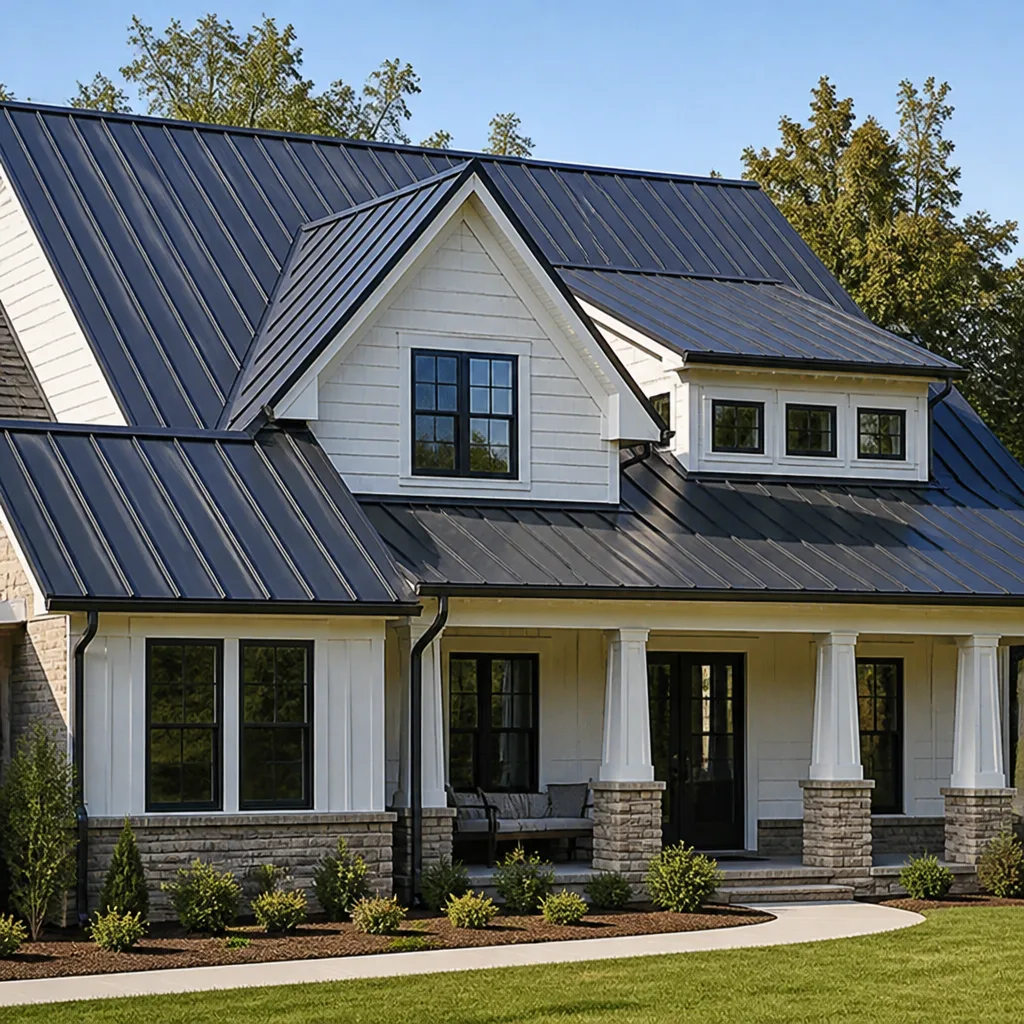 Metal roofing
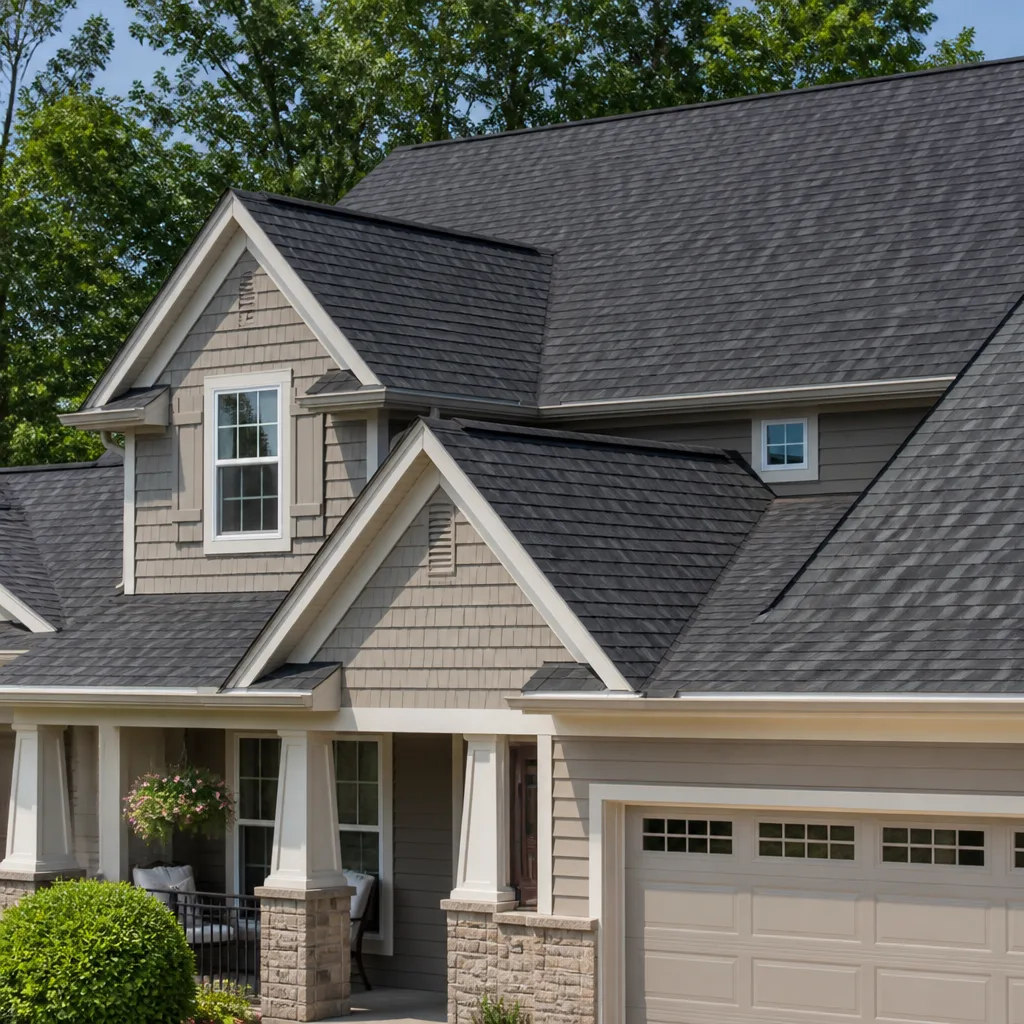 Architectural shingles
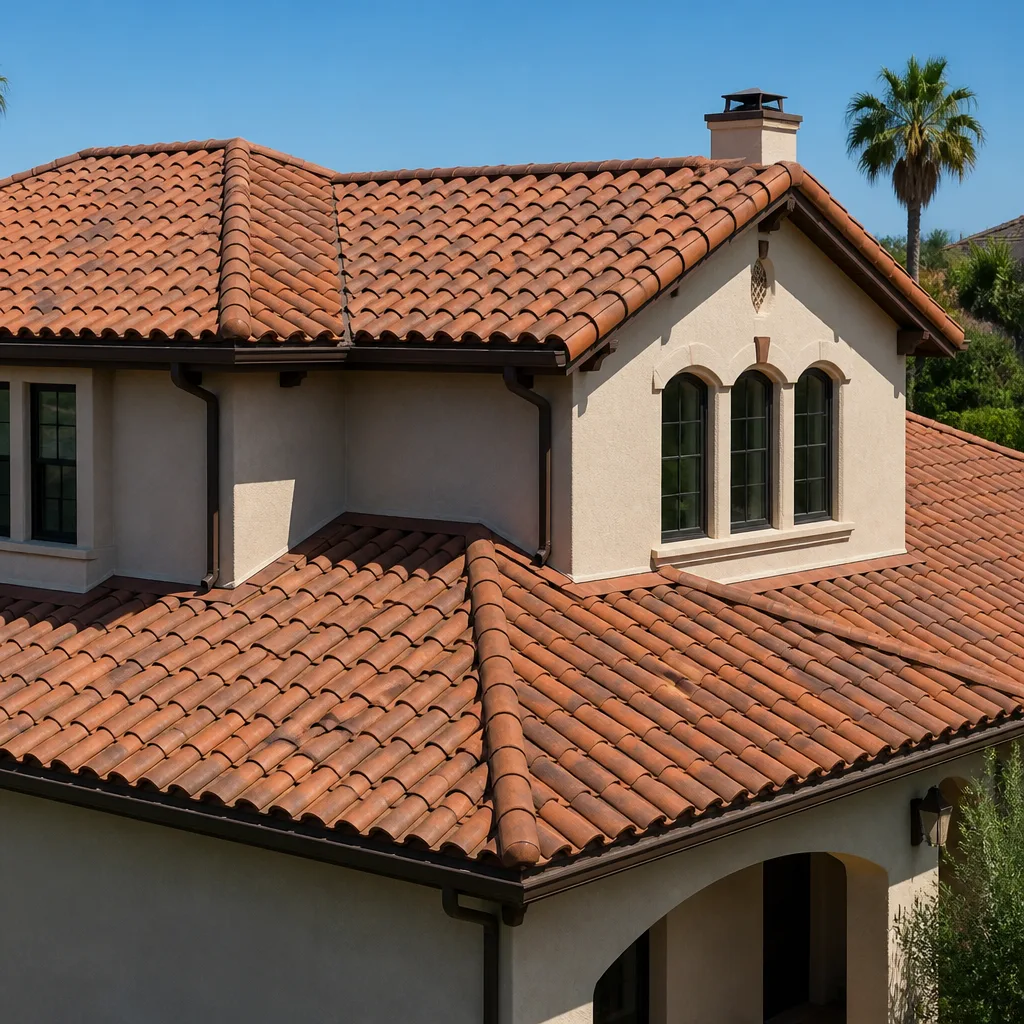 Tile roofing
 GAF
 Owens Corning
 Flat & low-slope
Free roof inspection with deck photos before we talk money - GAF and Owens Corning certified installation
DIY vs Professional Roofing: The Pomona Homeowner’s Decision Guide
The numbers most DIY roofing guides quote assume you live somewhere with mild summers and no real permit enforcement. Pomona is not that place. A homeowner who strips and replaces their own roof here saves on labor, sure, but they also void most manufacturer material warranties the moment a nail pattern deviates from the published spec, they can’t pull the C-39 roofing permit that Pomona’s building department requires for reroofing scopes, and they do the work on a surface that regularly measures 150 to 170 degrees Fahrenheit in July. This guide walks through the economics, the legal lines, the physical risks, and the handful of repair tasks a confident Pomona homeowner can actually do safely without creating a bigger problem. For Roof Repair Troubleshooting: Common Problems and How to Fix Them, see our dedicated guide.
Styles & brands we work with
Quick Answer
For repairs involving a handful of accessible asphalt shingles, a capable Pomona homeowner can reasonably do the work themselves and save a few hundred dollars. For full replacements, any flashing-related repair, flat roof seams, valley work, or anything on a tile roof, the permit requirements, manufacturer warranty terms, and real risk of heat injury in Pomona’s summer climate make professional work the financially smarter choice.
Table of Contents
- What Pomona Law and California Code Actually Allow a Homeowner to Do
- The Warranty Reality: What You Void When You Pick Up a Hammer
- The Real Labor Savings Math for a Pomona Roof
- The Pomona Climate Factor: Heat, Thermal Expansion, and Tile Profiles
- Repairs a Confident DIYer Can Reasonably Attempt
- Repairs That Create Bigger Problems When Done Wrong
- The Hybrid Approach: Professional Diagnosis, DIY Prep and Cleanup
- Common Mistakes to Avoid
- When to Call a Professional
- Frequently Asked Questions
- The Bottom Line
What Pomona Law and California Code Actually Allow a Homeowner to Do
California’s contractor licensing law draws a clear line between what a homeowner can do on their own property and what requires a C-39 roofing contractor. The distinction matters more than most DIY guides admit, because the city of Pomona enforces the California Building Code through its own building department, and inspectors do check permits on re-roof jobs.
A homeowner who owns and occupies a single-family home in Pomona can legally perform roof maintenance and minor repairs without pulling a permit. That includes replacing individual damaged shingles or tiles, resealing a small area of flashing, clearing debris from valleys, and reattaching loose flashing with appropriate sealant. These are defined as maintenance tasks, and the code treats them as a property owner’s right.
The line gets crossed with structural work. Any project that involves removing and replacing more than 50% of the roof surface triggers Pomona’s re-roofing permit requirement. That permit application, under California law, must be pulled by a licensed C-39 contractor when the scope exceeds the owner-builder exemption. The owner-builder exemption exists, but it requires signing a declaration that you are performing the work yourself, and it carries personal liability for code compliance for the life of the roof. If you sell the home within a year of an owner-builder permit, the sale can be complicated by disclosure requirements.
What most Pomona homeowners don’t realize is how this affects insurance. A homeowner’s insurance policy typically covers damage caused by sudden events, not damage caused by improper workmanship. If a DIY roof replacement leaks and damages the interior, the insurance adjuster will often deny the claim because the work was performed by an unlicensed party without a permit. That single denial can erase every dollar of labor savings from the project.
So the legal answer is: you can maintain your roof in Pomona without a license. You cannot reroof it without either pulling an owner-builder permit yourself or hiring a licensed C-39 contractor. The owner-builder route transfers all liability to you, and most homeowners underestimate how much that liability is worth.
The Warranty Reality: What You Void When You Pick Up a Hammer
Manufacturer warranties on roofing materials are not generic promises. They are contracts with specific installation terms, and those terms assume a trained installer who follows the published technical specifications. When a homeowner installs the materials themselves, the warranty situation changes sharply.
Take GAF shingles, for example. The GAF Lifetime Limited Warranty on their architectural shingle lines covers manufacturing defects, but the warranty language requires installation in accordance with GAF’s published application instructions. If the shingles fail due to improper fastening, under-driven nails, incorrect nail placement, or inadequate ventilation, the manufacturer will not cover the failure. A homeowner replacing a roof has no documented proof that installation met the spec, and the manufacturer has no incentive to believe unverifiable installation work. The practical result: the material warranty exists on paper but is unenforceable in most DIY scenarios.
CertainTeed and Owens Corning operate similarly. Their warranty documents reference “proper installation” and “applicator certification” in various sections. Owens Corning’s extended warranty options, including the higher-grade coverage available through their Platinum and Preferred contractor programs, are only available when a certified contractor performs the work. A homeowner cannot access these warranty tiers at all. CertainTeed’s SureStart Plus and similar enhanced warranties require manufacturer-credentialed installers. Boral’s tile and stone roofing products carry their own installation specifications that require specific underlayment, batten spacing, and fastening patterns. Deviation from those specs voids coverage.
The warranty issue compounds because roofing failures are often slow. A shingle that delaminates three years after a DIY installation produces a claim against the manufacturer, who asks for installation records, contractor certification, and proof of code compliance. The homeowner has none of these. The claim dies. The homeowner pays for the replacement roof out of pocket. The labor savings from the original DIY project, amortized over the shorter lifespan of an unwarranted roof, often produces a higher total cost of ownership than a professional installation would have.
When we inspect roofs where homeowner-installed materials have failed, we see the same patterns repeatedly: nail placement outside the manufacturer’s nailing strip, incorrect exposure, inadequate starter course installation, and ventilation systems that don’t meet the manufacturer’s minimum net free area requirements. These errors void warranties because the warranty assumes competent installation. That assumption does not hold for most first-time DIY roofers.
The Real Labor Savings Math for a Pomona Roof
The headline number in most DIY roofing articles is that labor represents 40 to 60 percent of a replacement cost, and therefore a DIY project saves that amount. In Pomona, that math breaks down under real project accounting. Here is an honest breakdown for a typical 1,800-square-foot single-story home with a 2,200-square-foot roof.
Shingle tear-off and replacement on that roof, including underlayment, drip edge, and standard architectural shingles, runs between $9,000 and $14,000 when a licensed Pomona roofer performs the work. The labor portion is roughly $4,500 to $6,500 of that total. A DIYer looks at that number and sees savings. But the DIYer’s actual project costs include items most casual estimates ignore.
First, tool rental and purchase. A pneumatic roofing nailer, a roofing shovel or tear-off spade, a magnetic sweeper, safety harness and rope, ladder stabilizers, and a dumpster rental for tear-off debris typically total $800 to $1,500 depending on dump fees in Pomona. These are one-time or rental costs the DIYer pays out of pocket.
Second, material waste. A competent roofing crew orders 5 to 8 percent waste factor for shingle cuts, starter course, ridge cap, and mistakes. A first-time DIYer routinely hits 12 to 18 percent waste because of misaligned cuts, damaged shingles from mishandling, and re-cuts. On a $5,000 material package, that extra 10 percent waste is $500.
Third, permit complications. If the project crosses the reroofing threshold and the homeowner pulls an owner-builder permit, the fees run $400 to $800 in Pomona depending on project valuation. If the homeowner skips the permit and gets caught (which happens when a neighbor complains or a code enforcement officer drives past), the stop-work order and retroactive permit fees can add $1,000 or more, plus the cost of removing and redoing any non-compliant work.
Fourth, the cost of fixing errors. A significant percentage of DIY roofs we inspect in Pomona have at least one code or manufacturer violation: improper nail pattern, missing drip edge, inadequate underlayment overlap, failed flashing details. Correcting these after the fact often costs $1,500 to $4,000 because the repair requires removing installed shingles and replacing sections.
The realistic net savings on a DIY full replacement in Pomona, after accounting for these line items, lands between $1,500 and $3,000, not $4,500 to $6,500. That’s before assigning any value to the warranty coverage you lose, the heat-stress risk you take, the weekends you spend, and the liability you carry. For most homeowners, that net number doesn’t compensate for what’s given up.
The Pomona Climate Factor: Heat, Thermal Expansion, and Tile Profiles
Roofing work in Pomona presents physical challenges that generic DIY guides fail to account for. The city sits in the eastern San Gabriel Valley, where summer temperatures regularly cross 100 degrees Fahrenheit, and roof surfaces absorb direct sun for the full length of the day. By mid-afternoon in July, an asphalt shingle roof in Pomona measures between 150 and 170 degrees on the surface. A concrete or clay tile roof runs hotter still.
Heat at those levels is a genuine physiological hazard. Heat exhaustion begins when core body temperature rises, and the body’s cooling mechanism fails under prolonged exposure. A homeowner working on a Pomona roof in July without cooling breaks, shade, and hydration faces heat stroke risk. Professional roofing crews in Southern California start work at dawn during summer months specifically because roof surfaces become unworkable and unsafe by early afternoon. The DIYer with a day job ends up working weekends at the hottest part of the day, which is when the risk is highest. The surface temperature alone is enough to cause contact burns on exposed skin, and wearing the protective gear that prevents burns (long sleeves, gloves, knee pads) makes heat dissipation harder. It’s a loop that favors trained crews who work fast and early.
The other Pomona-specific issue is thermal expansion. Roofing materials in this climate cycle through wide temperature swings between the cold early morning and the peak afternoon heat. Asphalt shingles soften in direct sun, which affects nailing and walking. A shingle installed at noon when the material is soft can tear around the fastener as it cools and contracts overnight. Proper installation in this climate requires understanding how fastening patterns interact with thermal movement. That knowledge comes from experience, not from a YouTube video.
Then there’s the tile question. A significant share of Pomona roofing stock is concrete and clay tile, especially in the older neighborhoods south of Holt and up through the Phillips Ranch area. Walking a tile roof requires specific technique: step on the overlapping sections of each tile, keep weight distributed across the tile’s strong axis, and never step on the edge or the center of a tile. First-time DIYers crack tiles constantly, and cracked tile lets water under the roof covering, where it rots the underlayment before anyone notices. Repairs on tile roofs often become replacements because the original tile has been discontinued and matching pieces are unavailable. A cracked-tile mistake on a tile roof can cascade into a full reroof.
Repairs a Confident DIYer Can Reasonably Attempt
Not every roofing task belongs in a professional’s hands. There are specific, contained repairs in Pomona where a homeowner with the right tools, a safety harness, and a realistic understanding of their own comfort level can do good work without legal or warranty exposure. Our Roof Repair Maintenance Checklist for Pomona Homeowners covers these tasks in detail. The key phrase is “not every task” – these are narrow, specific categories, not a license to start tearing off shingles.
- Single-tab asphalt shingle replacement. If one shingle is cracked, blown off, or curling, and the surrounding shingles are intact, replacing the single tab is a reasonably contained job. The work requires a flat pry bar, roofing nails, roofing cement, and patience. The shingle must be the same size and profile, and the surface must be cool enough to work without the shingle tearing. This is a $15 material fix that a roofer would charge a $250 to $400 minimum for, so this is where DIY actually wins.
- Exposed nail head sealing. Roofing nails that have backed out slightly and are exposed on the surface are a common issue. Sealing them with a dab of urethane roofing sealant is straightforward and prevents the water intrusion that starts at the nail hole. This is a 20-minute job that costs under $20.
- Gutter reseating and reattachment. In Pomona, winter Santa Ana winds can pull gutters loose from the fascia. Reattaching a gutter section with proper brackets and screws (not nails, which pull out) is well within DIY range. The work happens at the roof edge, not on the roof surface itself, and the safety risk is lower if the ladder is set correctly.
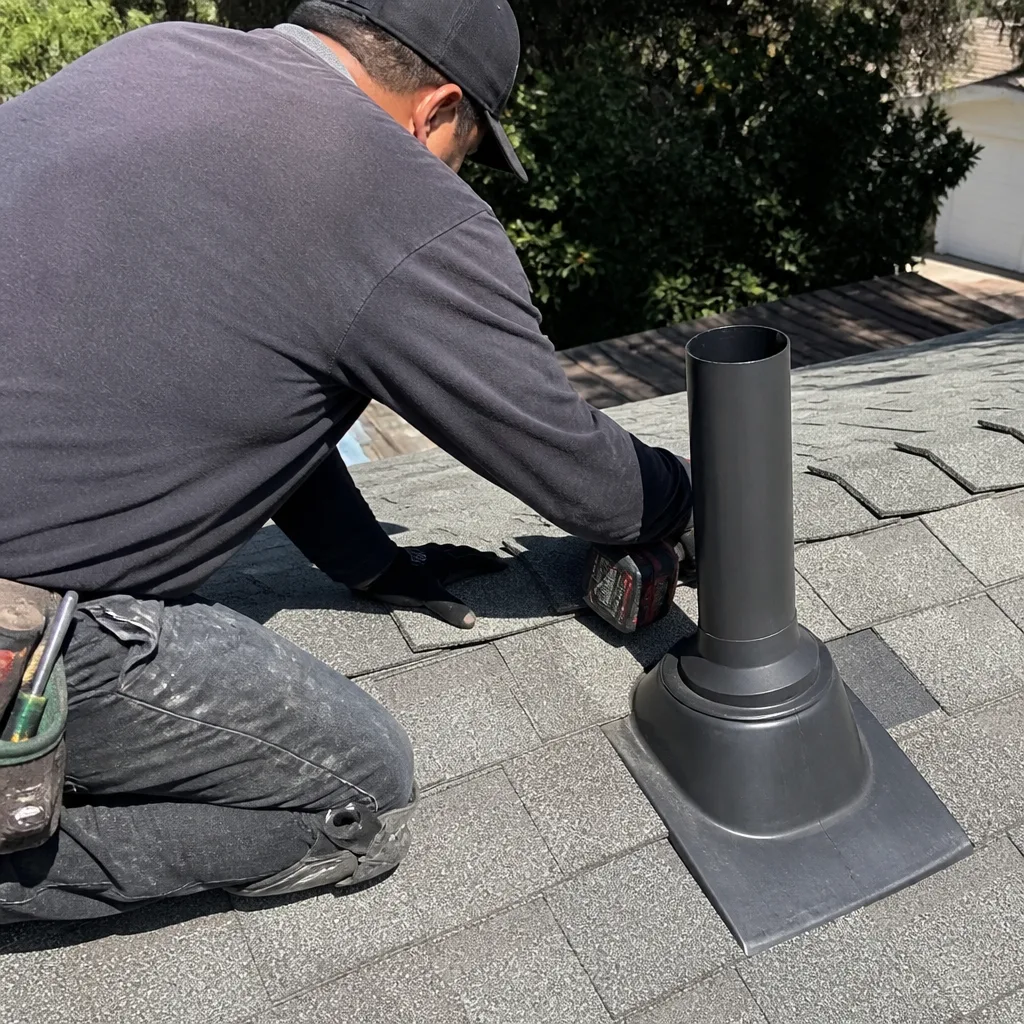
- Attic ventilation additions. Adding an unpowered static vent or a gable-end vent to improve attic airflow is a modest framing and roofing job. The work requires cutting through the roof deck, installing the vent flashing, and sealing around it. A homeowner who is comfortable with basic carpentry and follows the manufacturer’s flashing instructions can complete this in a day. The risk is moderate: the flashing must be integrated with the roof covering correctly.
Each of these tasks retains the homeowner’s flexibility without touching a permit threshold. The roof covering itself remains intact, the warranty-voiding scope never opens, and the work is reversible if the result is imperfect. These are the categories where the DIY financial math actually works.
Repairs That Create Bigger Problems When Done Wrong
There is a category of roofing work where the risk of error outweighs any plausible savings. These are the jobs we get called to fix most often after a DIY attempt, and the repair bill is usually higher than the original professional quote would have been.
- Flashing work of any kind. Chimney flashing, sidewall flashing, step flashing at roof-to-wall intersections – these are the highest-leak-risk details on any roof. Flashing work requires understanding how water moves across a roof surface, how to interleave materials so water drains away from penetrations, and how to seal without trapping moisture. A flashing error does not show up immediately. It leaks slowly into the roof deck, the underlayment, and eventually the ceiling below. By the time a homeowner sees the stain, the repair scope has expanded substantially.
- Valley repairs. Valleys are the channels where two roof planes meet and the highest volume of water collects during a Pomona winter rain. Valley work involves woven or closed-cut shingle patterns, metal valley flashing, or both, and the geometry changes roof to roof. A valley installed wrong channels water under the shingles instead of over them. This is one of the most common failure points we find in DIY and cheap-contractor roofs.
- Flat roof seam work. Many Pomona homes have flat sections over additions, porches, or carports. These are typically built-up or modified bitumen roofs, and the seams are the waterproofing system. Torch-down applications require an open flame, which is a fire hazard and genuinely dangerous for an untrained person. Self-adhered modified bitumen systems require factory-spec rolling pressure for adhesion. A seam that fails on a flat roof leaks immediately because water ponds rather than drains.
- Tile roof repairs. We covered the walking-technique issue, but the bigger problem is matching and installation. Concrete tile varies by profile, color, and age-weathering. A replacement tile that looks close in a photo is often visibly different on the roof. And lifting tile to access underlayment requires knowing how the tile is fastened; prying the wrong way breaks the tile you’re lifting and the one next to it. Tile repairs cascade.
- Any work involving the roof structure. If decking is rotted, rafters are sagging, or there’s visible deflection, the problem is structural, not cosmetic. Replacing a rotted deck section under shingles requires tearing off the covering, cutting out the damaged wood, inspecting the framing below, and reinstalling everything. This crosses into structural work and, in Pomona, into the permit conversation.
For these categories, the financially rational move is to call a licensed roofer before touching anything. The inspection cost is trivial compared to the repair cost created by a mistaken attempt. If you’re unsure how to vet a contractor, read How to Hire a Roofing Contractor in Pomona: A Step-by-Step Guide.
The Hybrid Approach: Professional Diagnosis, DIY Prep and Cleanup
The decision between DIY and professional roofing doesn’t have to be binary. There’s a middle path that preserves warranty coverage, ensures permit compliance, and still shaves cost from the project. The hybrid approach works like this: a professional handles the diagnosis and the work that carries liability or warranty requirements, and the homeowner handles the labor-adjacent tasks that don’t require expertise.
The diagnosis half is the most important. A roofing project starts with knowing what’s actually wrong, and that knowledge usually comes from an inspection. A professional roof inspection in Pomona identifies the specific failure points, documents them with findings the homeowner can use, and establishes a baseline for the scope. The homeowner uses that documented scope to determine what’s actually needed rather than guessing. This matters because most roofing failures are not visible from the ground, and a homeowner who repairs visible symptoms without addressing the underlying cause spends money and doesn’t fix the problem.
The DIY-adjacent tasks that reduce cost without adding risk include:
- Site preparation. Moving patio furniture, covering landscaping, clearing access paths for ladders and equipment, and protecting skylights or solar panels. These are important but easy tasks that a homeowner can complete before the crew arrives.
- Tear-off debris removal. On a replacement project, some Pomona homeowners coordinate their own dumpster rental and haul-away instead of having the contractor handle it. This saves the contractor’s disposal markup. The key is staying out of the crew’s way during tear-off, because that work has its own safety rhythm.
- Post-project cleanup. Nail pickup, magnetic sweeping, and final debris checks are tedious but simple. A homeowner can walk the property with a magnetic sweeper multiple times after the project and reduce the risk of tire punctures without paying a labor rate for it.
- Material selection research. A homeowner who compares shingle brands, colors, and warranty tiers before getting quotes can narrow the conversation and save time. The material choice ultimately matters less than the installation quality, but knowing you want a GAF Timberline in a specific color rather than “some kind of gray shingle” makes the planning more efficient.
The hybrid split makes sense because it separates tasks that require liability protection from tasks that simply require effort. The permit, the warranty-bearing installation, the flashing work, the safety-critical procedures – those stay with the professional. The effort-based work that surrounds the project – that’s where the homeowner can save money without creating exposure.
Common Mistakes to Avoid
- Underestimating the heat. A Pomona roof in summer is not a spring roof in Ohio. Homeowners who schedule DIY work for a Saturday afternoon in August are making a safety error before they swing a hammer. Surface temperatures at that time of day make the work physically dangerous and the materials harder to handle correctly.
- Ignoring the permit threshold. The belief that “it’s my house so I can do what I want” doesn’t survive contact with Pomona’s building department. Crossing the 50% threshold without a permit creates a code violation that becomes a disclosure issue when the home is sold. The permit complications follow the property, not just the person who did the work.
- Skipping the ventilation check. A roof system is more than shingles. Attic ventilation affects shingle lifespan, energy efficiency, and warranty compliance. A DIY replacement that doesn’t address ventilation is installing a new roof on top of an old problem. The next roof will fail early for the same reason the last one did.
- Nailing outside the pattern. Shingle manufacturers publish nailing zones and nail counts for every product. Nails outside the pattern tear the shingle or fail to hold it, and the warranty is void. This is technical work, not intuitive work, and most DIYers get it wrong without realizing until the first wind event.
- Trying to match materials by eye. A shingle from one manufacturer in “Weathered Wood” is not the same as another manufacturer’s “Weathered Wood.” The colors, profiles, and reveal dimensions differ. Mixing brands or product lines on a repair creates a patch that’s visible from the street and fails differently than the surrounding roof. Match the exact product or replace the section.
- Treating tile roofs like shingle roofs. Walking patterns, fastening, underlayment requirements, replacement matching – everything about tile is different. A homeowner who learns on asphalt shingles and then tries a tile repair on a Pomona tile roof is taking a risk they don’t fully understand.
- Assuming the insurance company will cover mistakes. Homeowners insurance covers sudden events: wind, hail, tree falls, fire. It does not cover slow leaks caused by improper installation. A DIY error that leads to interior water damage is a maintenance failure, and the claim will likely be denied. The homeowner eats the cost of both the roof repair and the interior repair.
When to Call a Professional
Call a licensed Pomona roofing contractor when the scope involves any of the high-risk categories covered above: flashing, valleys, flat roof seams, tile work, structural decking, or anything exceeding the 50% replacement threshold. Call when you see evidence of an active leak, when you find granules accumulating in gutters, or when you can see daylight through the attic roof deck. Call when the roof is 20 years old and you’re not sure what condition it’s actually in – the inspection is cheap relative to the surprises. Call when you need the warranty that only a credentialed installer can provide. Millstone Roofing offers free estimates in Pomona – call (855) 341-6021 to schedule a Roof Inspection in Pomona and get documented findings before you decide anything.
Frequently Asked Questions
You can legally perform minor maintenance and repairs without a permit, but a full replacement that exceeds 50% of the roof surface requires either a C-39 licensed contractor or an owner-builder permit. The owner-builder permit transfers code-compliance liability to you personally, and an improperly installed roof can complicate a future home sale. Call (855) 341-6021 if you’re unsure which category your project falls into.
A typical asphalt shingle replacement on a 2,200-square-foot roof in Pomona runs between $9,000 and $14,000 depending on material choice, roof pitch, decking condition, and access. Tile replacements run higher. Millstone Roofing works with GAF, CertainTeed, Owens Corning, IKO, Atlas, Tamko, and Boral materials, so the quote reflects the product that fits your roof, not the one a supplier pushed. Call (855) 341-6021 for a written estimate.
Yes, in most cases. Manufacturers like GAF, CertainTeed, Owens Corning, and Boral condition their warranties on installation performed according to published specifications, and enhanced warranty tiers require credentialed installers. A homeowner installation has no verifiable proof of spec compliance, so material defect claims are routinely denied. Roof Replacement in Pomona through a licensed contractor preserves the warranty access.
Replacing a single damaged asphalt shingle, sealing exposed nail heads, reattaching a loose gutter section, and adding a static attic vent are all reasonable DIY tasks for a confident, safety-conscious homeowner. These tasks don’t cross the permit threshold and don’t void the broader roof warranty. Anything involving flashing, valleys, flat roof seams, tiles, or structural decking belongs with a Roof Repair in Pomona professional.
Generally, no, not during peak afternoon heat. Pomona roof surfaces regularly exceed 150 degrees Fahrenheit in July and August, which creates real heat-stroke risk and makes asphalt shingles soft enough to damage during installation. Professional crews work early morning hours for this reason. If you’re going to do DIY work, schedule it for a cool morning in fall or spring.
Use the hybrid approach: let a professional handle the inspection, diagnosis, permitting, and installation while you handle site prep, debris coordination, and final cleanup. You maintain warranty protection and code compliance while reducing the total project cost by handling tasks that don’t require expertise. Start with a professional inspection – Millstone Roofing home offers free estimates in Pomona.
The Bottom Line
The DIY versus professional roofing decision in Pomona comes down to three factors most generic guides miss: the heat, the permit, and the warranty. Minor repairs on accessible asphalt shingles are genuinely DIY-friendly and save real money. Full replacements and anything involving flashing, valleys, flat seams, or tile are not. The liability you take on, the warranty you lose, and the physical risk you assume in Pomona’s summer climate outweigh the labor savings on any substantial project. Take the hybrid path instead. Get the professional inspection, make the informed decision, and do the prep and cleanup work yourself if you want to shave cost. Browse our more guides & resources for additional Pomona roofing advice. The roof protects everything under it. That’s not the place to learn by trial and error.
Written by the team at Millstone Roofing, serving Pomona since 2011.
See the difference
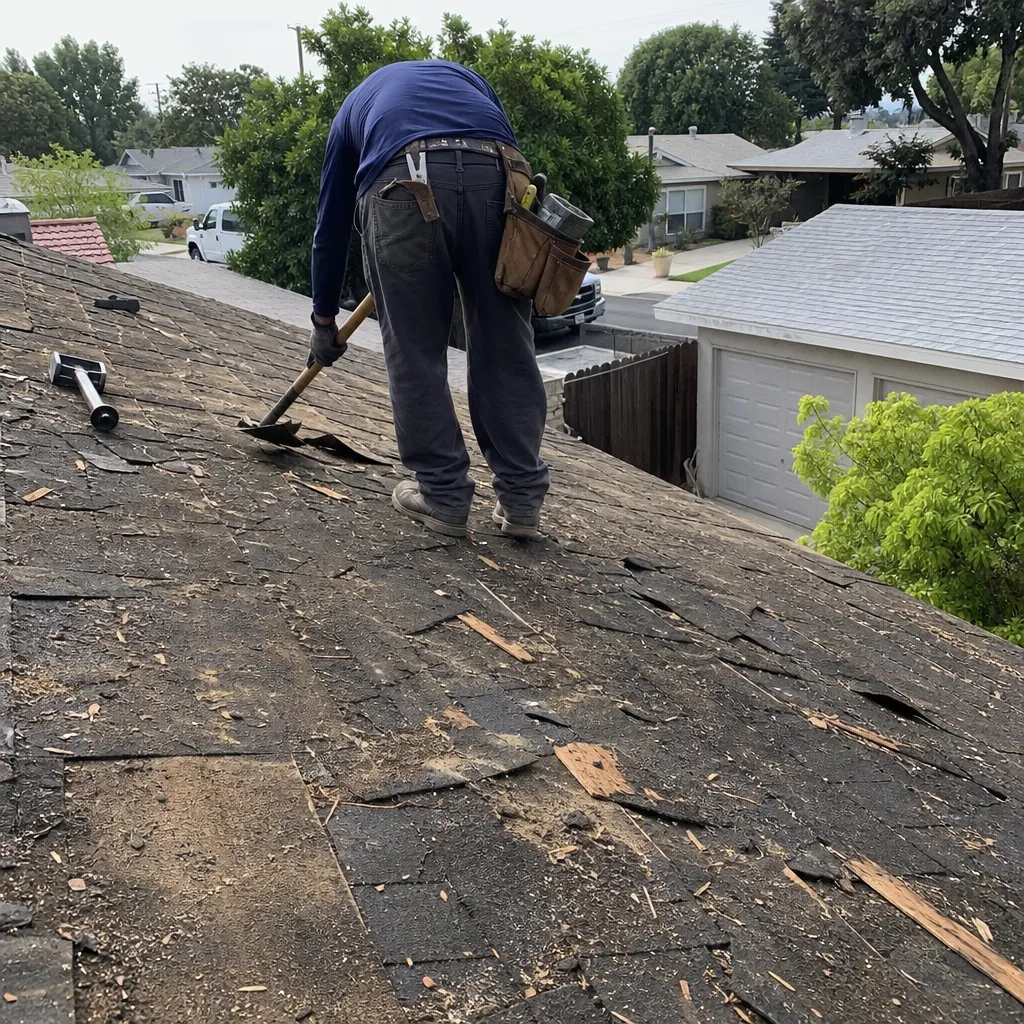 Before
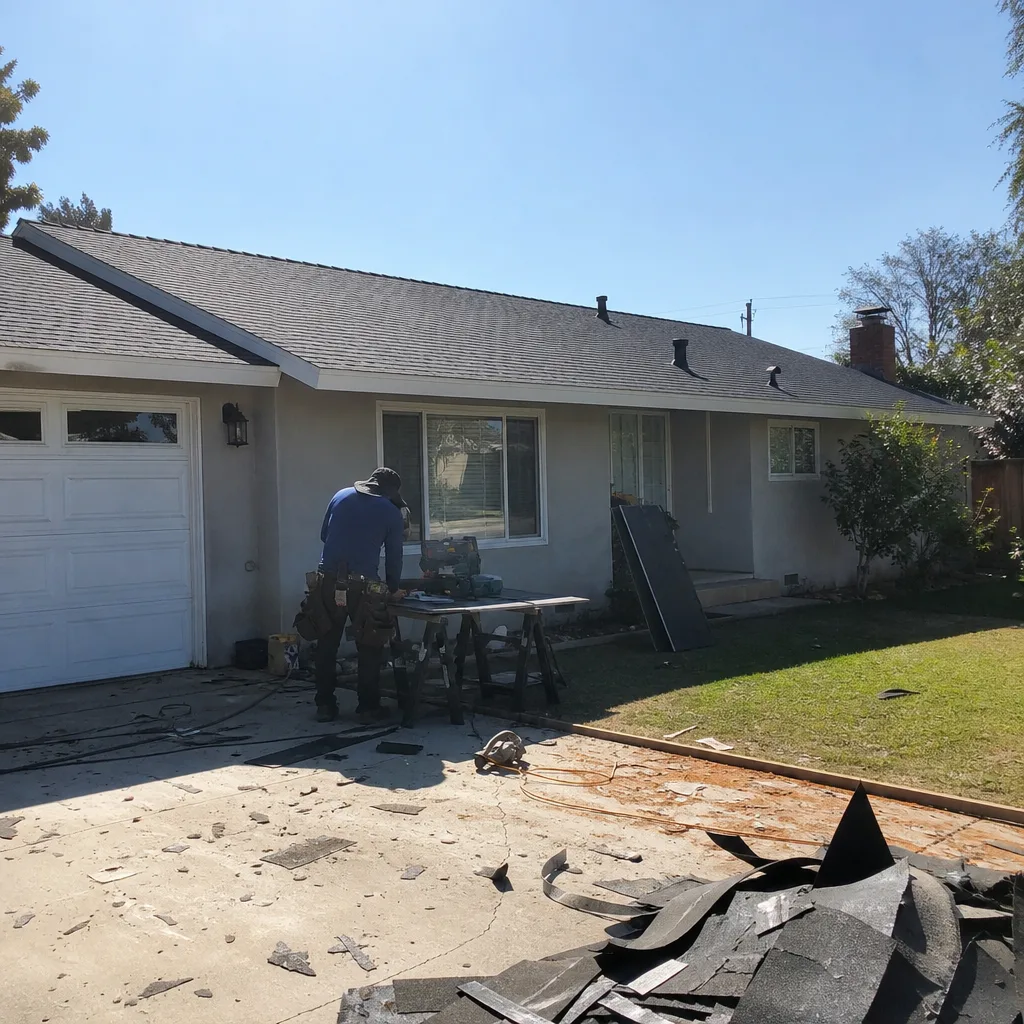 After
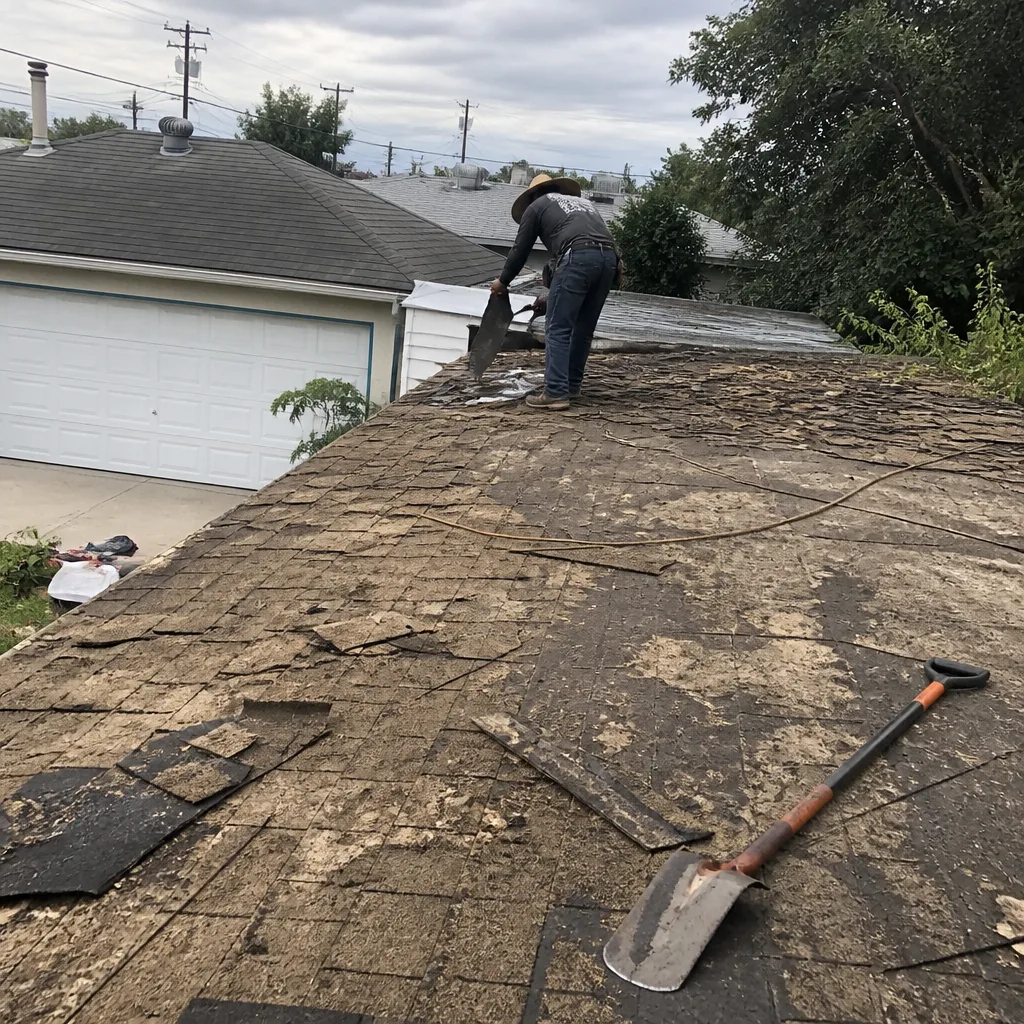 Before
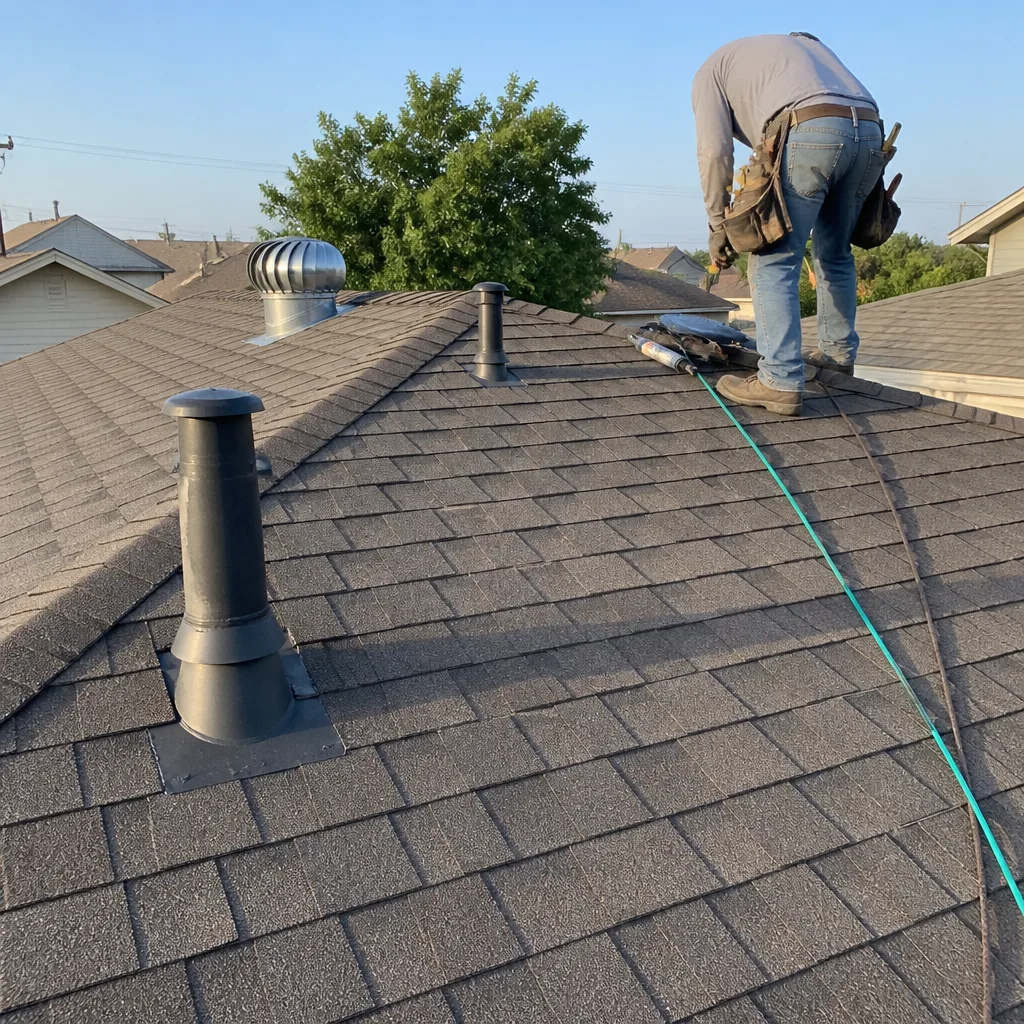 After
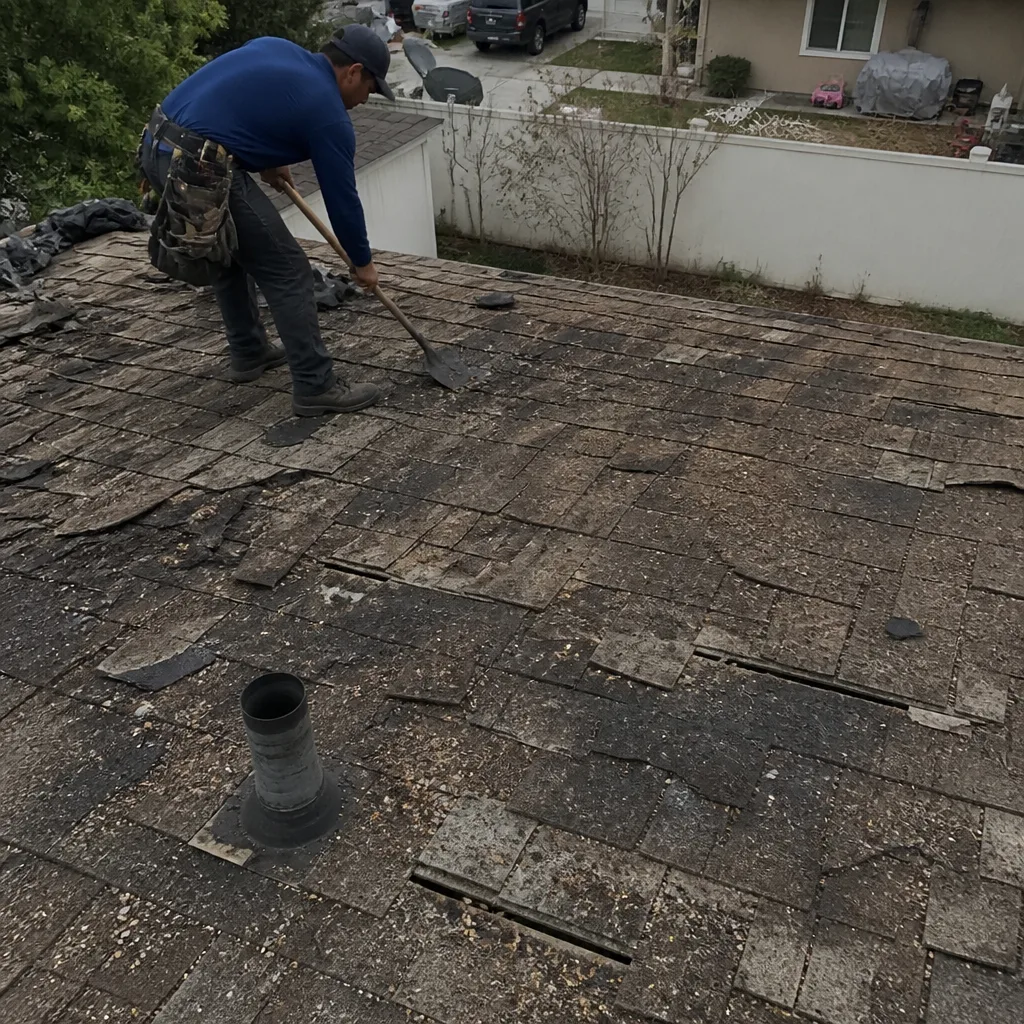 Before
 After