Last updated October 30, 2026
 Metal roofing
 Architectural shingles
 Tile roofing
 GAF
 Owens Corning
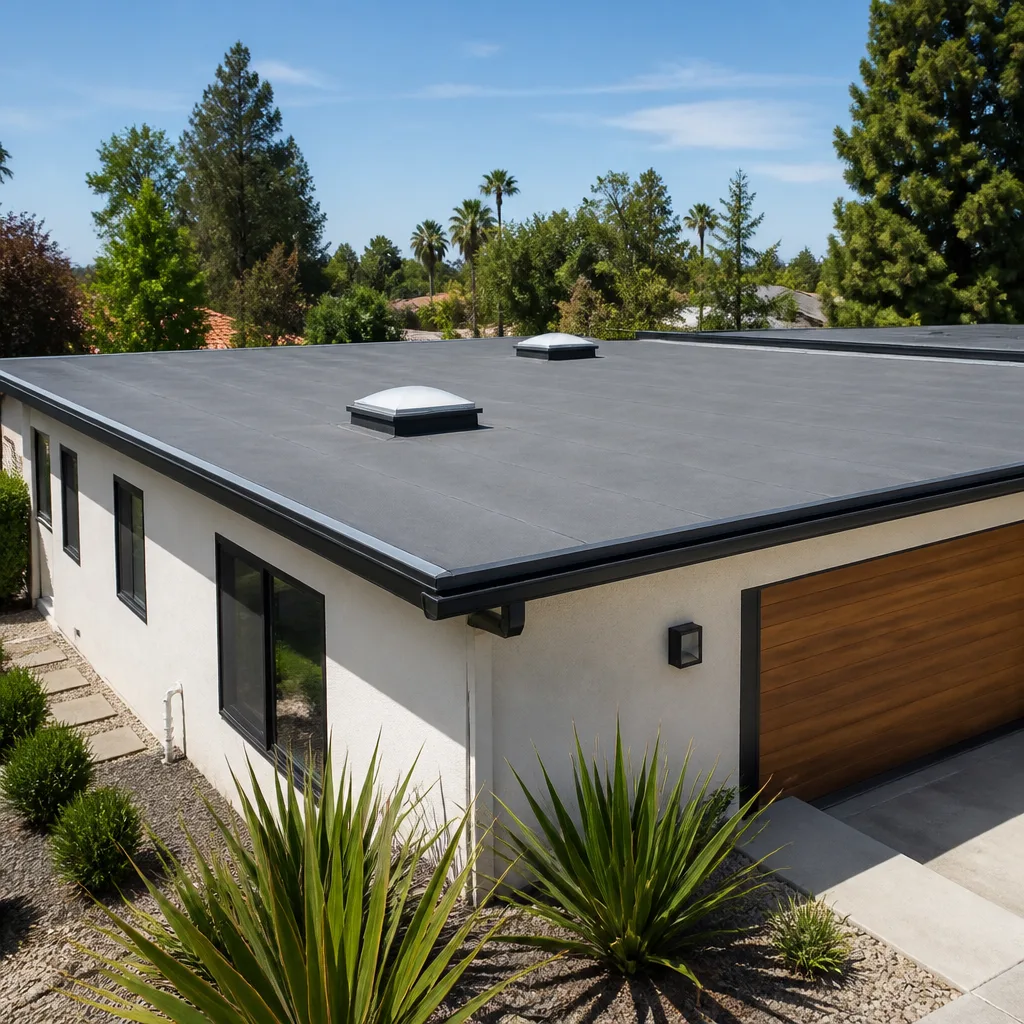 Flat & low-slope
Free roof inspection with deck photos before we talk money - GAF and Owens Corning certified installation
How to Hire a Roofing Contractor in Pomona: A Step-by-Step Guide
In California, a roofing contractor only needs a C-39 license to legally reroof your house. That license confirms they passed a trade exam and carry the minimum bond. It tells you nothing about whether they’ve ever touched the concrete tile profiles that cover half the roofs in Phillips Ranch, or whether they understand how Santa Ana winds load a ridge line in West Pomona. The difference between a good Pomona roofing hire and a five-figure mistake comes down to the questions you ask before anyone climbs a ladder. This guide gives you those questions, a structured vetting process, and the red flags that show up more often in this market than almost anywhere else in Los Angeles County.
Quick Answer
Hiring a roofing contractor in Pomona comes down to five steps: verify the C-39 license through the California State License Board, read the contract for five specific clauses that protect you from disposal and permit surprises, compare bids using an apples-to-apples material chart, ask exactly who will be standing on your roof during the job, and refuse any bid that showed up unsolicited after a windstorm. Do those five things and you’ve already eliminated the contractors responsible for most of the complaints we hear about in this city. For a deeper dive, see our Roof Repair Troubleshooting: Common Problems and How to Fix Them.
Table of Contents
- 1
- 2
- 3
- 4
- 5
- 6
- 7
- 8
- 9
- 10
Step 1: Verify the C-39 License Through the CSLB
Every legitimate roofing contractor in California holds a C-39 Roofing Contractor license issued by the Contractors State License Board. Checking it takes four minutes. Go to the CSLB website, enter the contractor’s name or license number, and confirm three things: the license is active, the classification is C-39 specifically (not just a general B license), and the contractor’s workers’ compensation coverage is current. A lapsed workers’ comp policy means you are the insurance plan if someone falls off your roof.
Now the part most guides skip. A C-39 license is the floor, not the ceiling. What sits above it tells you more. Manufacturer certifications, for example, require contractors to submit proof of completed installations, pass training modules, and sometimes carry higher insurance minimums than the state requires. At Millstone Roofing home, we maintain certifications across multiple manufacturer lines because no single brand fits every Pomona roof.
Here’s a Roof Repair Maintenance Checklist for Pomona Homeowners covering what to verify when you check a license:
- Active status and issue date. A brand-new license isn’t automatically disqualifying, but a license that changed business names three times in six years is a pattern worth noticing.
- C-39 classification confirmed. Some general contractors will bid roofing work and subcontract it out. You asked for a roofer. Confirm the classification.
- Workers’ compensation policy is current. If the CSLB shows no active workers’ comp, cancel the bid. No exceptions for “small crew” or “we use 1099s.”
- Bond amount. The state minimum is $15,000 for a bond. That’s the pool of money you can claim against if the contractor abandons the job. It doesn’t cover bad workmanship; it covers failure to complete contracted work.
- Any CSLB complaints or legal actions. A single old dispute isn’t a conviction. A pattern of unresolved complaints is a bright red flag.
We’ll say this once and clearly: a license number on a business card means nothing. A license number you independently verify on the CSLB website means everything. Take the four minutes.
Step 2: Five Contract Clauses That Protect Pomona Homeowners
Roofing contracts are not all alike, and the differences are not small print. Five clauses determine whether your bid of $18,000 stays $18,000 and whether your roof is installed the way you were told it would be. When you sit down to review a contract in Pomona, read for these five things before you sign anything.
1. Scope of Demolition
Does the contract say “remove existing roof” or does it say “remove one layer of composition shingles”? Pomona has thousands of homes built before 1980, and many of them have roofs that were reroofed over the original layer instead of torn off. If a second layer is hiding underneath, the contractor will either charge a change order or, worse, shingle over it. That’s illegal in California for residential reroofing in most circumstances. Your contract must state the number of existing layers and explicitly assign responsibility if more are found.
2. Disposal Method
This sounds minor until your driveway is blocked by a dumpster you didn’t expect or the crew starts throwing shingles into a pile on your lawn. The contract should specify where a dumpster will be placed, who covers any driveway damage, and whether the city of Pomona requires any special debris containment. Pomona’s municipal code has specific rules about construction debris containment that some out-of-town contractors have never read.
3. Permit Responsibility
In Pomona, a reroof requires a building permit through the city’s Building and Safety Division. The contract must say who pulls it. If the contractor asks you to pull the permit as the homeowner, that’s legal in California but puts the inspection burden on you. A contractor who handles the permit process and schedules the inspection is doing the job you’re paying for. The permit fee itself is typically included as a line item. Confirm it’s there.
4. Workmanship Warranty Length
Manufacturer warranties cover the shingles against defects. They do not cover installation errors. The contractor’s workmanship warranty covers installation. In Pomona, the minimum you should accept is five years. Ten is better. If a contractor offers one year or two, ask yourself why they have that little confidence in their own crews. Whatever they agree to, it must be in writing with the exact number of years.
5. Payment Schedule Triggers
California law caps the down payment for home improvement contracts at 10% of the total job or $1,000, whichever is less. That’s state law for residential work. After that, payments should be tied to milestones: after tear-off, after deck repair (if any), after installation, after final inspection. No milestone should require more than a third of the total contract. If a Pomona roofer asks for 50% down “to buy materials,” you’re being asked to finance their cash flow problem. Walk away.
Step 3: How to Compare Bids When Contractors Spec Different Materials
You’ve got three bids. One specs a GAF Timberline HDZ shingle with synthetic underlayment. One specs an Owens Corning Duration shingle with felt. One specs something called “architectural shingles” with no brand name at all. Are you comparing apples to apples? You’re not, and this is where homeowners in Pomona get quietly overcharged or under-roofed.
Start with the shingle spec. Every legitimate bid should name the manufacturer and the specific product line. “Architectural shingles” is not a product. It’s a category. If a bid doesn’t name the brand, the contractor is reserving the right to install whatever is cheapest at the supply yard that week. At Roof Replacement in Pomona, every proposal we write names the exact shingle, the underlayment, the flashing system, and the decking policy. If you can’t see it on paper, you can’t hold anyone to it.
Next, compare the underlayment. Felt is a budget product that degrades when exposed to sun and tears under foot traffic during installation. Synthetic underlayment costs more and performs better across the board. It’s particularly relevant in Pomona’s climate, where summer roof deck temperatures routinely exceed 140 degrees. Felt can dry out and become brittle under those conditions before the shingles even go on. If one bid specs synthetic and another specs felt, that’s not a small difference. It’s a material decision that affects the life of the roof.
Finally, ask every bidder the same question about decking: “What happens if you find rotted plywood under the shingles?” The answer reveals more than you might think. The right answer is a per-sheet price stated in the original bid, with a clear note that deck replacement will be documented with photos before and after. The wrong answer is “we’ll see when we open it up.” That means the price is moving and you’ll find out how much after the old roof is gone and you have no leverage.
Here’s a simple comparison tool we recommend to homeowners in Pomona:
- Shingle manufacturer and product line named: Yes / No. If no, the bid is incomplete.
- Underlayment type specified: Synthetic / Felt / Not specified. Synthetic is the better spec.
- Decking replacement policy: Per-sheet price stated / Hourly / Undefined. Per-sheet is the only defensible approach.
- Flashing scope named: Does the bid mention step flashing, pipe boots, and valley metal specifically? If not, corners are being cut.
- Cleanup and haul-away line item: Present / Absent. If absent, you’re paying for it later.
You don’t need to become a roofing material expert to hire well. You need to know enough to recognize when one bid is specifying a meaningfully different roof than another. The chart above is enough.
Step 4: The Subcontracting Question Nobody Thinks to Ask
Here’s the scenario we hear from Pomona homeowners more than almost any other: the salesperson who sold the roof was professional, knowledgeable, and responsive. The crew that showed up spoke a different language, couldn’t answer a single question about the materials, and left a mess in the yard. When the homeowner called the salesperson, the phone rang through to voicemail. The contractor had subcontracted the installation to a crew they’d never met, and the paper contract offered no recourse because it never named who would actually be doing the work.
Ask this question during the bid process, in writing, and get the answer in writing: “Who will be on my roof during installation, and are they your employees or subcontractors?”
Subcontracting is not automatically disqualifying. It’s common in the industry and many subcontractor crews are excellent. The problem is when the arrangement is hidden from you until the day the crew arrives. What you’re looking for is transparency. A reputable contractor will tell you directly whether their installers are W-2 employees or long-standing subcontractor relationships, and they’ll stand behind the workmanship either way.
What to watch for:
- A contractor who won’t answer the question. If you ask “who installs the roof” and get a vague answer about “qualified professionals,” that’s a non-answer and it’s deliberate.
- Crew composition changes between bid and install. The estimator came out, then a different company name appears on the truck that shows up. Ask about it before they start.
- The license holder never appears on site. In California, the C-39 license holder is responsible for the work regardless of who performs it. But if the license holder has never once visited your roof, ask yourself who is actually supervising.
At Millstone Roofing, we inspect first, we scope the work from documented findings, and the same company that inspects the roof is the company that repairs or replaces it. That continuity is part of the reason our Roof Inspection in Pomona service exists. We don’t hand our findings to a third party and hope for the best. One crew, one company, from the first inspection to the final shingle.
Step 5: Red Flags in Post-Storm Door-to-Door Solicitation
Every autumn, when the Santa Ana winds kick up and send roof tiles tumbling into Pomona yards, a particular type of contractor appears at front doors. They have a ladder, a clipboard, and a story about “storm damage in your neighborhood.” Some of them are legitimate local companies. Many of them are not. Here’s what to understand about that knock on the door.
The business model of storm-chasing roofers depends on volume and speed. They move into a region after a wind event, sign as many contracts as possible in a two-week window, complete the work quickly with whatever crew they can assemble, and then leave the area. When problems appear six months later – a leaking valley, lifted shingles, a voided manufacturer warranty because the installation didn’t follow spec – the homeowner discovers the office number is disconnected and the warranty is a piece of paper with no one behind it.
Here are the specific red flags to recognize if someone knocks on your door in Pomona after a wind event:
- They “noticed damage” from the street. Roof damage assessment requires walking the roof, not squinting from the curb. A professional will ask permission, inspect, and show you photos. A drive-by damages-quote is a sales script.
- They need an answer today. “The price is only good until I leave.” Storm chasers use urgency to prevent comparative shopping. A legitimate Pomona roofer knows a real roof repair will still need doing next week, and will not pressure you for a same-day signature.
- They offer to waive or cover your insurance deductible. This is insurance fraud under California law, and the homeowner gets drawn into it too. If a contractor proposes covering your deductible as a “courtesy,” report them and find a different roofer.
- No local address, no local history. A roofer with a post office box and an out-of-state license plate is a red flag. Ask for their Pomona or Inland Empire project references. If they have none, that’s your answer.
- They claim your insurance will definitely cover it. No one knows what your carrier will approve until the adjuster reviews the claim. A contractor who guarantees insurance approval before inspection is promising something they cannot deliver.
The right response to a door knock after a storm is polite and simple: “Thanks, I’ll have my own inspection done.” Then call a local Pomona roofing contractor on your own timeline, not theirs.
Why Pomona Roofs Are Different: Climate and Code Considerations
Pomona sits in the eastern edge of the San Gabriel Valley, which puts it in a specific climate band that affects roofing decisions more than most homeowners realize. The city gets real summer heat – regular 90-plus degree days from June through September – and roof assemblies here experience significant thermal cycling. That’s the expansion and contraction that occurs daily as the roof surface heats and cools. Over 20 years, the cumulative effect of those cycles is what separates roofs that last from roofs that fail early.
What this means practically is that underlayment choice matters more in Pomona than in coastal communities. The synthetic underlayments we discussed earlier hold up far better against prolonged high-heat exposure than traditional felt. The same logic applies to ventilation. A Pomona attic that isn’t properly vented will cook shingles from below, dramatically shortening their service life regardless of what the manufacturer’s warranty says.
The wind factor is the other piece. Pomona sits in a zone that catches the tail force of the Santa Ana wind corridor, which descends through the Cajon Pass and funnels toward the coast. The wind loads here are not extreme by code standards, but they are real, and they show up in specific ways: lifted shingle tabs on north-facing slopes, broken clay tiles on ridge lines, and loose flashing around chimney penetrations. A roofing contractor who has never worked in Pomona or the broader Inland Empire may not account for these local wind patterns in their installation specifications.
Then there’s the architectural reality. Pomona has a significant stock of older homes with clay and concrete tile roofs – a roofing surface common throughout the Inland Empire but rare enough in other parts of LA County that some contractors rarely touch it. Tile roofing requires a different installation approach than composition shingles, including specialized underlayment, different flashing details, and crews who understand tile profiles and matching. If you own a tile roof in Pomona and a contractor’s primary experience is with asphalt shingles in new construction tract homes, you’re their learning project.
Ask specifically: “How many tile roofs have you worked on in Pomona or the Inland Empire?” A contractor who can name neighborhoods – Phillips Ranch, Ganesha Hills, Lincoln Park – and describe tile profiles common in those areas is telling you they’ve actually done this work here. A contractor who hesitates is telling you something too.
Understanding Material vs. Workmanship Warranties
There are two warranties on any new roof, and Pomona homeowners confuse them constantly. Understanding the distinction is the difference between knowing who to call when something goes wrong and finding out the hard way that your “lifetime warranty” covers almost nothing.
The material warranty comes from the shingle manufacturer. It covers defects in the shingle product itself – premature granule loss, manufacturing flaws, material failures. These warranties vary significantly across brands. CertainTeed and Owens Corning offer different warranty tiers through their certified contractor programs, and some of those tiers include enhanced coverage periods, wind rating upgrades, and workmanship coverage backed by the manufacturer rather than just the contractor.
The workmanship warranty comes from the roofing contractor. It covers installation errors – incorrectly driven nails, misplaced flashing, poor sealing at penetrations. This is the warranty that matters most in the first five years, because most new-roof problems are installation problems, not material defects. If a Pomona roofer offers you a one-year workmanship warranty, that’s a company that doesn’t trust its own work. The contractors who believe they install correctly offer five, ten, or more.
Here’s the warranty checklist we recommend:
- Material warranty length and tier in writing: Which brand, which product line, which warranty tier, and what specifically is covered.
- Workmanship warranty length in writing: The number of years the contractor stands behind the installation.
- Warranty transferability: If you sell your Pomona home in five years, does the manufacturer warranty transfer to the buyer? Many do, but you need to confirm the specific tier you’re buying allows it.
- Process for warranty claims: Who do you call first – the contractor or the manufacturer? What’s the turnaround expectation? Get it in writing.
Our position at Millstone Roofing is that the material choice should follow from the roof’s needs and your budget, not from whichever brand we happen to stock. We work with GAF, CertainTeed, Owens Corning, IKO, Atlas, Tamko, and Boral precisely so that our recommendations are driven by what makes sense for the roof. The right material for your roof, not the easiest one for us to stock.
Common Mistakes to Avoid
- Selecting a contractor without checking the CSLB license status. This is the single most consequential mistake in roofing. Four minutes on the CSLB website can prevent a $20,000 mistake. In Pomona, we’ve seen unlicensed operators pass themselves off as established companies simply because their truck looks professional.
- Signing a contract that doesn’t specify demolition scope and disposal. If the contract doesn’t say how many layers will be removed and where the debris goes, you’ve signed an open-ended agreement. The change order will find you.
- Accepting a bid that doesn’t name the shingle manufacturer and product line. “Architectural shingles” is not a specification. A bid without a named product is a bid that can be delivered with whatever is cheapest.
- Paying more than the California legal maximum down payment. For residential home improvement contracts, that cap is 10% of the job or $1,000, whichever is less. Any contractor asking for more is either ignorant of state law or choosing to ignore it. Neither is acceptable.
- Hiring a storm chaser who knocked on your door after a wind event. The fastest way to lose money on a roof repair in Pomona is to sign a contract under time pressure from a company that won’t be here next year. Always get a second opinion from a local contractor.
- Assuming the manufacturer’s warranty covers installation mistakes. It doesn’t. The material warranty covers material defects. The workmanship warranty covers installation errors. You need both, and you need both in writing.
- Skipping your own inspection before accepting a storm damage quote. An honest contractor will walk the roof with you, show you photos of the damage, and explain what needs fixing and what doesn’t. A contractor who quotes from the ground is guessing, and you’re the one who pays for a wrong guess.
When to Call a Professional
Some roofing situations are safe to evaluate on your own, and some are not. You should call a professional Pomona roofing contractor if you can see visible water stains on your ceiling, if you find shingle granules collecting in your gutters or at your downspouts, if you notice curled or cracked shingles from the ground, or if a tile roof has four or more broken tiles clustered in one area. You should also call a professional after any significant wind event that left debris on your roof or in your yard, even if you don’t see damage from the ground. Some wind damage is only visible from the roof deck itself. Millstone Roofing offers free estimates in Pomona – call (855) 341-6021 and we’ll schedule an inspection on your timeline, not ours.
Frequently Asked Questions
A full roof replacement in Pomona typically falls between $12,000 and $28,000 depending on roof size, material choice, decking condition, and the type of roof being removed. Composition shingle replacements for an average Pomona ranch home usually sit in the $14,000 to $20,000 range, while tile roof replacements run higher due to material and labor differences. The only way to get a real number for your roof is a professional inspection with documented findings. Call (855) 341-6021 for an exact quote – estimates are free.
Yes. The City of Pomona requires a building permit for residential reroofing work through its Building and Safety Division. Your contract should clearly state which party is responsible for pulling the permit, and the permit fee should be visible as a line item in the bid. A contractor who suggests skipping the permit to save money is not a contractor you want on your roof.
A standard composition shingle replacement on an average Pomona home takes two to four days from tear-off to final inspection. Tile roofs take longer, typically one to two weeks depending on the roof’s complexity and tile availability. Weather delays during the winter months can extend timelines. Your contractor should give you a written schedule before work begins.
Composition asphalt shingles from manufacturers like CertainTeed, Owens Corning, IKO, and Atlas remain the most common choice in Pomona because they handle both the summer heat and the Santa Ana winds well when properly installed with synthetic underlayment. Clay and concrete tile suits the architectural character of many older Pomona neighborhoods and performs excellently in the Inland Empire climate, but requires a more specialized installation. There’s no single “best” material – the right answer depends on your roof’s slope, your home’s structure, and your budget. That’s why a material-agnostic contractor matters.
Often, yes. Repair is appropriate when the roof’s overall condition is still sound and the damage is localized – a small leak around a pipe boot, a few cracked tiles, a section of lifted shingles. Roof Repair in Pomona is a service we offer precisely because we believe repair when repair is right, and replacement when replacement makes sense. A contractor who always recommends replacement regardless of the roof’s actual condition is selling a product, not a solution. An inspection will tell you which path is correct.
Ask these five questions: First, is your C-39 license active and can I verify it through the CSLB? Second, will your own employees or subcontractors perform the installation? Third, can you name three recent roof replacements you’ve completed in Pomona or the Inland Empire? Fourth, what does your contract say about demolition scope, disposal, permits, workmanship warranty length, and payment schedule? Fifth, what happens if you find rotted decking once the old roof is removed? The quality of the answers tells you everything you need to know. Call (855) 341-6021 to ask us these questions directly – we welcome them.
The Bottom Line
Hiring a roofing contractor in Pomona is not about finding the lowest bid. It’s about finding a contractor you can verify, who writes a contract that protects you, who names their materials, who answers the subcontracting question honestly, and who has done this work in this city before. The five-step process outlined above will eliminate most of the contractors who cause problems in this market. Take the time to verify the C-39 license on the CSLB website. Read the contract for those five clauses. Compare bids using the material spec chart. Ask who stands on your roof. And never sign anything under time pressure from a door knock after a windstorm. That’s the entire process, and it’s enough.
Written by the team at Millstone Roofing, serving Pomona since 2011.
If you’re ready to start with a professional inspection, call (855) 341-6021 to schedule your free estimate. We inspect first – every recommendation comes with documented findings.
Styles & brands we work with
See the difference
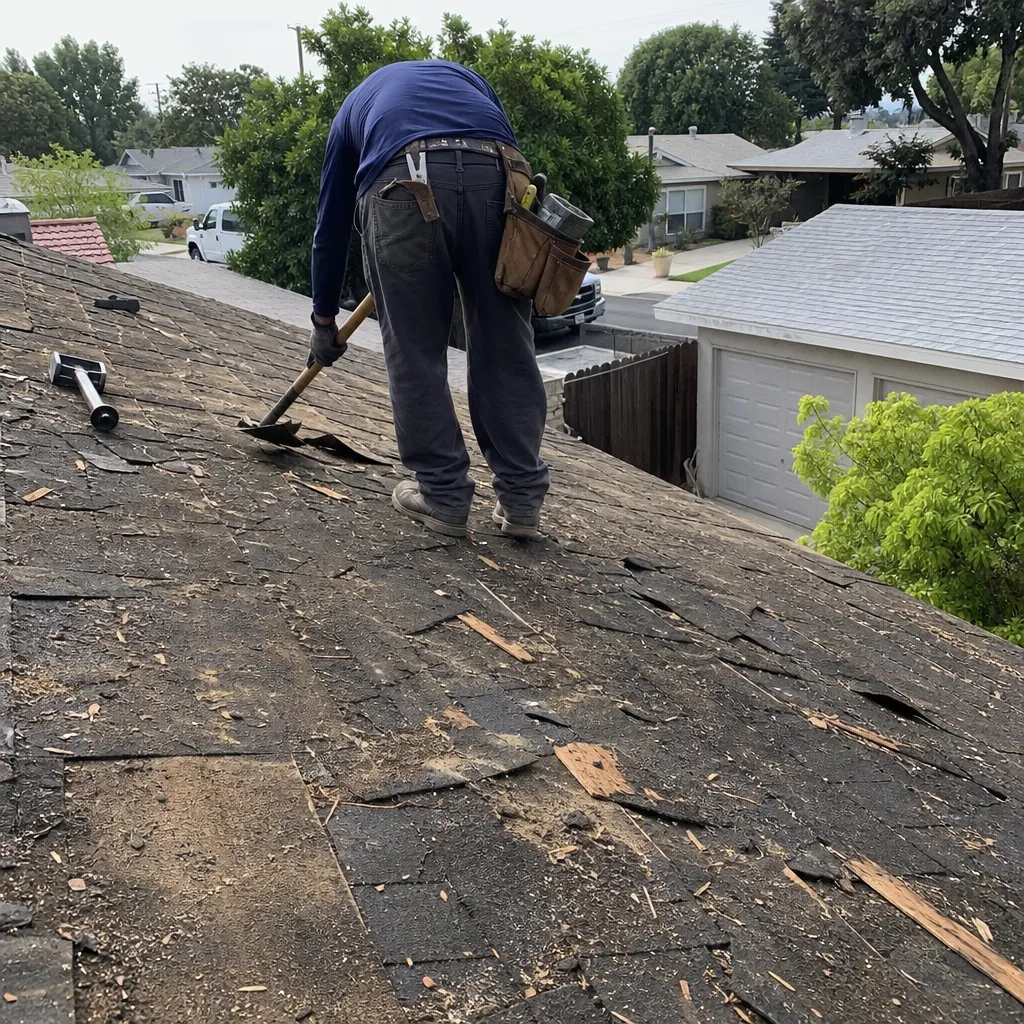 Before
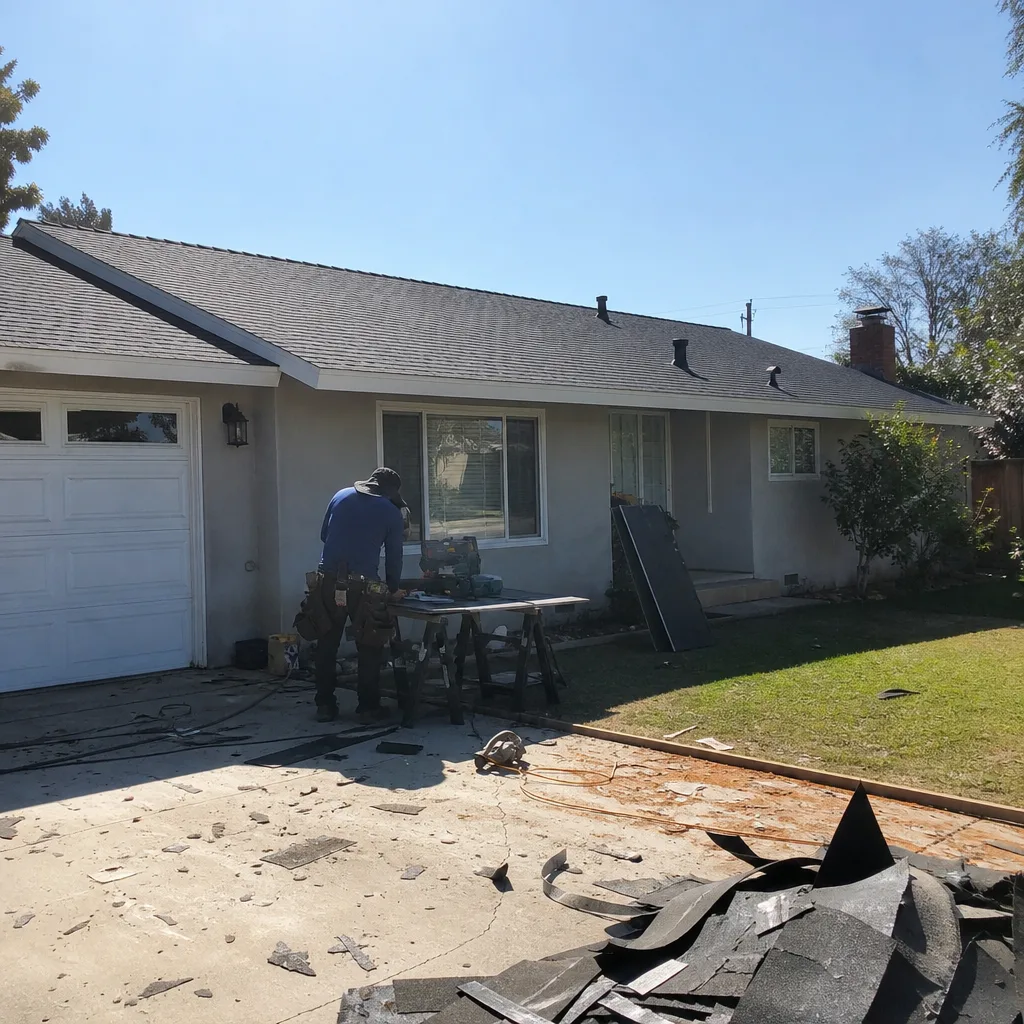 After
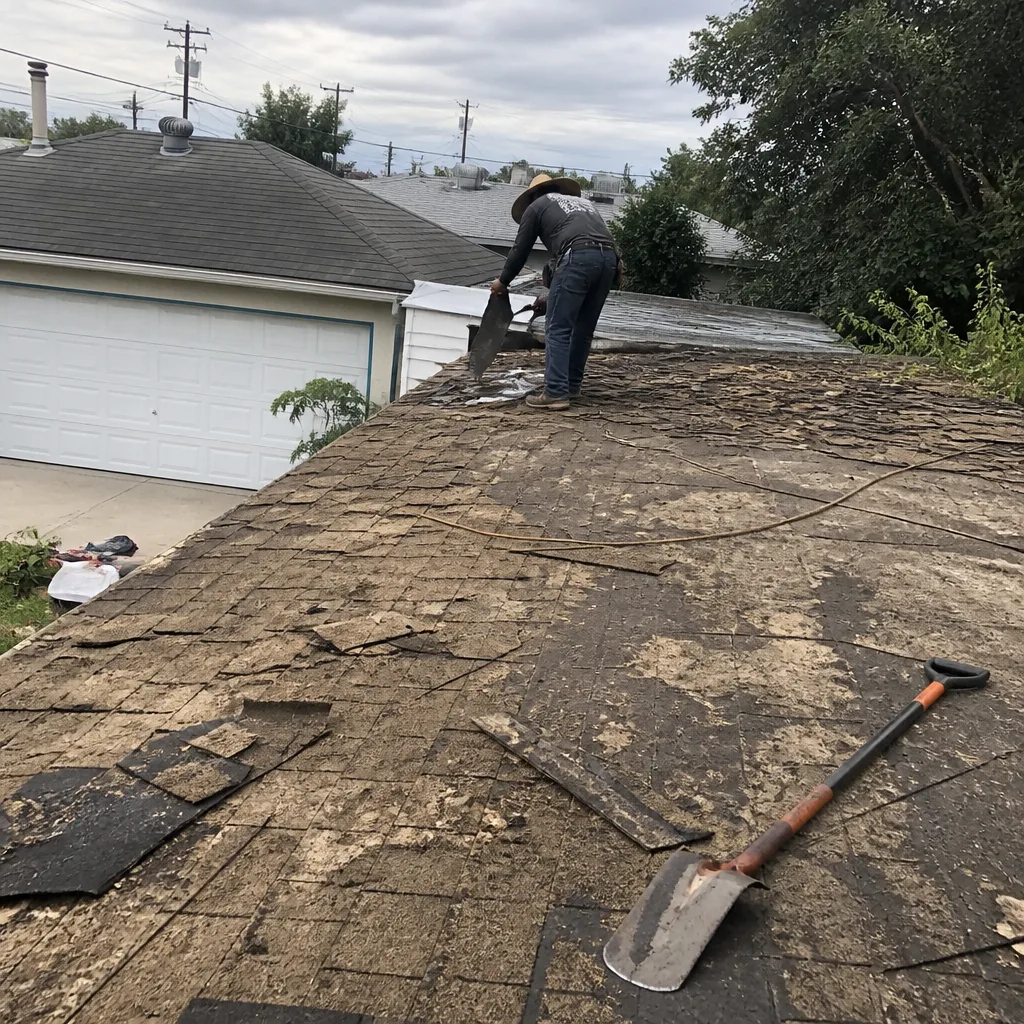 Before
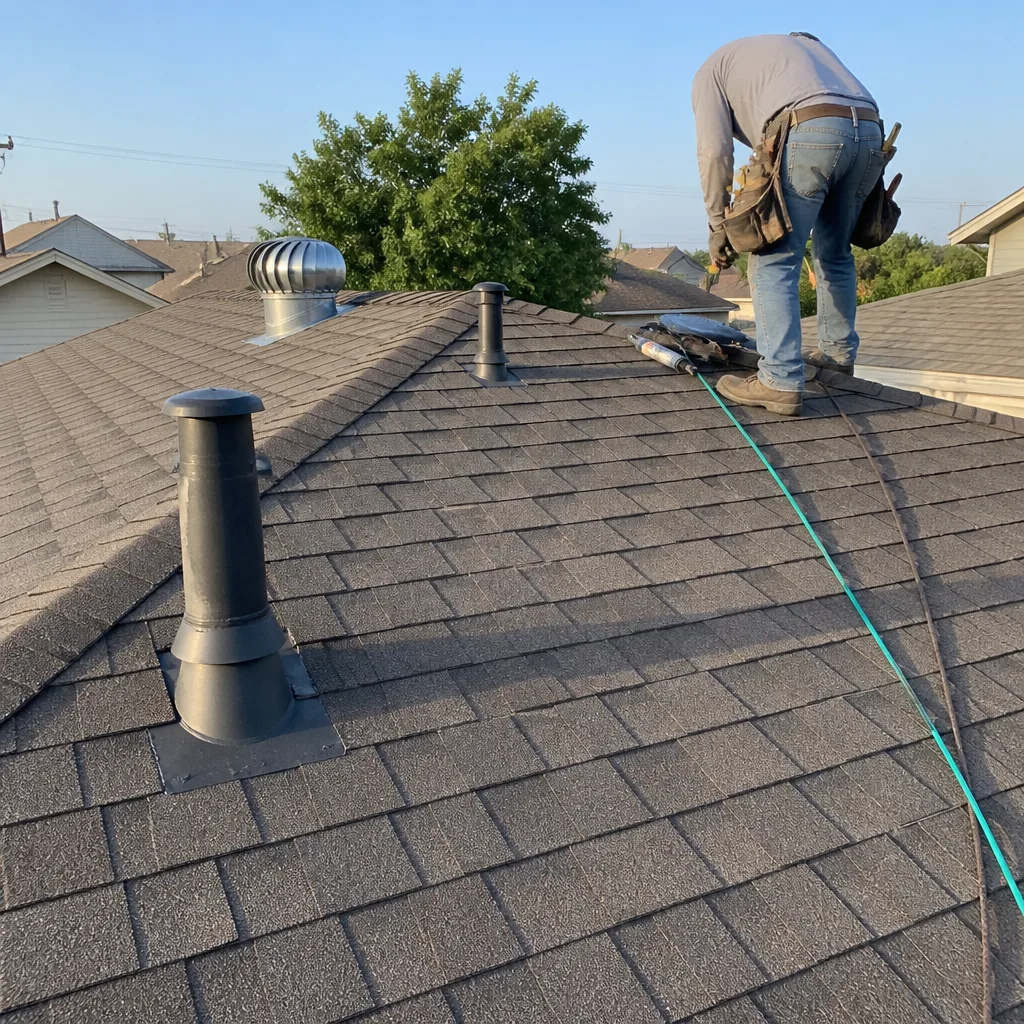 After
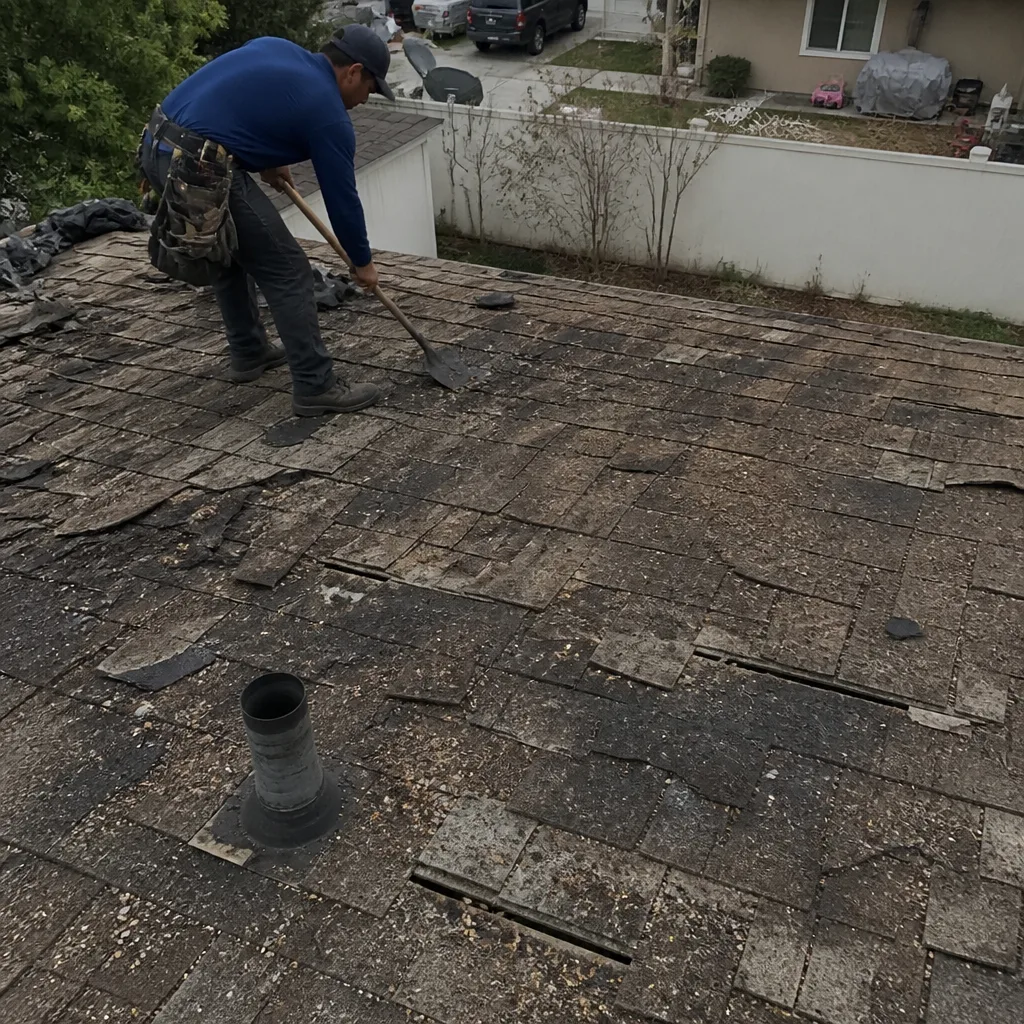 Before
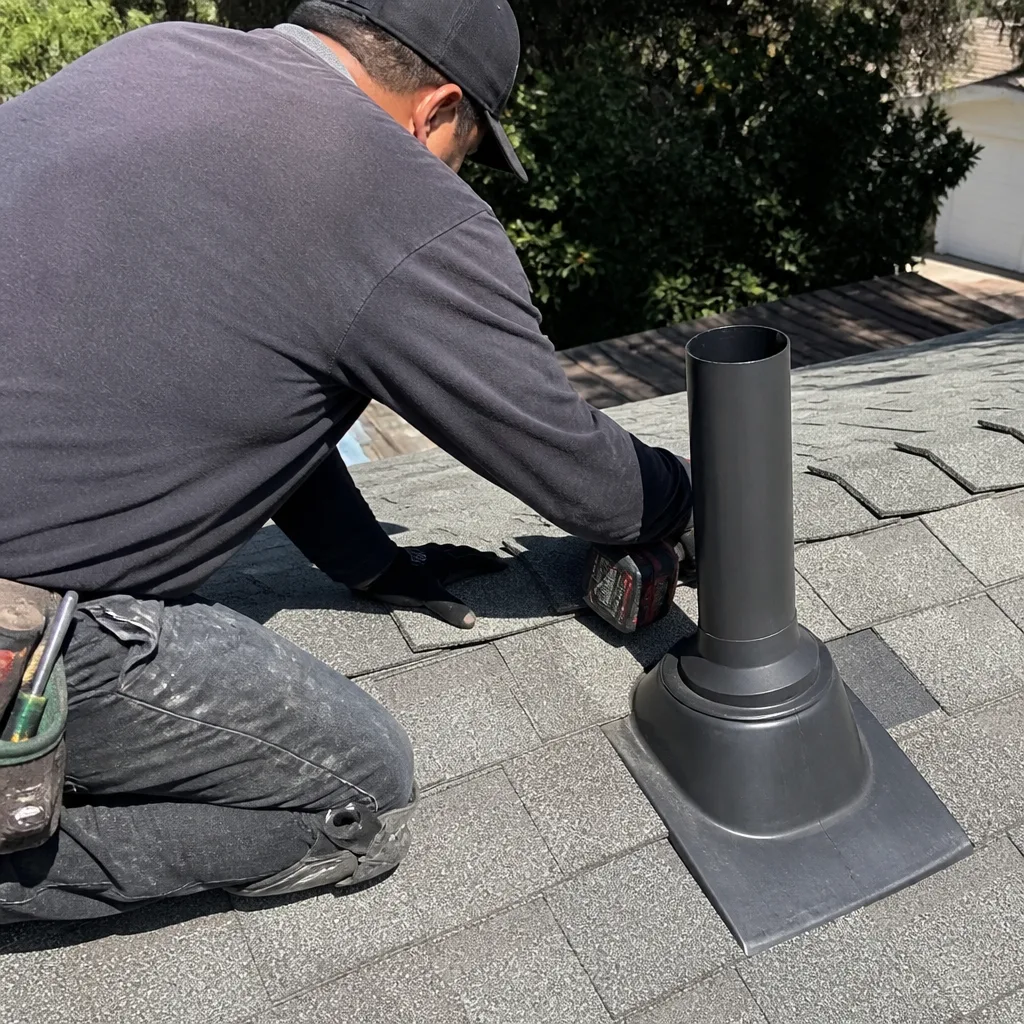 After